
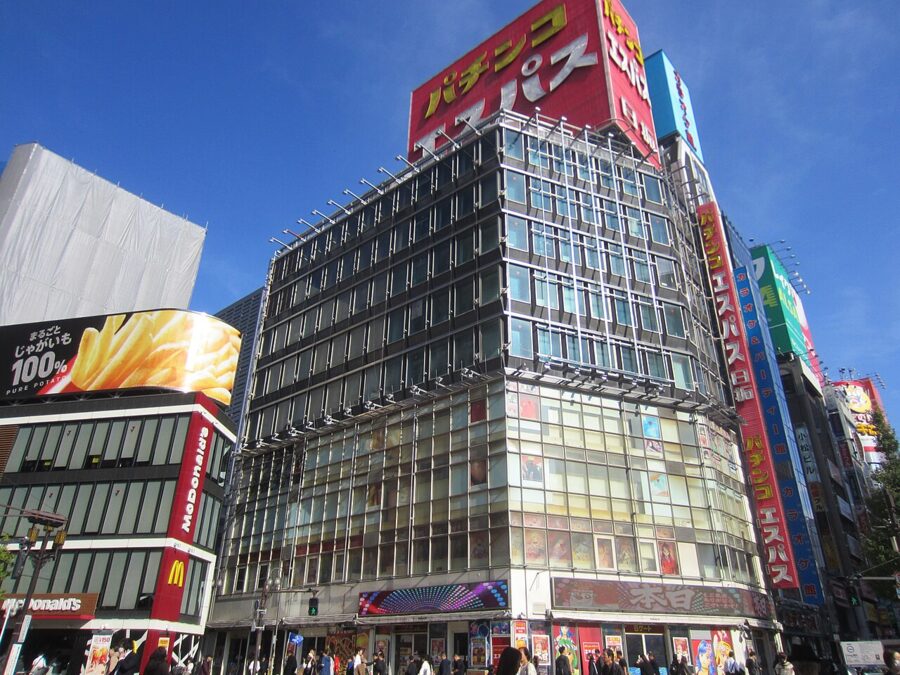
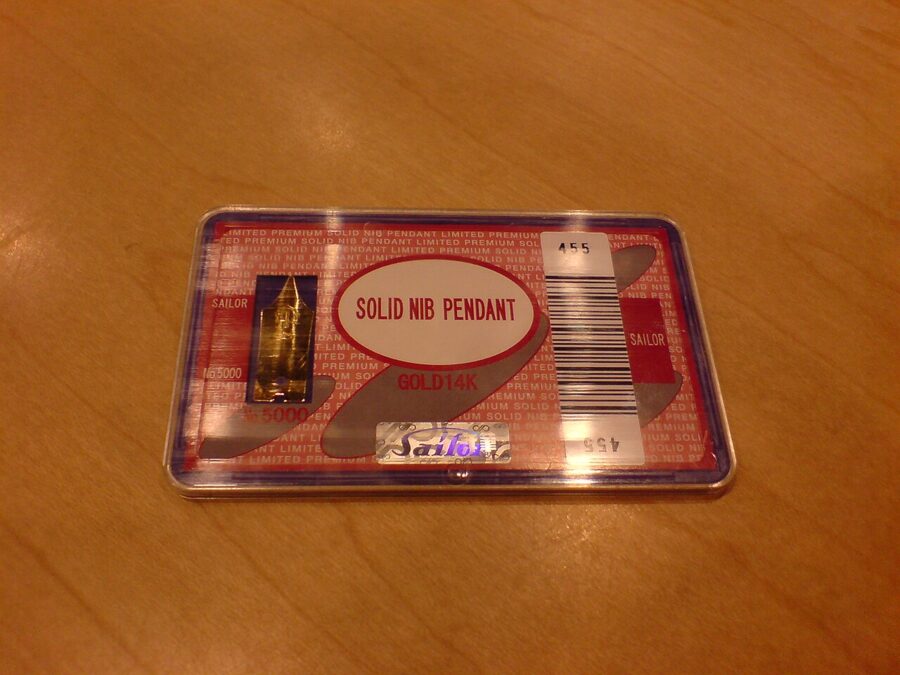
Win at pachinko in Tokyo and the parlor will not hand you a single yen. It hands you a palm-sized plastic case with a sliver of gold sealed inside. You walk out the door, around the corner, to a window the size of a ticket booth, push the case through a slot, and a hand you never see pushes cash back. On paper, the parlor and that window have nothing to do with each other, and that one fact keeps a ¥16 trillion (about $105 billion) business on the right side of Japanese law.
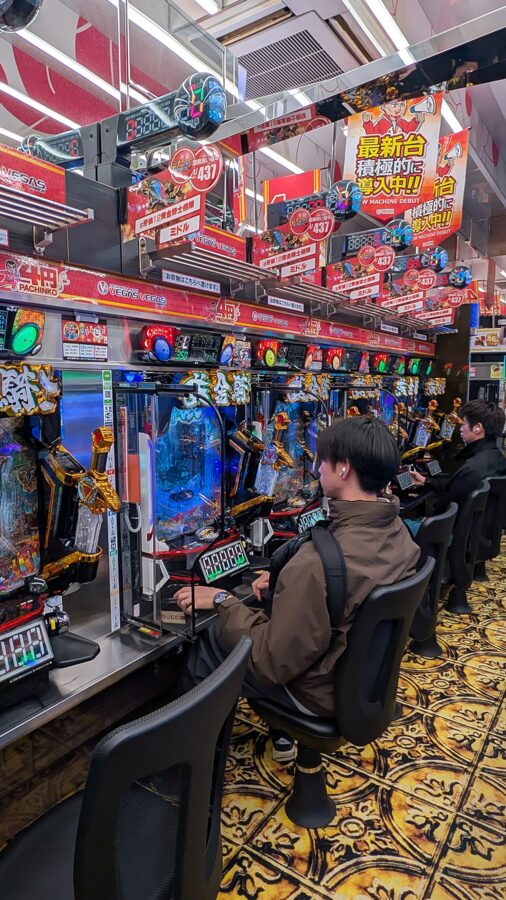
Pachinko is a vertical pinball game played with steel balls, and the word is written in katakana: パチンコ. The usual explanation is that it comes from パチン (pachin), the snap of a small hard thing hitting another. Inside a parlor, thousands of balls hit brass pins at once, like hail on a tin roof.

The arrangement has a name, 三店方式 (santen hōshiki), the three-shop system, and once you understand it a lot of Japanese culture around rules and appearances makes more sense. Pachinko also has its own small vocabulary, nearly all of it ordinary Japanese bent to a new job, so a parlor is a surprisingly good reading lesson. Figures below are as of November 2026.
目次 Contents
What you are looking at: pachinko and pachislot
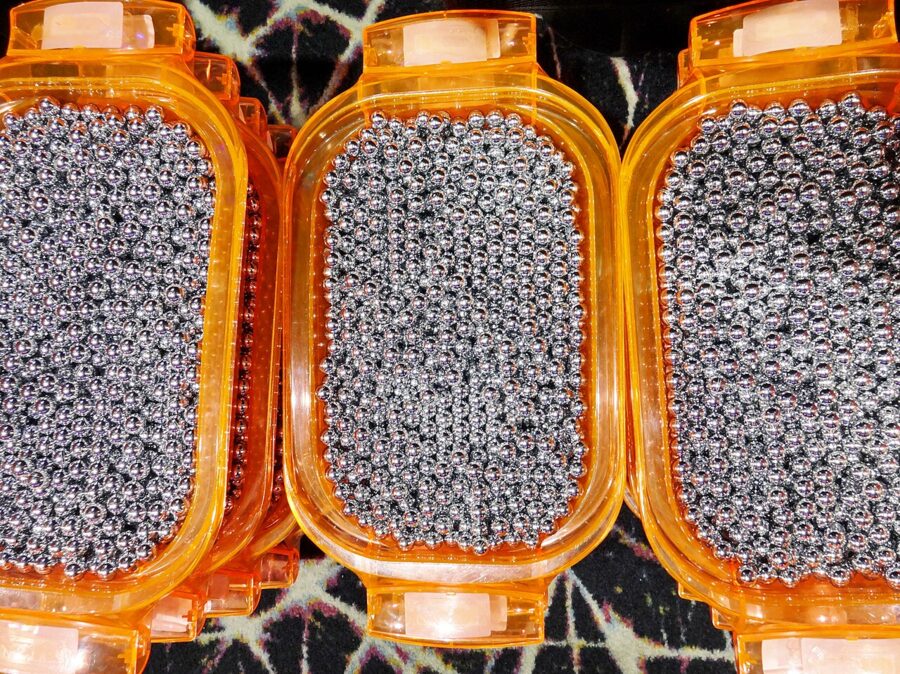
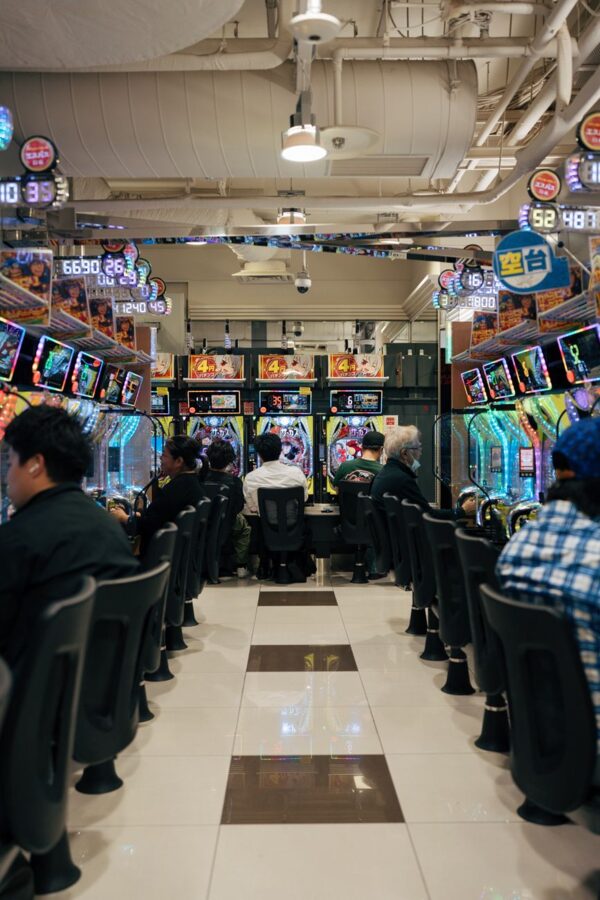
A parlor holds two kinds of machine. パチンコ (pachinko) machines stand upright and shoot steel balls 11 millimeters across. パチスロ (pachisuro), often just スロット (surotto) or スロ, are Japanese slot machines with three reels and a stop button under each one. The building itself is a パチンコ店 (pachinko-ten) or, in casual speech, パチンコ屋 (pachinko-ya), with the same 屋 (ya) as 本屋 (hon’ya), a bookshop.

How a pachinko machine plays
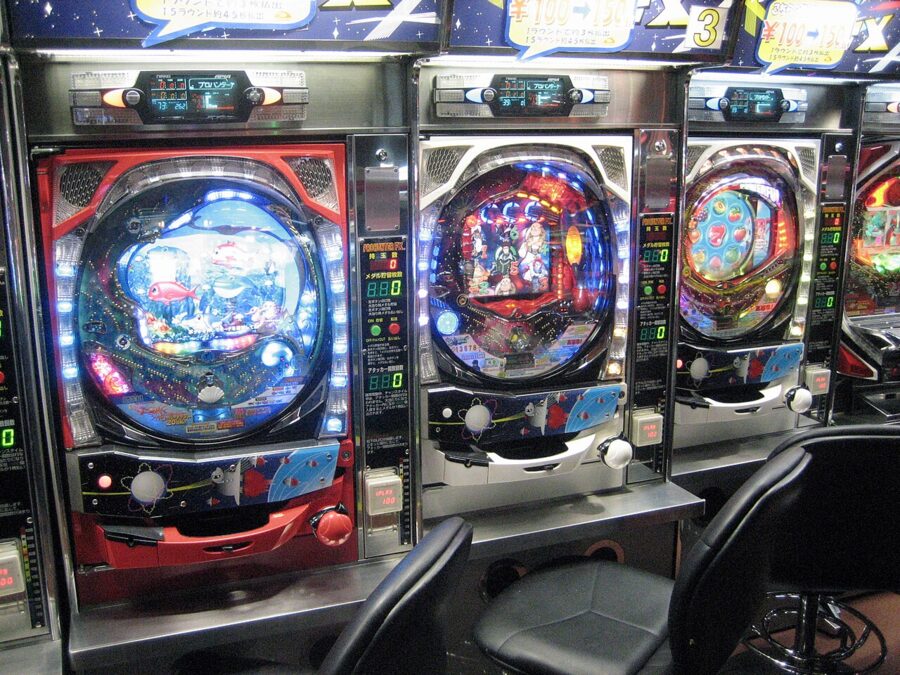
You feed a banknote into the unit between machines, press the 玉貸 (tamakashi, ball rental) button, and balls drop into the tray. Then you turn the round handle at the bottom right and hold it. The machine fires balls one after another, roughly a hundred a minute, and the angle of the handle sets how hard they fly. That is almost the whole of the skill.
The balls rattle down through a field of brass nails. Most fall out of the bottom and are gone. A few drop into the start pocket under the screen, called ヘソ (heso), “belly button,” and each one that does starts a digital lottery on the screen, like a slot machine spinning.
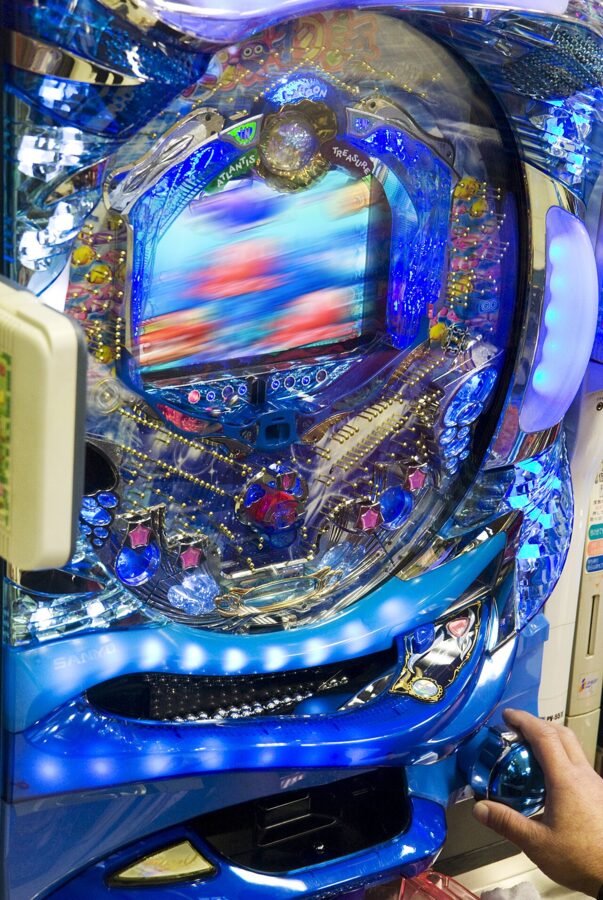

When two of the three numbers line up, the machine plays a long animation called リーチ (rīchi, from English “reach”) to stretch out the suspense. Three in a row is a 大当たり (ōatari), a jackpot. A gate at the bottom opens, you switch to 右打ち (migiuchi, shooting right) as the screen tells you, and balls pour into the tray for several rounds.
Many jackpots then put the machine into 確変 (kakuhen), a mode where the odds of the next jackpot jump sharply. Others give 時短 (jitan), a stretch of fast spins with help getting balls into the start pocket. A run of back-to-back jackpots is what regulars chase, and it is also why an afternoon can swing so far either way.

Pachislot
Pachislot looks more like a casino slot. You insert medals, press a lever to spin three reels, and stop each reel with its own button. Timing the stops matters once a bonus is ready, but the machine still decides when that is.
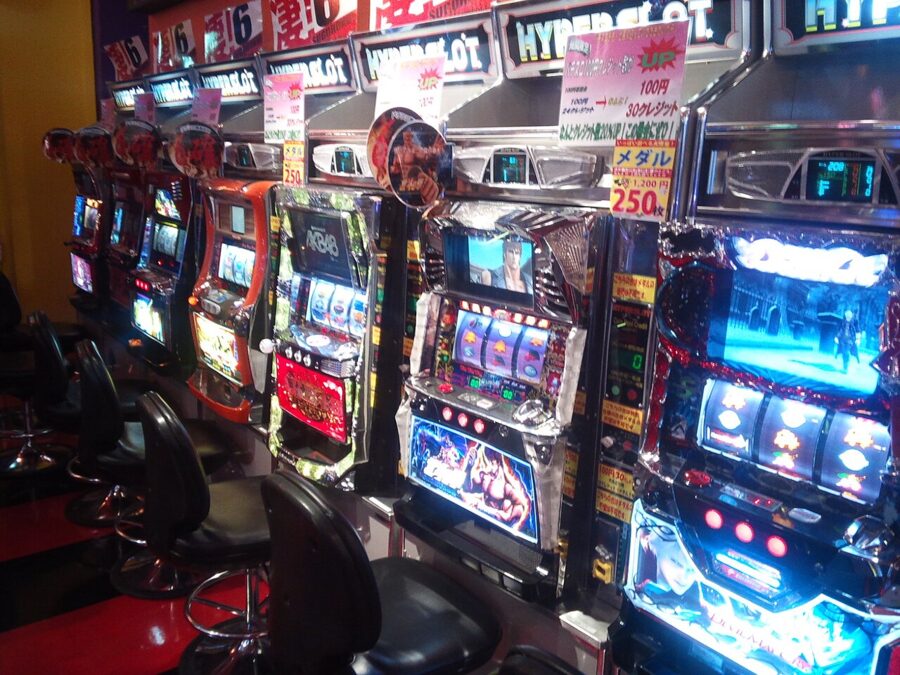

Since November 2022 parlors have installed スマスロ (sumasuro), “smart slots,” which use no physical medals at all, and smart pachinko machines (スマパチ, sumapachi) followed. Both keep everything inside the machine and record winnings on a card. Pachislot is holding up better: its machine count rose slightly in 2024 and 2025 while pachinko kept falling.
From a children’s toy to the corner of every station
Pachinko grew out of the Corinth game, a tabletop bagatelle board sold as a toy in the 1920s and turned upright. The first licensed parlor opened in Nagoya in 1930, and Nagoya is still home to many machine makers. During the war pachinko was banned outright as a nonessential business, and the machines were scrapped.
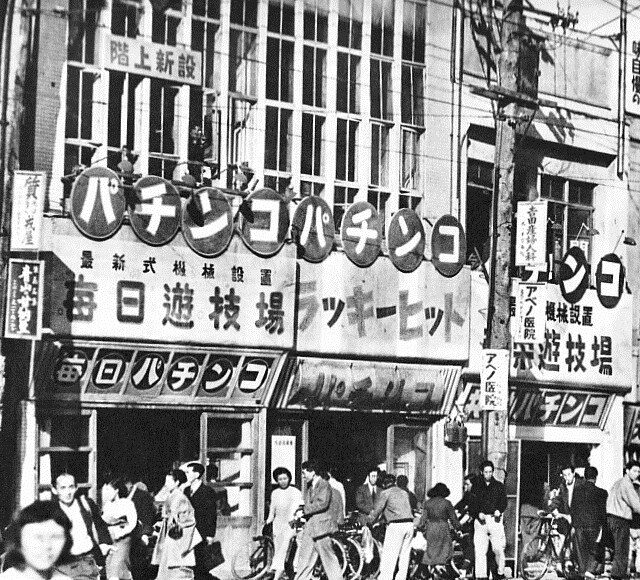
After 1946 it came back fast. In 1948 Masamura Takeichi, who ran a parlor in Nagoya, worked out a new pattern of nails, the 正村ゲージ (Masamura gēji, Masamura gauge), that made the ball’s path far more interesting, and almost every later machine borrows from it. The same year, the postwar entertainment law made pachinko a licensed business, and in 1951 under-18s were barred.
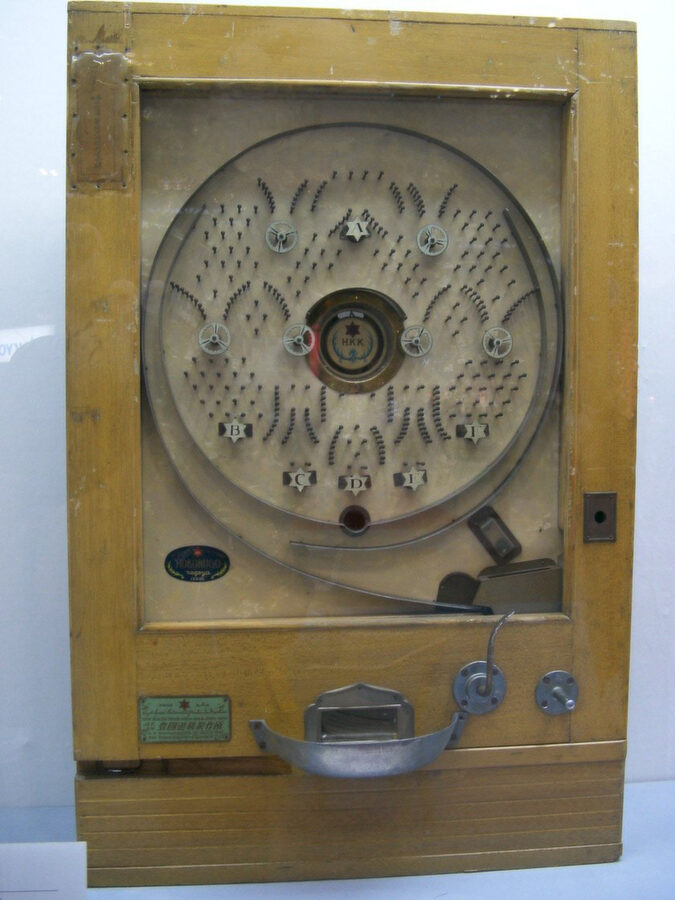

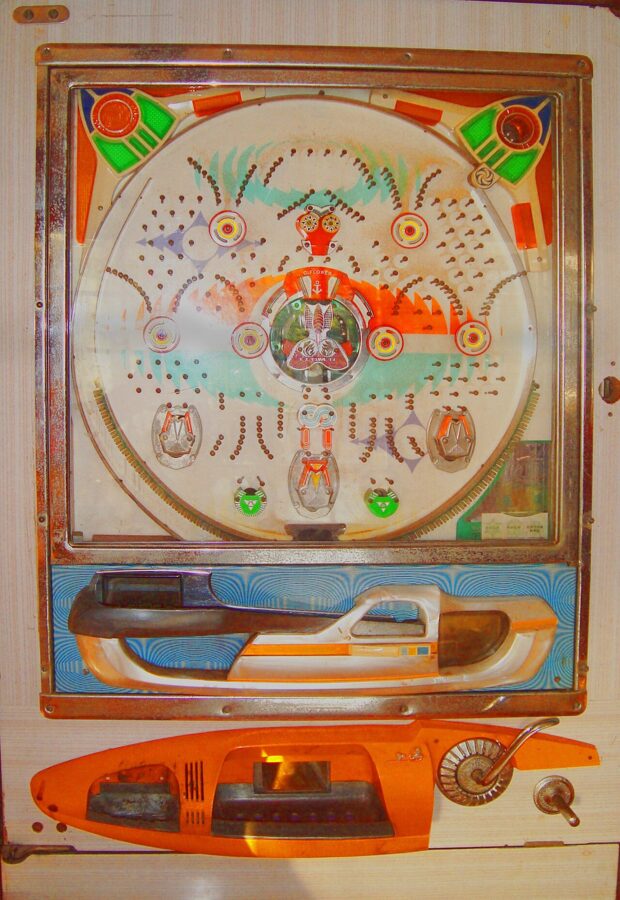
The 1960s brought the チューリップ (chūrippu, tulip), a catcher whose two petals open to swallow more balls. In 1972 the electric handle replaced the flick lever, and in 1978 the rental price reached 4 yen a ball, still the ceiling today before tax. Then in 1980 Sankyo released Fever, the digital-lottery machine every modern one descends from.

The three-shop system: how balls become cash
Article 185 of Japan’s Penal Code makes gambling a crime, except for betting “things for momentary entertainment,” a snack or a drink. Separate laws allow betting on horse, bicycle, boat and motorbike races and the lotteries. Pachinko is in neither group: legally it is 遊技 (yūgi), a game of skill that pays out prizes.
The rules for those prizes sit in Article 23 of the Entertainment Business Act (風営法, Fūeihō). A parlor must not:
- give cash or securities as prizes,
- buy back the prizes it gave out,
- let customers take balls or medals out of the building,
- or issue a paper slip showing how many balls it is holding for a customer.
The enforcement rules add limits: a ball may cost no more than 4 yen (about 3 cents) and a pachislot medal no more than 20 yen, and no single prize may be worth more than ¥9,600 (about $62) plus tax. Inside those lines, a parlor may legally hand out prizes in proportion to the balls you won.
Three shops, one loop
The three “shops” are separate companies, and each step is legal on its own.
| Step | Who | What changes hands |
|---|---|---|
| 1 | パチンコ店 (pachinko-ten), the parlor | You rent balls for cash and play. Your winnings are counted and swapped for 特殊景品 (tokushu keihin), special prizes. |
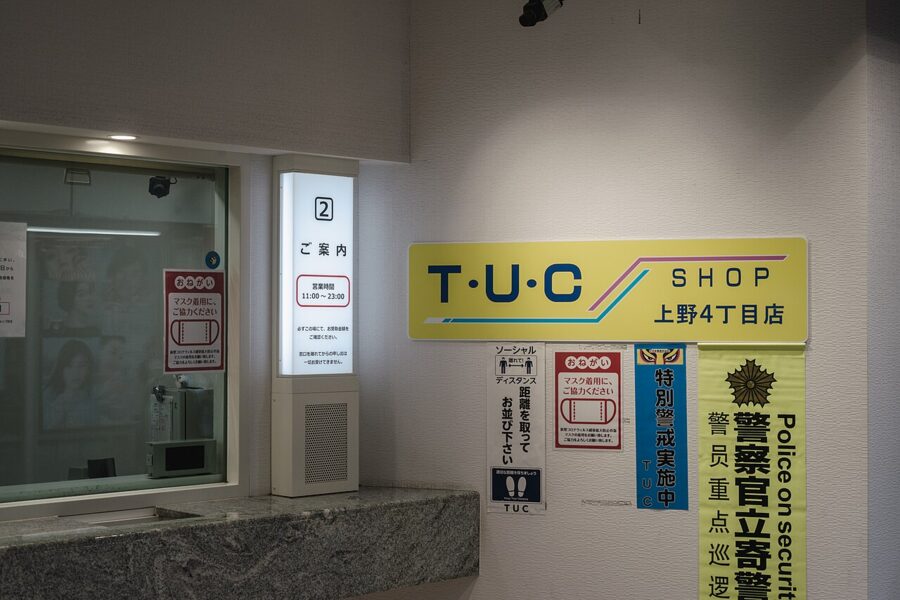
| 2 | 景品交換所 (keihin kōkanjo), the exchange window | A separate licensed dealer in secondhand goods buys your special prizes for cash. |
| 3 | 景品問屋 (keihin don’ya), the wholesaler | Buys the prizes from the window and sells them back to the parlor, which hands them out again. |
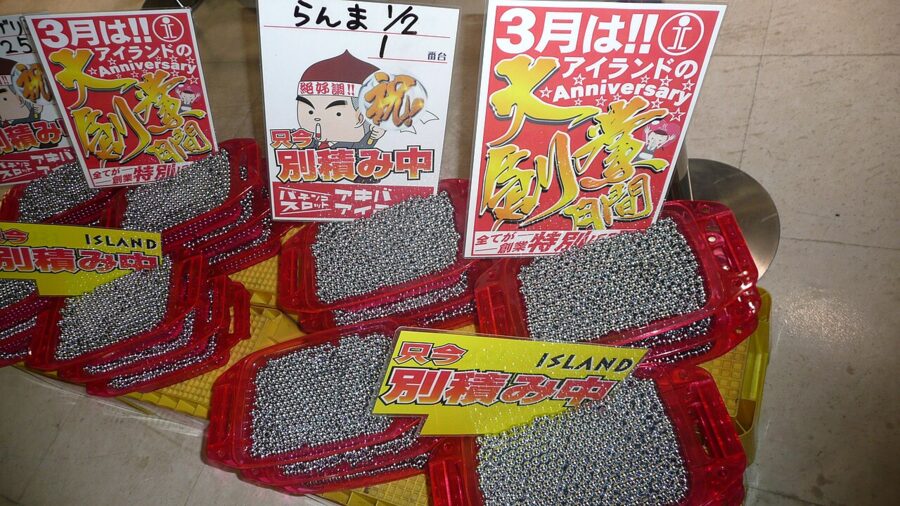
The same little plastic cases go round and round. The parlor never buys back its own prize, so it never breaks Article 23. The window never runs a game, so it never runs a gambling den. Everyone keeps up the fiction: staff will not tell you where the window is, and the window will not mention the parlor.
The system began in Osaka in 1961. After the war, black-market buyers had loitered outside parlors buying prizes for cash, and gangsters fought over the trade. A former Osaka police officer named Mizushima proposed handing the buying to a welfare association that employed widows and disabled people, which gave the windows a respectable face. The “Osaka method” spread across Japan, and the welfare connection mostly did not.
Is it really legal?
Yes, as long as the three shops stay independent, and that is exactly the line the police watch. In 1953 the Supreme Court held that prizes given within the licence conditions count as stakes “for momentary entertainment,” not gambling. In 1984 a National Police Agency official told the Diet that the Act regulates parlor operators and cannot reach people with no connection to them, such as a buyer outside.
The government repeated the point in a 2017 written answer to the Diet: a third party buying back prizes breaks Article 23 only when it is “substantially the same” as the parlor. In 2020 police in Nagano sent prosecutors the papers on a parlor operator and an employee after the parlor bought its special prizes back from customers directly. That is the one move the law will not tolerate.
So when someone asks whether pachinko is gambling, the plain answer is that it works exactly like gambling and is legally something else. Japanese has a word for this kind of polite fiction, 建前 (tatemae), the public face, as against 本音 (honne), what everyone actually thinks.
Gold in Tokyo, and the leftover balls
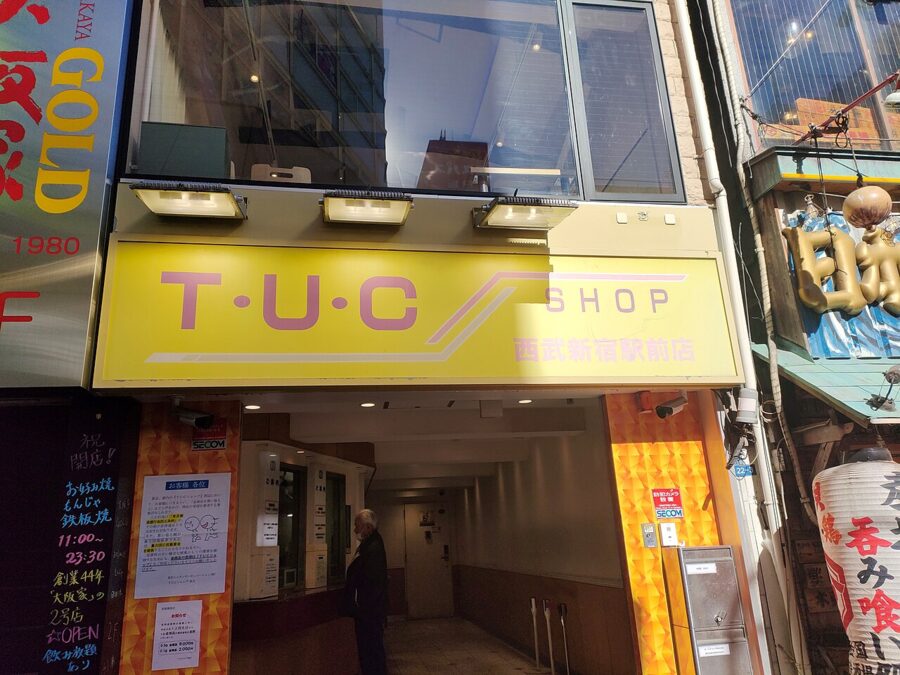
Tokyo’s special prizes are real gold and silver: 0.3 grams of gold for the large prize, 0.1 grams for the medium, and a gram of silver for the small one. As gold prices climbed, TUC raised its buying prices three times in 2025 alone. As of early 2026 the large prize was worth ¥9,000 (about $58), the medium ¥4,000 (about $26) and the small ¥1,000 (about $6.50). The old 1-gram gold prize was dropped once its value passed the ¥9,600 legal cap.
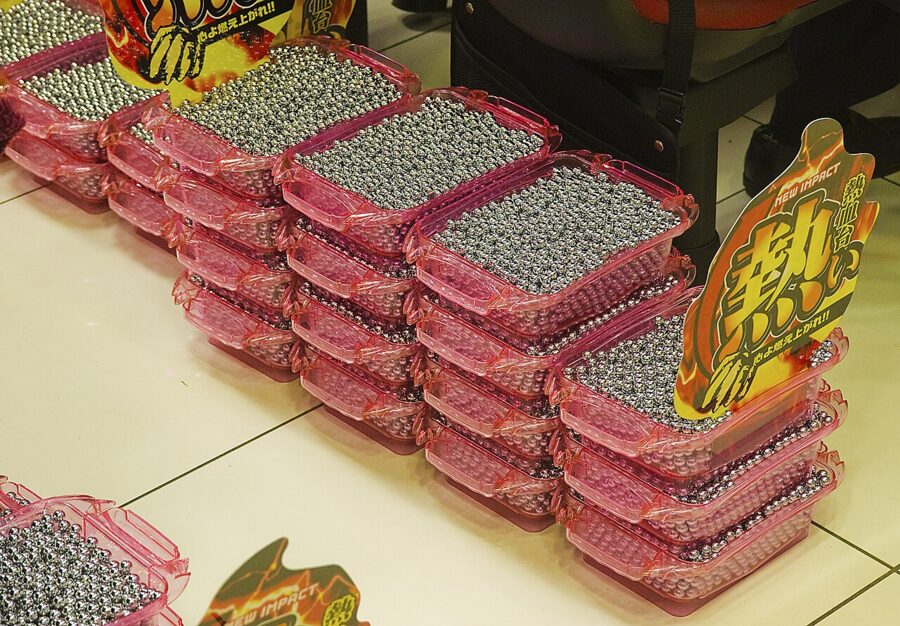

Because the smallest prize is now ¥1,000, anything below that is left over. Players call it 余り玉 (amaridama), leftover balls, and swap it for a can of coffee or a bag of chips from the 一般景品 (ippan keihin), the general prizes. Outside Tokyo, special prizes are usually not gold, and many regions still use units as small as ¥200 (about $1.30), so the leftovers are smaller.
Boom, decline and the 2018 rules
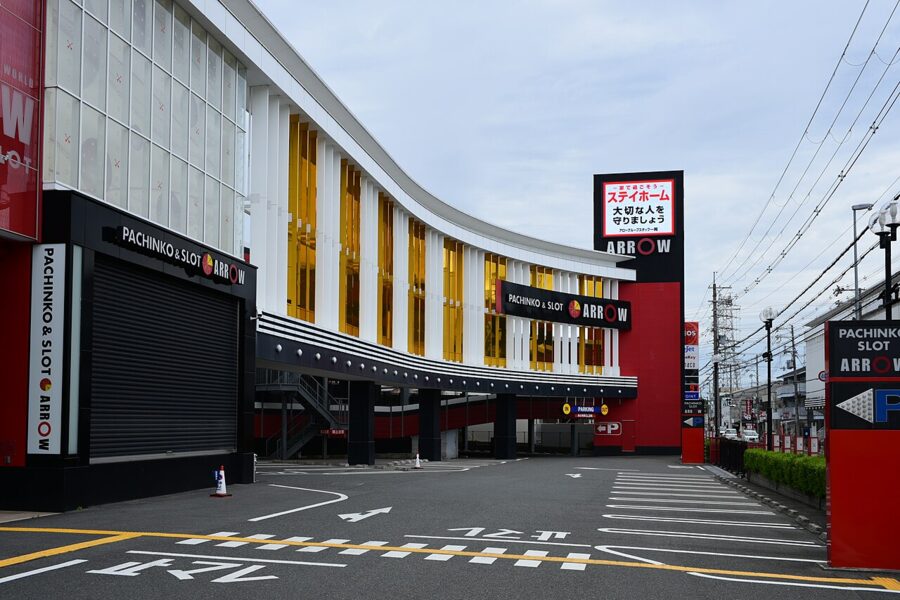
In the mid-1990s Japan had around 17,000 parlors. At the end of 2025 it had 6,464, by the count in the National Police Agency’s annual report published in April 2026. The fall has not slowed much.
| End of year | Parlors | Pachinko machines | Pachislot machines |
|---|---|---|---|
| 2021 | 8,458 | 2,338,294 | 1,475,703 |
| 2022 | 7,665 | 2,205,332 | 1,358,568 |
| 2023 | 7,083 | 2,077,641 | 1,347,466 |
| 2024 | 6,706 | 1,969,913 | 1,355,839 |
| 2025 | 6,464 | 1,872,041 | 1,362,177 |
The parlors that survive are getting bigger. Halls with more than 1,000 machines rose from 316 to 422 over those five years, while those with 101 to 300 machines fell by roughly half. The small neighborhood parlor by the station is what is disappearing.

Money tells a stranger story. The Japan Productivity Center’s Leisure White Paper put pachinko and pachislot at ¥16.2 trillion (about $105 billion) in 2024, up ¥0.5 trillion on the year, from 6.9 million players. That figure counts every ball rented, and most of it goes straight back to players as prizes, so the parlors’ real takings are a small fraction of it. The number of players is near its lowest on record, but the money passing through the machines has held up far better than the count of parlors.
The biggest recent push came from the 2018 rule change. From February 2018 new machines could pay out at most 1,500 balls per jackpot, down from 2,400, and pachislot bonuses were capped at 300 medals. Over four hours of standard play, a machine must now return less than one and a half times the balls fed into it. The aim was to cut how much a player could win or lose in a day, part of the same push against gambling addiction that produced a national addiction law that summer.
Older, looser machines had to come out within about three years, and the last of the old pachislot generation left the floors in early 2022. Many regulars drifted away, and plenty of small parlors closed rather than pay for new machines. Japan’s first casino resort is still being built in Osaka, so for now pachinko remains the country’s everyday gambling, under another name.
Playing as a visitor
Visitors can play, and staff are used to first-timers who have no idea what they are doing. A few things help.
- Age. The law bars anyone under 18, and parlors also turn away high school students who have turned 18. In the Japanese school year, that means most students wait until they graduate in March.
- Noise. It is loud enough that regulars wear earplugs. Bring a pair; some parlors keep them at the counter.
- Smoke. Since the revised Health Promotion Act took full effect on April 1, 2020, smoking indoors is only allowed in enclosed smoking rooms, and nobody under 20 may enter them. Some parlors have a sealed section for heated tobacco with machines inside it, so a faint smell can linger, but the old blue haze is gone.
- Hours. Most parlors open in the morning, often 10 a.m., and close before 11 p.m. Queues form outside on new-machine days.
- Photos. Don’t take them inside. Many parlors ban photography of the floor and the machines.

What it costs
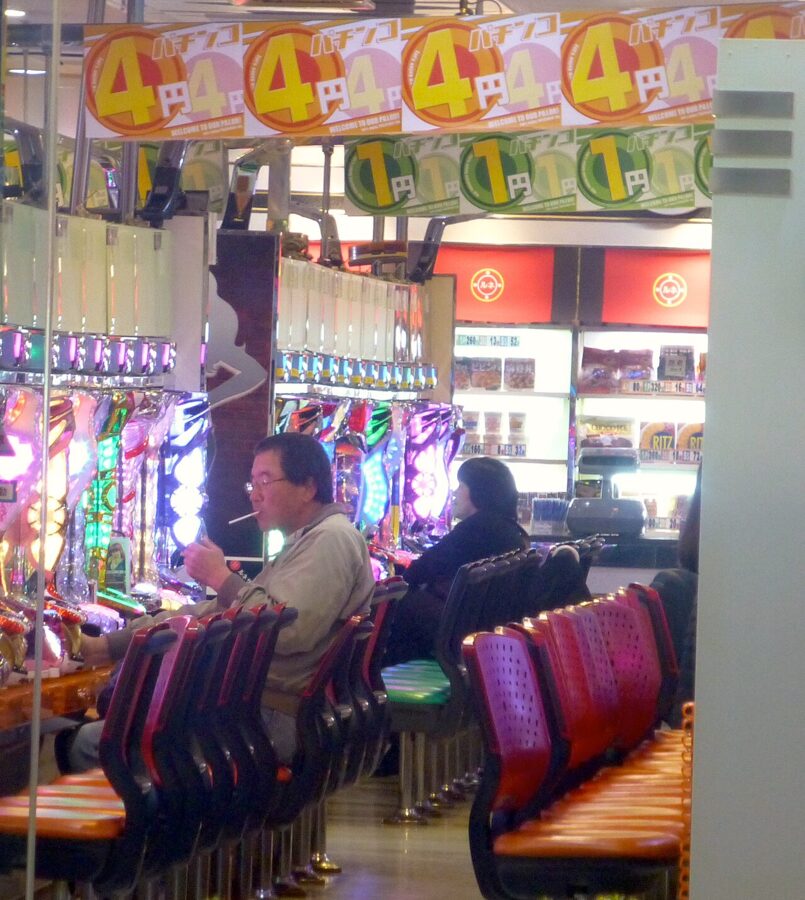
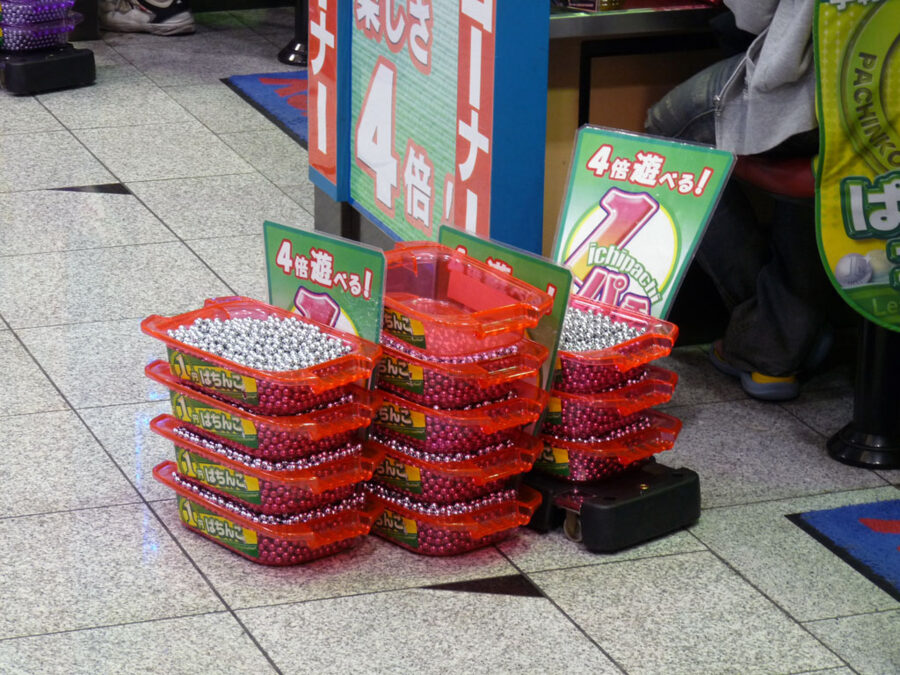
At a standard 4-yen parlor, ¥1,000 (about $6.50) buys about 250 balls, and with a hundred balls a minute leaving the handle, that can be gone in a few minutes. Many parlors also run 1-yen corners, signed 1円パチンコ (ichi-en pachinko) or 1パチ (ichipachi), where the same ¥1,000 lasts four times as long and the swings are a quarter of the size. For a first try, that is where I would sit.

Pachislot medals usually cost 20 yen each, with 5-yen corners in many halls. Set a cash limit before you start and treat whatever goes into the machine as the price of the afternoon; over time, the parlor wins.

From first ball to cash, step by step
- Walk the rows and pick an empty seat. A cigarette pack, a lighter or a card left in the tray means the seat is taken.
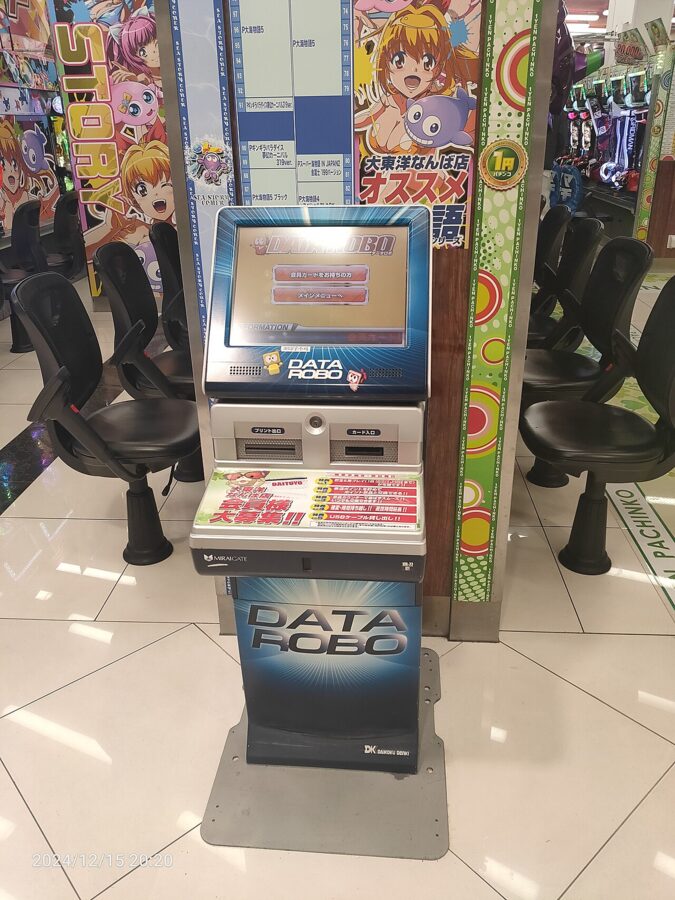
- Feed a ¥1,000 note into the slot beside the machine and press 玉貸 (tamakashi) for balls.
- Turn the handle until the balls arc toward the left of the screen and hit the heso now and then. Hold it there.
- If you hit a jackpot and the screen shows 右打ち (migiuchi), turn the handle all the way so the balls go right.
- When you are done, press 計数 (keisū, count). The machine or a staff member counts your balls, and you get a receipt or a card.
- Take it to the 景品カウンター (keihin kauntā), the prize counter, swap it for special prizes, then find the exchange window outside.
Nobody at the counter will say “cash.” The phrase that does the work is 特殊景品でお願いします (tokushu keihin de onegai shimasu), “special prizes, please.” It is polite (desu/masu level) and perfectly normal; staff hear it all day.
| Japanese | Romaji | Meaning | Level |
|---|---|---|---|
| 初めてです。 | Hajimete desu. | It’s my first time. | Polite |
| 遊び方を教えてもらえますか。 | Asobikata o oshiete moraemasu ka. | Could you show me how to play? | Polite |
| この台、空いていますか。 | Kono dai, aite imasu ka. | Is this machine free? | Polite |
| 特殊景品でお願いします。 | Tokushu keihin de onegai shimasu. | Special prizes, please. | Polite |
| 交換所はどこですか。 | Kōkanjo wa doko desu ka. | Where is the exchange window? | Polite |
That last question is the funny one. Staff are trained not to direct you to the window, because a parlor pointing at its own buyback shop is exactly what the law forbids. Step outside and look for other players walking the same way with small plastic cases.

Pachinko is also a serious addiction for some people, and the industry funds a free helpline, the Recovery Support Network (リカバリーサポート・ネットワーク). Parlors also run a self-exclusion scheme, 自己申告プログラム (jiko shinkoku puroguramu), where a player or family member can ask for a spending or visit limit. If an afternoon starts to feel like something you need rather than something you chose, stop there.
The words, with kana
Most pachinko words are everyday Japanese with a narrow meaning, and you will see them on walls, screens and receipts. If you keep vocabulary flashcards, the first five are worth a card each.
| Kana / kanji | Romaji | Meaning in a parlor |
|---|---|---|
| 玉 / たま | tama | A ball. Everyday meaning: ball, bead, jewel. |
| 景品 / けいひん | keihin | Prize. Everyday meaning: a free gift with a purchase. |
| 換金 / かんきん | kankin | Turning something into cash: 換 (exchange) plus 金 (money). The word the industry avoids. |
| 確変 / かくへん | kakuhen | Short for 確率変動 (kakuritsu hendō), “probability change,” the high-odds mode after a jackpot. |
| 大当たり / おおあたり | ōatari | Jackpot. 当たり is a hit or a win, the same word as on a lottery ticket. |
| 出玉 / でだま | dedama | The balls a machine pays out. |
| 時短 / じたん | jitan | Short for 時間短縮 (jikan tanshuku), “time shortening,” the fast-spin mode. |
| 台 / だい | dai | A machine; also the counter for machines and cars. |
| 特殊景品 / とくしゅけいひん | tokushu keihin | Special prize, the one the window buys. |
| 交換所 / こうかんじょ | kōkanjo | The exchange window. |
| 新装開店 / しんそうかいてん | shinsō kaiten | “Newly refurbished, now open,” the banner for new-machine days. |
Two of those, 確変 and 時短, show a habit worth learning early. Japanese clips long four-kanji compounds down to two by taking the first kanji of each half, the way 確率変動 becomes 確変. You will meet the same pattern in 就活 (shūkatsu, job hunting, from 就職活動) and 原発 (genpatsu, nuclear plant, from 原子力発電所).

One more pair is worth knowing. The industry writes its business as 遊技 (yūgi), with 技, “skill,” never 遊戯 (yūgi), with 戯, “play,” and certainly never 賭博 (tobaku), “gambling.” The two yūgi sound identical. The choice of kanji is the legal argument in a single character.
Players have their own rougher words too. パチンカス (pachinkasu) joins pachinko to カス (kasu), “dregs,” and regulars use it about themselves with a grin; it sits in the same family as the insults in Japanese swear words and insults, so keep it for people who have called themselves that first.
Pachinko in film, manga and fiction
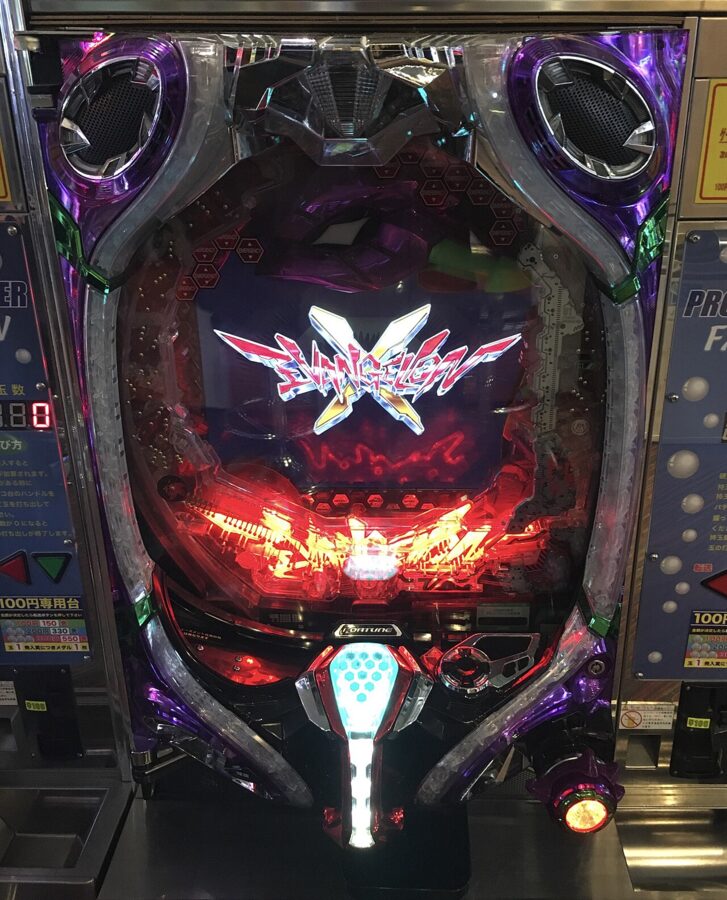
Pachinko and popular culture feed each other. Machine makers license anime, manga, films and pop groups, and the machine becomes a new way to sell the story: there are pachinko and pachislot machines built on Evangelion, Fist of the North Star (北斗の拳, Hokuto no Ken) and AKB48, the group at the center of the 2010s Japanese idol boom. A few anime have even gone the other way, starting life as machines.

In manga, the best-known pachinko story belongs to Kaiji, Fukumoto Nobuyuki’s long-running gambling series. In its second part, the hero takes on 沼 (numa, “the Bog”), a monstrous rigged machine in an underground casino, and the arc was filmed as Kaiji 2 in 2011. Japan also has whole magazines devoted to pachinko and pachislot strategy, sold in convenience stores next to the comics.
For English readers, though, the word now means a book first. Min Jin Lee’s novel Pachinko (2017) follows four generations of a Korean family who move to Osaka, and a son, Mozasu, makes his living in pachinko parlors. The book was a finalist for the National Book Award, and it opens with the line “History has failed us, but no matter.”


That setting is not invented. Zainichi Korean families, Koreans who stayed in Japan after the war, built a large part of the industry when other doors were closed to them, and Maruhan, the largest parlor chain today, was founded by one. Apple TV+ adapted the novel as a series, with seasons in 2022 and 2024, and for most people outside Japan it is the only look inside a parlor they will ever get.
Next time you pass a parlor, look a few doors down for a small window with no sign worth reading. Say the word under your breath, 交換所, kōkanjo, and you will know more about how it works than most of the people walking past.