
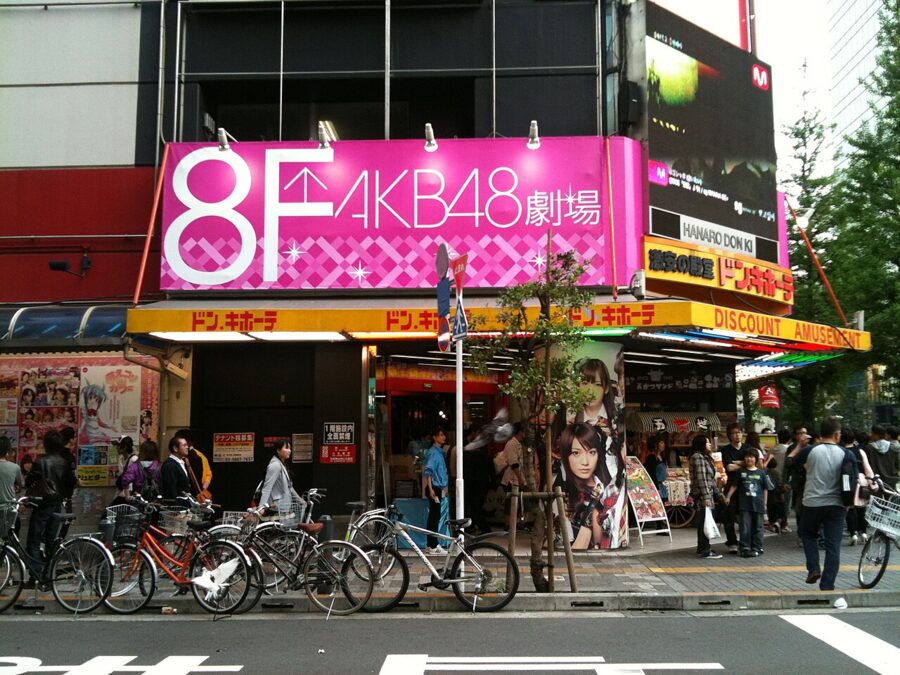
Thirty minutes before every show at the AKB48 Theater, on the eighth floor of a discount store in Akihabara, the audience draws lots for the order they walk in. They have already won a lottery to buy the ticket. Now they win, or lose, the chance to sit in the front row, a few meters from a group of young women they have watched grow up on stage, some of them for years.
That mix of distance and closeness is the whole idea of the Japanese idol, アイドル (aidoru). An idol sings and dances, but what fans really follow is a person: her first nervous single, her promotion to the front row, the day she says goodbye. Fans call the member they back their 推し (oshi), and the time and money they spend on her 推し活 (oshikatsu).

For anyone learning Japanese, idols are a good teacher. Their songs are clear and repetitive, their TV shows caption every line, and the fan vocabulary turns up in everyday talk about Japanese culture.

目次 Contents
アイドル: the word, and what makes someone an idol
アイドル is written in katakana because it is a loanword, from English “idol.” The Seisen-ban Nihon Kokugo Daijiten traces it to the sense of a religious image, and notes that today it mostly means young singers and actors with passionate fans. Its earliest citation, from Futabatei Shimei’s novel 浮雲 (Ukigumo) in the late 1880s, uses it for a beloved object of devotion. The dictionary entries for アイドル agree on the shift and give no single date for it.
Japanese sources point to a French film: Cherchez l’idole, with the singer Sylvie Vartan, opened in Japan in 1964 as アイドルを探せ (Aidoru o Sagase, “Look for the Idol”), and the word started to stick to young pop stars. If you are still getting used to katakana, アイドル is a good one to practice: ア, イ, ド with its two small dakuten marks, and ル.
An idol is not quite a pop artist
A singer admired for skill and songwriting is an アーティスト (ātisuto, artist). An idol is admired for charm, effort and the story of getting better. Fans 応援する (ōen suru), “cheer on,” an idol, the same verb used for a school sports team.
That is why a slightly shaky voice is not a problem. A first single sung a little off key becomes part of the story, and the fan who was there for it feels part of the climb.
K-pop idols share the family tree, and several are Japanese, such as Momo, Sana and Mina of TWICE. But K-pop sells polish after long trainee years; Japanese idols debut less finished, and the unfinished part is the point.
Fifty years of idols, era by era
The 1970s: audition shows and the girl next door
Japanese writers call 1971 アイドル元年 (aidoru gannen), “year one of the idol.” Three young singers debuted that year, Minami Saori, Amachi Mari and Koyanagi Rumiko, and Nippon TV launched スター誕生! (Sutā Tanjō!, “A Star Is Born!”), an audition show that ran into the 1980s and turned ordinary teenagers into stars on live television.
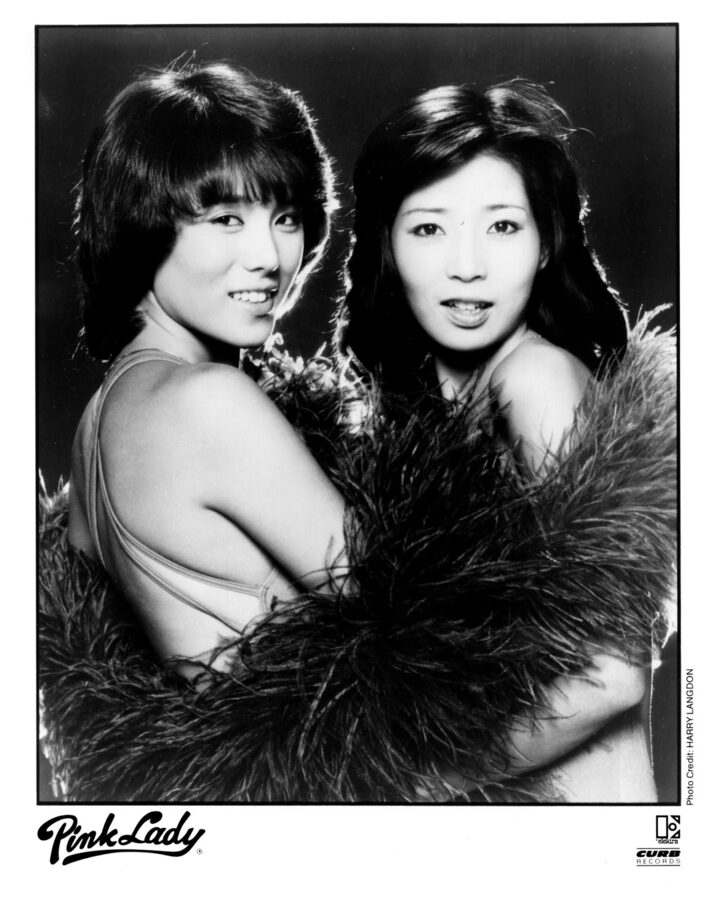
Its most famous graduates were the 花の中三トリオ (hana no chūsan torio), “the flower trio of third-year junior high students”: Mori Masako, Sakurada Junko and Yamaguchi Momoe. Yamaguchi became the defining idol of the decade, then retired at 21 to marry, closing her last concert at the Nippon Budokan in October 1980 by setting her microphone down on the stage. The duo Pink Lady sold millions of singles in the late 1970s with routines children copied in playgrounds.
Some idols of that decade moved into other genres later. Ishikawa Sayuri debuted as a teenage idol in 1973 and became one of the great singers of enka, the slow ballad style that still closes many a karaoke night.
The 1980s: Seiko-chan and the class of ’82
Matsuda Seiko debuted in 1980, the year Yamaguchi retired, and is the name most often given for the idol of the decade. Her fans and critics called her 聖子ちゃん (Seiko-chan), and her bouncy hairstyle was copied across the country. The ending ちゃん (-chan) is the affectionate one you will see attached to idols’ names all the time; Japanese suffixes explains where it fits next to -san and -kun.
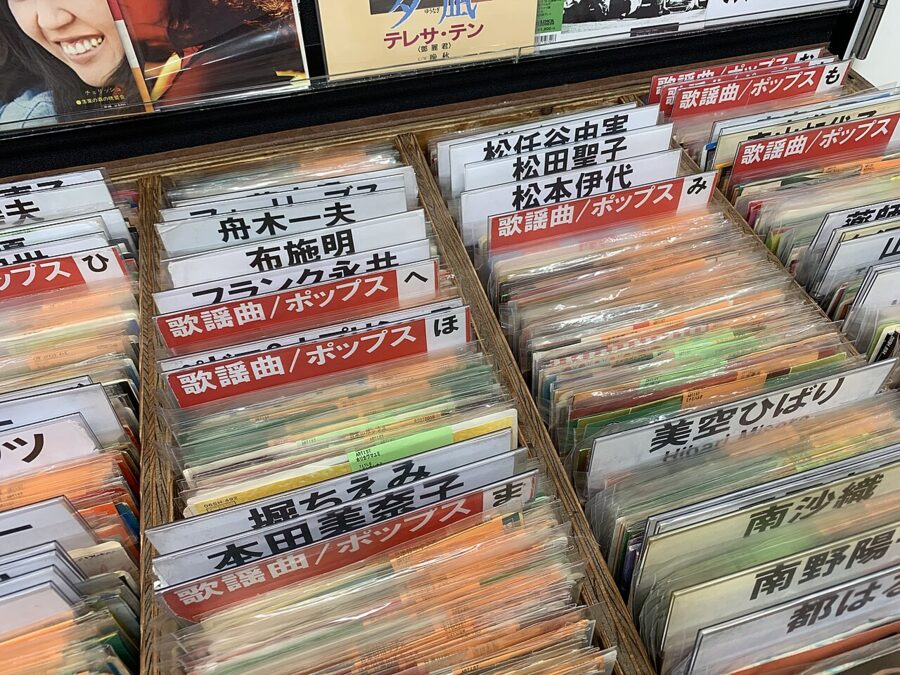

Two years later came so many debuts that the group got a name: 花の82年組 (hana no hachijūni nen gumi), “the flower class of ’82.” Koizumi Kyoko and Nakamori Akina led it, with Matsumoto Iyo, Hayami Yu, Hori Chiemi and Ishikawa Hidemi beside them. In 1985 the lyricist Akimoto Yasushi helped launch おニャン子クラブ (Onyanko Kurabu), a large group of schoolgirls drawn from Fuji TV’s after-school show 夕やけニャンニャン. It disbanded in 1987, but the formula of a big, changing group built around a TV show came back twenty years later in Akimoto’s next idea.
Idol winter and the 1990s groups
When the big prime-time music shows ended around the turn of the 1990s, solo idols lost their stage. Fans and critics call the years from the late 1980s to the mid 1990s アイドル冬の時代 (aidoru fuyu no jidai), “the idol winter.” Singers who had started as idols began calling themselves artists, and record shops filed them under J-pop.
The boys kept the idea alive. SMAP, a group from the Johnny’s agency, survived the winter by doing comedy, cooking segments and drama on TV, and became 国民的アイドル (kokuminteki aidoru), a “national idol” group, until they disbanded at the end of 2016. The winter ended for girls in the late 1990s with SPEED and with モーニング娘。 (Mōningu Musume), formed in 1997 from the runners-up of an audition on the TV show ASAYAN and given their major debut in 1998.
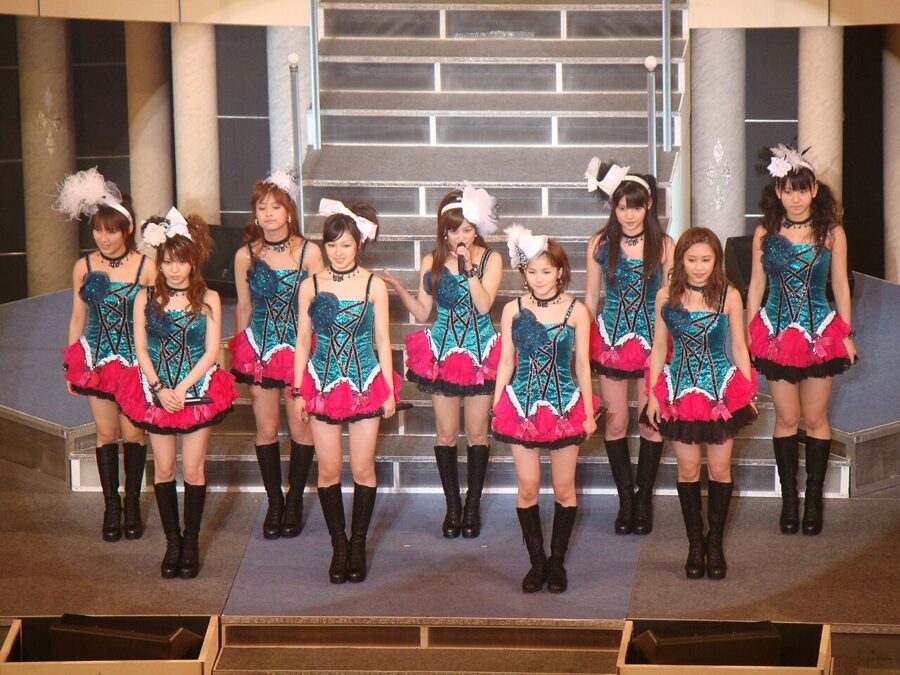

Morning Musume made a habit of something that every big group now does. Members joined in numbered 期 (ki), “generations,” and left one by one, so the group could outlive any single singer.
AKB48 and idols you can go and meet
In 2005 Akimoto opened a small theater in Akihabara for a new group named after the neighborhood. AKB48 played there almost every day, under the slogan 会いに行けるアイドル (ai ni ikeru aidoru), “idols you can go and meet.” In 2008 the group moved to King Records and began packing a handshake ticket into each CD, which turned buying a single into buying time with a member.
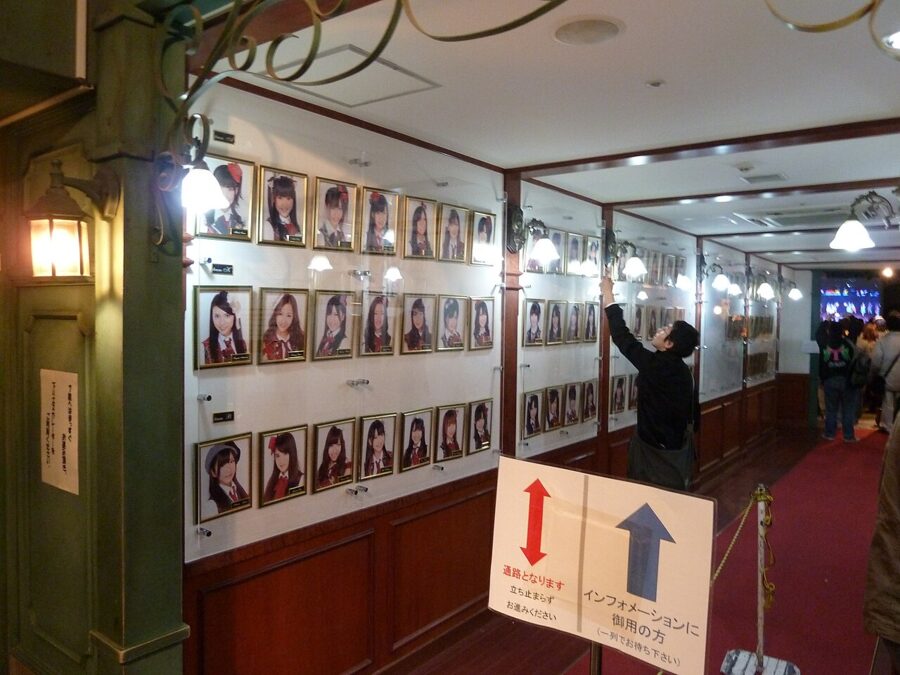

Around 2010 Japanese media started calling the scene アイドル戦国時代 (aidoru sengoku jidai), “the warring-states period of idols,” after the century of civil war in Japanese history. AKB48’s “Heavy Rotation” was everywhere, sister groups opened theaters in Nagoya, Osaka and Fukuoka, Nogizaka46 was formed in 2011 as AKB48’s “official rival,” and Momoiro Clover Z built a following on energy and stunts. More people called themselves idols than at any other time in the history of Japanese show business.
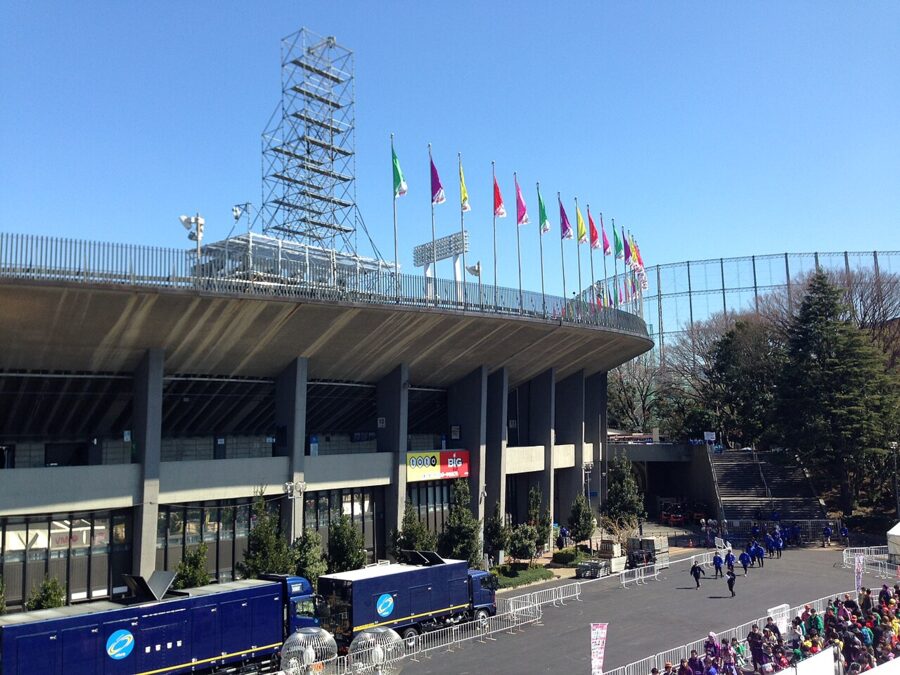

The theater outlived the boom. It reopened after a refit in December 2024, and AKB48 still plays it most weeks.
Johnny’s, the scandal, and STARTO
For about sixty years one agency shaped almost every male idol in Japan. Johnny & Associates, founded by Johnny Kitagawa, produced SMAP, Arashi and dozens of other groups, and TV networks rarely crossed it. Kitagawa died in 2019. In 2023, after a BBC documentary and former trainees speaking publicly, the agency admitted on September 7 that he had sexually abused boys in its care over decades.


On October 17, 2023 the company renamed itself SMILE-UP. and turned to compensating victims, a process it still reports on in 2026. The same day a new management company, STARTO ENTERTAINMENT, was set up to look after the performers; its name was announced in December 2023 and it took over fully in April 2024. Groups such as Snow Man and SixTONES are now STARTO acts, and older fans still call themselves ジャニオタ (janiota), “Johnny’s otaku.”
How fans love an idol
Handshake events and the CD with a ticket inside
A 握手会 (akushukai), “handshake event,” works like this. You buy a single on CD, it comes with a ticket, and the ticket buys you a few seconds with the member of your choice in a long line at a convention hall. Fans who want more seconds buy more CDs, which is how AKB48 singles sold in the millions while many of the discs went unplayed.
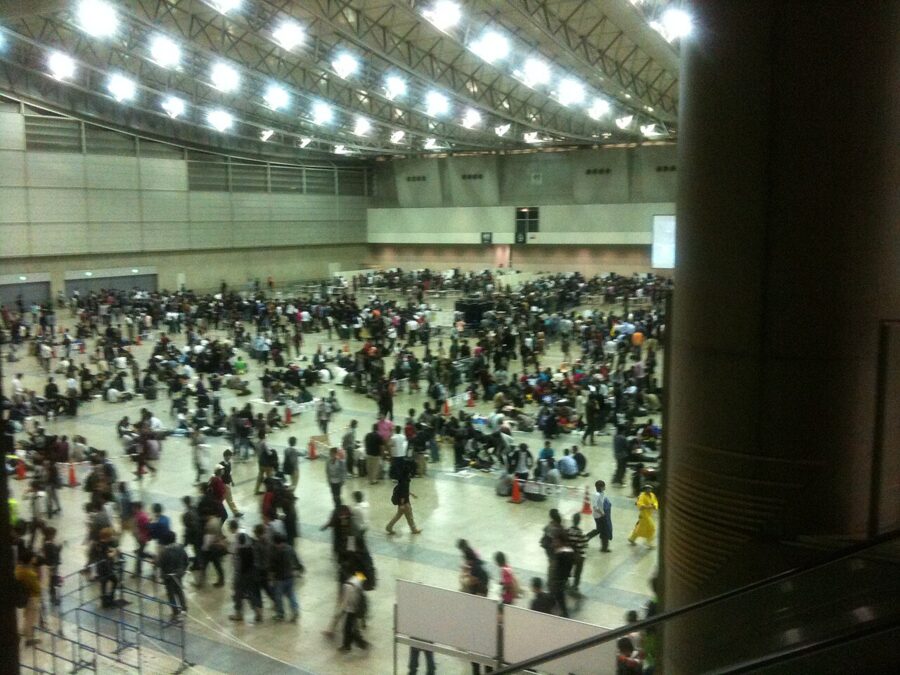

Fans plan those seconds carefully. A short line like 覚えててくれた? (oboetete kureta?, “you remembered me?”, casual) is the goal of many trips, because being recognized has its own word, 認知 (ninchi). The members’ styles get names too: a warm, chatty one has 神対応 (kami taiō), “god-tier treatment,” and a cool, brief one has 塩対応 (shio taiō), “salt treatment.”
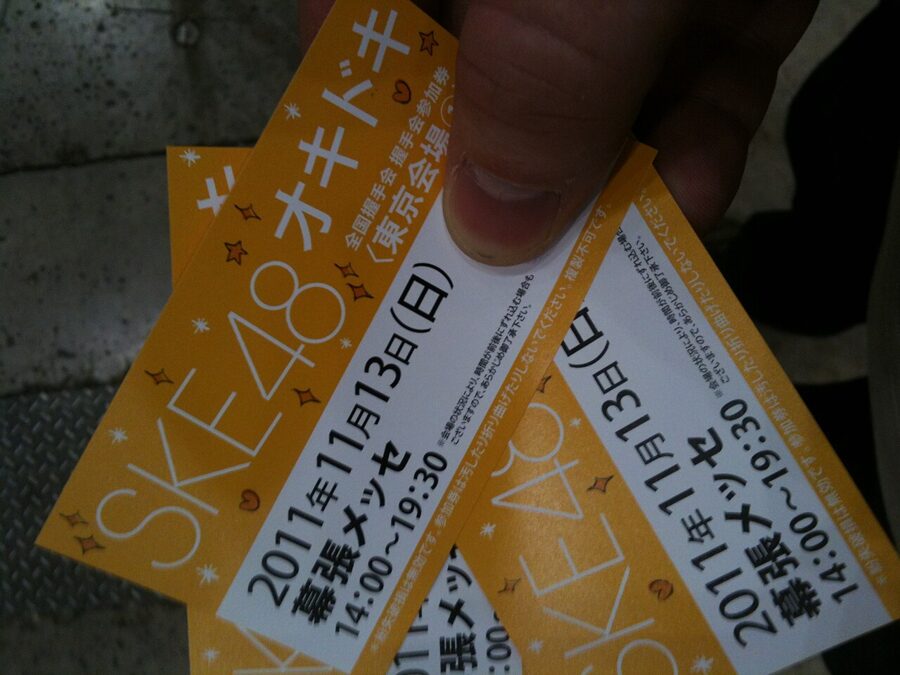

During the pandemic most groups moved these meetings online, as one-to-one video calls called オンラインお話し会 (onrain ohanashikai). In-person handshakes are back: AKB48 held handshake events for its 67th single at Ariake and Makuhari Messe in early 2026. Underground idols have their own version, the 特典会 (tokutenkai), “bonus event,” where a ticket buys a chat and a チェキ (cheki), an instant photo taken with the member.
Penlights, calls and wotagei
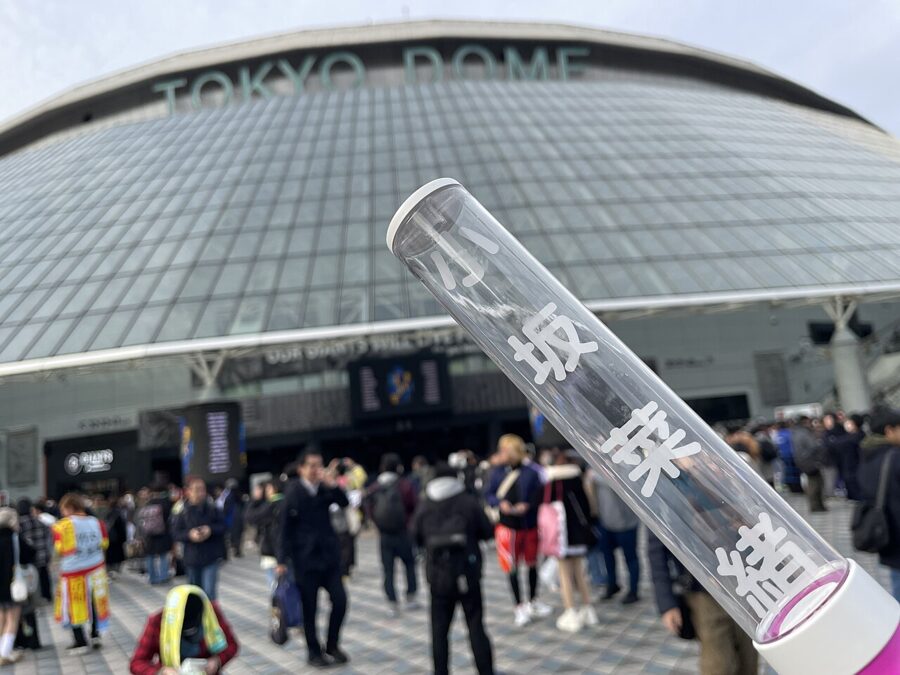
At a concert the crowd holds ペンライト (penraito), battery light sticks that switch between colors. Each member in most groups has a 推しカラー (oshi karā), “oshi color,” and the arena changes color as the song moves from one member’s part to the next. Rules are strict: the AKB48 Theater sells only official penlights and asks that any other stay under 20 cm and no brighter than the official one, and it bans snap-and-glow chemical sticks outright.
Between the lines of a song, fans shout set コール (kōru), “calls,” usually the member’s name. The best-known one, the MIX, is a nonsense chant that runs “tiger, fire, cyber, fiber, diver, viber, jā-jā,” and you will hear it at almost any small idol show.


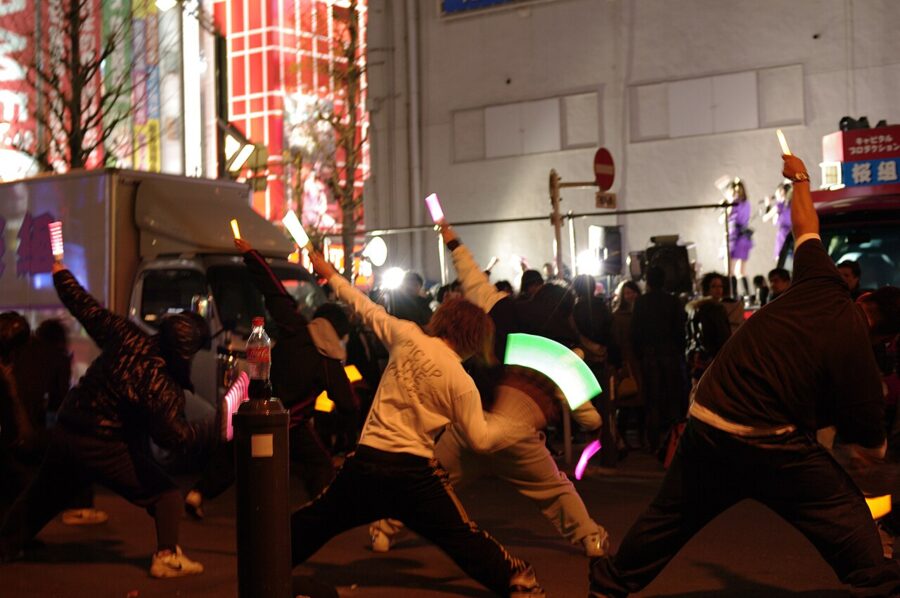
Wotagei, ヲタ芸, means “otaku arts.” The ヲ is the old kana for wo, used on purpose to look geeky. Big concert halls often discourage the arm-swinging versions because they block the view, so most wotagei happens at small live houses, outdoor stages and festivals, or on the street outside afterward.
Elections, the center and graduation
Only some members sing on each single. They are the 選抜 (senbatsu), “the selected,” and the one in the middle of the front row is the センター (sentā), “center.” From 2009 to 2018 AKB48 let fans pick the senbatsu in a yearly 選抜総選挙 (senbatsu sōsenkyo), “general election,” with ballots packed into a CD. The results were broadcast live like a real election night.


Idols do not quit; they 卒業 (sotsugyō), “graduate.” The word is the same one used for leaving school, and the farewell is built like a school ceremony, with a last concert, tears and flowers. It suits a business where members join as teenagers, and it fits the rhythm of the Japanese school year, where students graduate in March.

The dating ban and its critics
Many agencies have put a 恋愛禁止 (ren’ai kinshi), “no romance,” rule into contracts, sometimes written, sometimes understood. The thinking is that fans pay for a feeling of closeness, and a boyfriend breaks it. In 2013 an AKB48 member, Minegishi Minami, shaved her head and apologized on video after a tabloid photographed her leaving a man’s apartment, and the clip shocked viewers far outside the fan world.
The courts have not agreed with each other. In September 2015 the Tokyo District Court ordered a former idol to pay damages for dating a fan. In January 2016 the same court threw out a similar claim, with the judge ruling that dating is part of the “freedom to pursue happiness” and that punishing it with damages went too far, even for an idol.
Critics go further: the pressure on very young members, rules about weight and image, and a fan economy that rewards spending more for a few seconds of attention. The Johnny’s case showed what unchecked power in one company can hide. I think a learner can enjoy the songs and keep all of that in mind.
The words a learner meets
Most idol vocabulary is ordinary Japanese with a narrower meaning. 推す (osu) means “to push” or “to recommend”; fans turned its noun form, 推し, into the person you recommend to everyone. The dictionary definition of 推し活 now covers buying goods, going to events and visiting the places a story is set, for entertainers, athletes and characters alike.
| Word | Reading | Meaning |
|---|---|---|
| 推し | おし oshi | Your favorite, the member you support |
| 推し活 | おしかつ oshikatsu | Everything you do for your oshi |
| 推しメン | おしメン oshimen | Your favorite member of a group |
| 箱推し | はこおし hakooshi | Supporting the whole group (the “box”) |
| 選抜 | せんばつ senbatsu | Members picked to sing a single |
| 卒業 | そつぎょう sotsugyō | Graduation, leaving the group |
| 握手会 | あくしゅかい akushukai | Handshake event |
| 現場 | げんば genba | A live event, “the scene” |
| 遠征 | えんせい ensei | Traveling to a show in another city |
| 生誕祭 | せいたんさい seitansai | A member’s birthday show |
| 地下アイドル | ちかアイドル chika aidoru | “Underground” idol, playing small venues |
People now say 推し about a ramen shop or a baseball player too. Here are the words in sentences you can use, with the politeness level marked.
| Japanese | Romaji | English |
|---|---|---|
| 推しは誰ですか。 | Oshi wa dare desu ka. | Who is your favorite? (polite) |
| 推しは誰? | Oshi wa dare? | Who’s your oshi? (casual) |
| 箱推しです。 | Hakooshi desu. | I support the whole group. (polite) |
| 明日は現場だ。 | Ashita wa genba da. | I’ve got a show tomorrow. (casual) |
| 卒業おめでとうございます。 | Sotsugyō omedetō gozaimasu. | Congratulations on your graduation. (polite) |
Seeing idols live in Japan
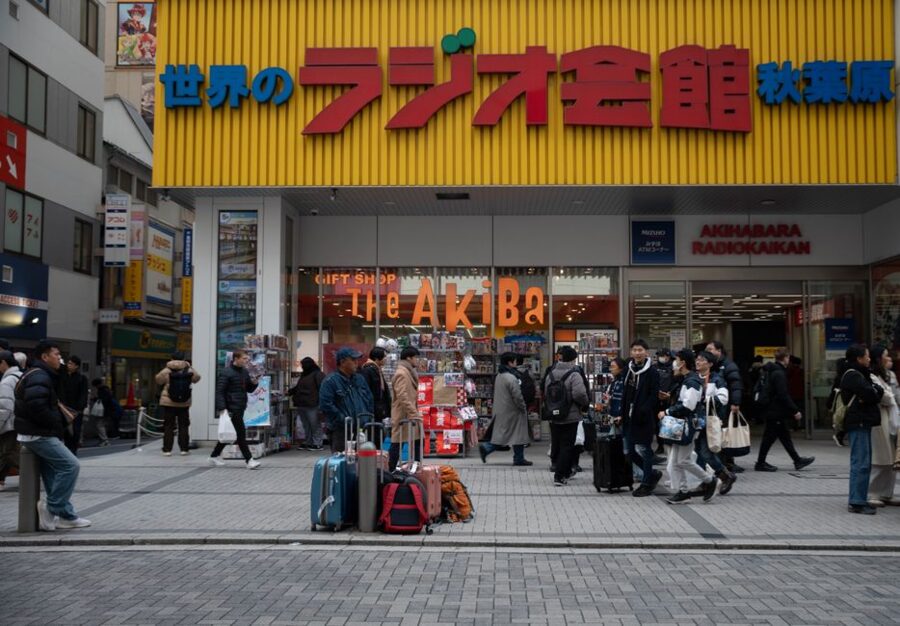
The AKB48 Theater in Akihabara
The theater is on the 8th floor of Don Quijote Akihabara, 4-3-3 Sotokanda, Chiyoda, about five minutes’ walk from the Electric Town (電気街口, denkigai-guchi) exit of JR Akihabara Station. You cannot buy a ticket at the door. Here is how it works, from the theater’s own steps to see a show (as of November 2026):
- Register for a free account on the AKB48 Ticket Center site, find a show and apply. Winners are drawn by lottery and get an email; you then pay in advance.
- Fan club and video-service members get earlier application windows, and there are separate allocations for women and children of junior high age and under, and for families and couples.
- The lobby opens two hours before the show. Thirty minutes before, the 抽選入場会 (chūsen nyūjōkai), the entry-order lottery, starts; arrive late and you can only stand at the back.
- Bring photo ID; a passport works. Bags, backpacks and anything that records go in the lobby lockers, and everyone walks through a metal detector.
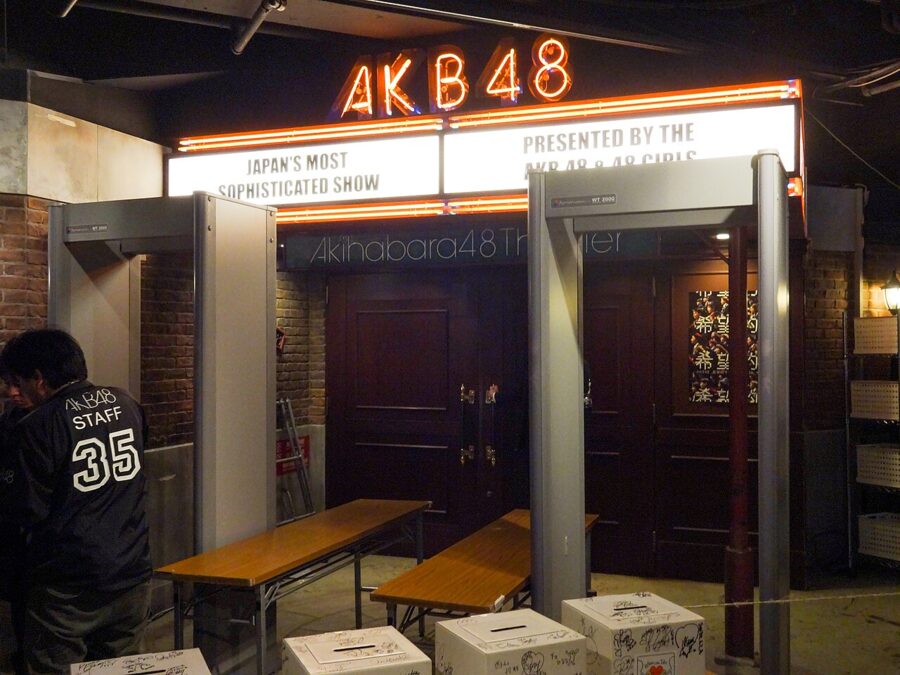

The theater’s question-and-answer page adds the rules that catch visitors out. Tickets go only to the winner and can never be passed on or resold; copied or expired ID is refused, and photographing members is banned even in the lobby. Prices are listed on the Ticket Center when you apply.
Live houses and underground idols
Below the TV groups sits a much bigger world of 地下アイドル (chika aidoru), “underground idols,” also called ライブアイドル (raibu aidoru), “live idols.” They play small 対バン (taiban) shows, where five or ten groups share one bill and each gets twenty or thirty minutes. Tickets cost far less than an arena show, and after the set the members come out to the merchandise table for the tokutenkai.
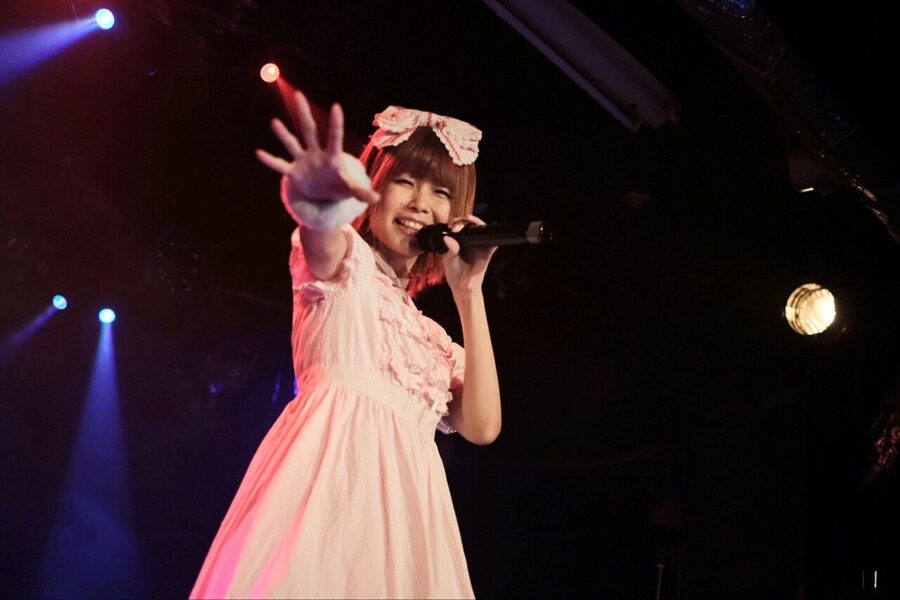

Akihabara, Shibuya and Shinjuku all have live houses that book idol shows; search venue schedules for アイドル and the date. Etiquette matters more in a room of 100 people than in a dome. Ask before you film (most shows say 撮影禁止, satsuei kinshi, “no photos”), watch what the regulars do for the calls, and do not reach for the members.

Tokyo Idol Festival

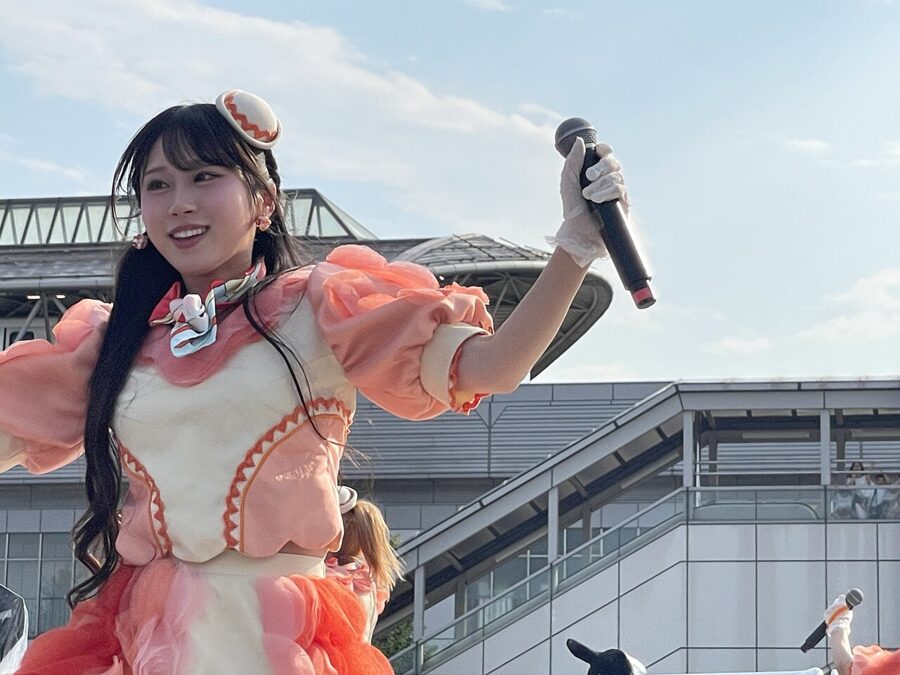
If you want to see many groups in one trip, go to the Tokyo Idol Festival in August. TIF 2026 ran from July 31 to August 2 across outdoor and indoor stages in the Odaiba and Aomi waterfront area, with 212 groups, 1,495 idols and about 89,000 fans over three days. As of November 2026 the 2027 dates have not been announced.

Arena tickets, lotteries and the resale law
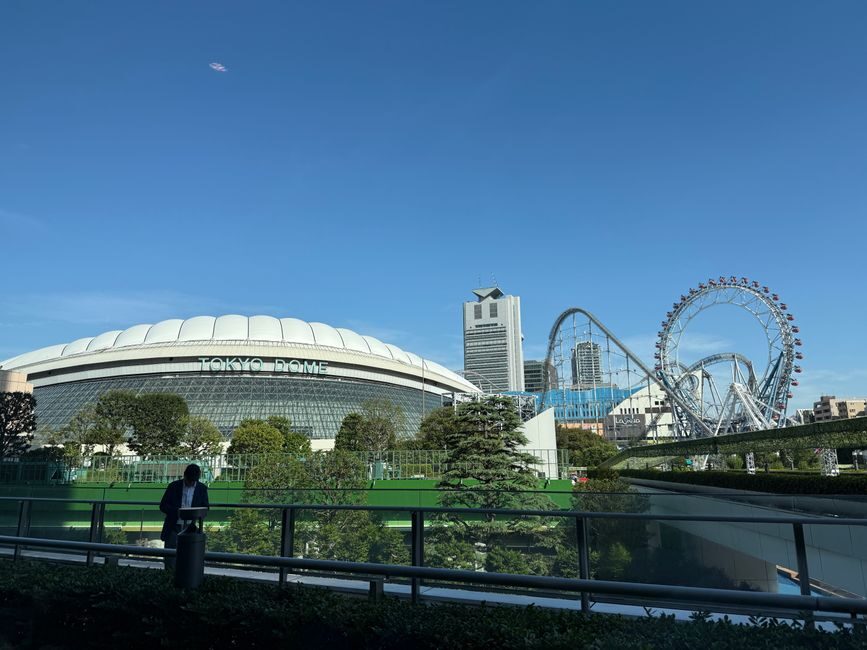
Tickets for big idol concerts are almost always sold by 抽選 (chūsen), lottery, and fan club members get the first and best draw. You apply in a 先行 (senkō), “advance,” window, wait for a result email marked 当選 (tōsen, “won”) or 落選 (rakusen, “lost”), then pay. Many lotteries ask for a Japanese phone number or address, which is the biggest hurdle for visitors; general sale, if there is one, comes later and sells out fast.
Do not buy from a tout. Since June 2019 Japan’s ticket resale law has banned reselling designated tickets above face value, repeatedly and without the organizer’s consent, and buying them in order to resell. A designated ticket is one that says on its face that resale without consent is banned and names the date, venue and seat or the holder. The penalty is up to a year in prison, a fine of up to 1,000,000 yen (about $6,400), or both.
The law does not punish the buyer, but the venue will. Many big idol shows check names and photo ID at the gate, so a resold ticket in someone else’s name usually just does not get you in. If a group runs an official resale (公式リセール, kōshiki riseru) at face value, use that; otherwise, the lottery really is the only safe route.
Learning Japanese from idols
Idol songs are a good first step into Japanese lyrics: sung clearly, often in unison, with a chorus that repeats, and full of school words: 放課後 (hōkago, after school), 制服 (seifuku, uniform), 先輩 (senpai, an older student), 片想い (kataomoi, a one-sided crush). Pick one song, find the lyrics, and look up every word before you listen again.

YOASOBI’s 2023 hit is literally called アイドル, written as the theme of the anime 【推しの子】 (Oshi no Ko), a story about the dark side of the idol business. It is fast, but the title words come round often enough to catch, and the anime itself is a crash course in fan vocabulary.
Variety shows are even better for listening. Most big groups have a weekly show where members play games and chat, and Japanese TV runs テロップ (teroppu), on-screen captions of what people say. You hear casual young speech and read it at the same time, which no textbook gives you.
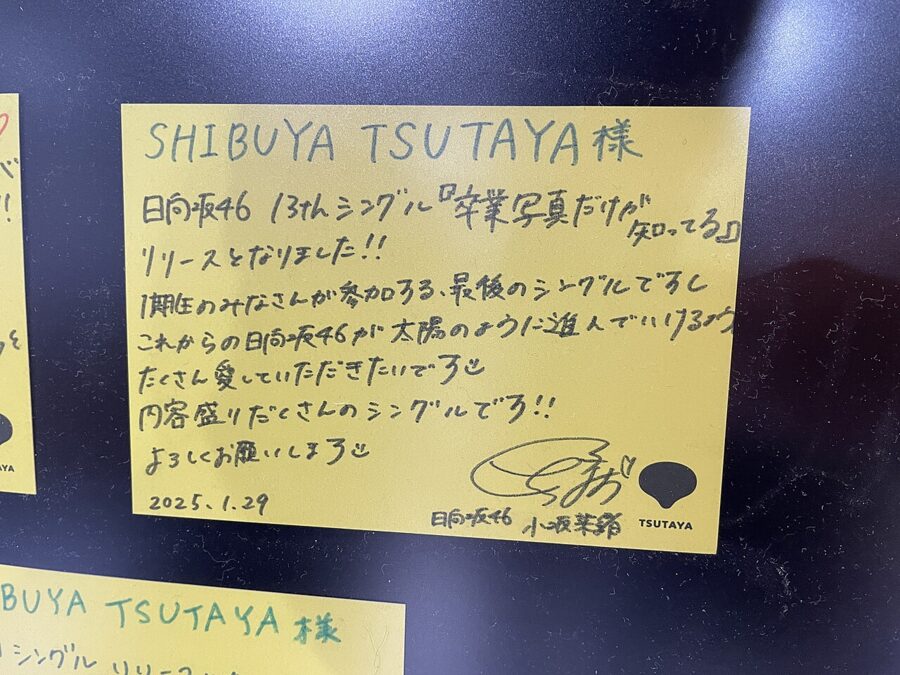

Members also write blogs on their groups’ official sites, short posts in casual Japanese full of ね and よ, good reading practice once you know a few hundred kanji. If you keep vocabulary flashcards, add a few fan words to them; you will meet them again in places that have nothing to do with idols.
Start today with one sentence. Next time someone in Japan mentions a band, a team or a ramen shop with a little too much enthusiasm, ask them 推しは誰ですか. You will learn more about that person in five minutes than any phrasebook can teach.