
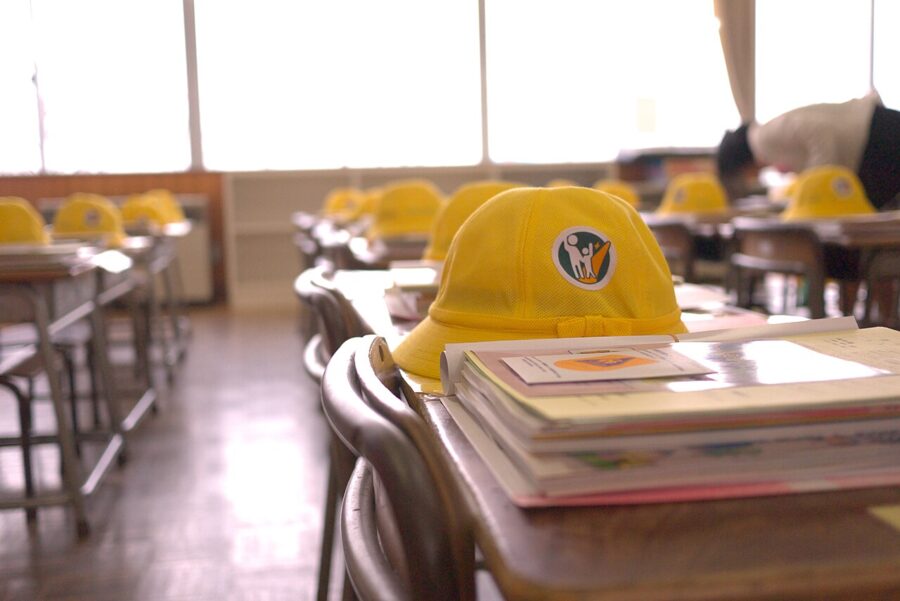
A Japanese six-year-old starts school in April with a leather backpack on her shoulders that cost her parents, on average, ¥62,034 (about $400). It is called a ランドセル (randoseru), it is meant to last all six years of elementary school, and families often order it nearly a year ahead. That one purchase tells you most of what is different about the Japanese school year: it starts in spring, it runs on ceremony, and the whole country moves through it on the same calendar.
Here is the year term by term, from the entrance ceremony to the exam results in March, with the words you need for each part. School vocabulary runs all through Japanese culture, from anime to the January news. Dates and rules are as of November 2026.


目次 Contents
Why the year starts in April
The rule is written into law. Article 59 of the enforcement regulations of the School Education Act says the elementary school year begins on April 1 and ends on March 31, and the same calendar applies to junior high and high schools. Universities follow it too.
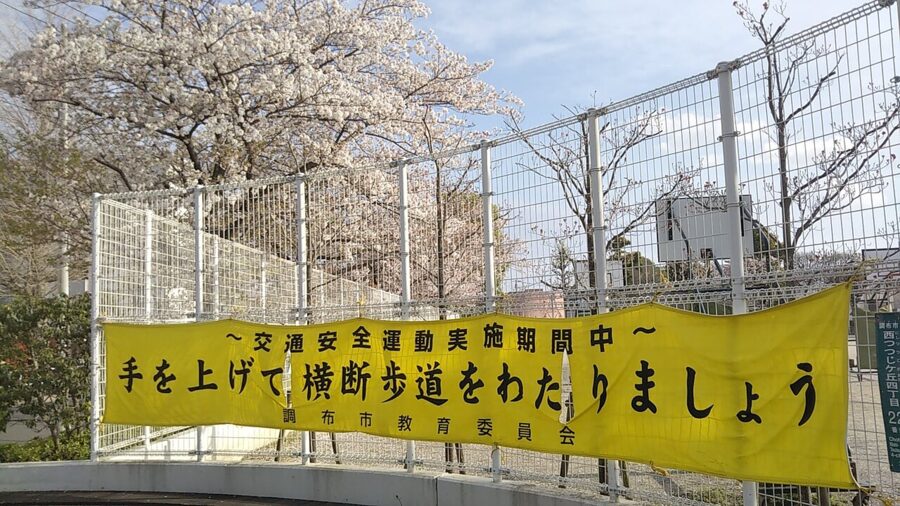
The deeper reason is money. The national fiscal year switched to an April start in 1886, and schools, paid for out of that budget, moved with it: teacher-training colleges first, then elementary schools, which had generally switched by the 1890s. Some earlier Meiji schools had started in September on the Western model. The cherry blossoms are the story people tell, and they fit so well that most Japanese people would name them first.
That link explains one small, important word. 年度 (nendo) is a year that runs April to March, used for budgets, companies and schools. 2026年度 (nisen nijūroku nendo) is the school year from April 2026 to March 2027, written 令和8年度 (Reiwa hachi nendo) on official papers. The calendar year is 年 (nen); the school year is 年度.
A move to September comes up every few years. The last serious push was in 2020, when the pandemic closed schools for months; the government studied it and decided against it.
Three terms and three breaks
Most public schools split the year into three 学期 (gakki), terms. The exact dates are not national: a cabinet order under the School Education Act lets each local board of education set terms and holidays for its public schools, and private schools write their own. A school in Hokkaido has a shorter summer break and a longer winter one than a school in Tokyo.
| Term | Typical dates | Break that follows |
|---|---|---|
| 一学期 (ichi-gakki), first term | Early April to around July 20 | 夏休み (natsu-yasumi), summer break, to late August |
| 二学期 (ni-gakki), second term | Late August or September 1 to around December 25 | 冬休み (fuyu-yasumi), winter break, to about January 7 |
| 三学期 (san-gakki), third term | Early January to around March 24 | 春休み (haru-yasumi), spring break, to early April |
Some schools use two terms instead, 前期 (zenki) and 後期 (kōki), with a few days off in October. Either way, summer break sits in the middle of the year. Students come back to the same class and teacher, carrying workbooks, a diary and often a 自由研究 (jiyū kenkyū), an independent research project.
So do Japanese students go to school year-round? No, but club practice runs through most breaks and many students spend part of summer at 塾 (juku), cram school. Winter break is short and covers New Year, with its own food and New Year games.
Grades and ages
Children start elementary school in the April after they turn six. The cut-off is April 1, because Japanese law has you reach a new age the day before your birthday: a child born on April 1 is the youngest in the grade above one born on April 2. Children born from January to April 1 are 早生まれ (hayaumare), “early born.”
The system is 6-3-3-4: six years of 小学校 (shōgakkō), elementary school; three of 中学校 (chūgakkō), junior high; three of 高校 (kōkō), high school; four of 大学 (daigaku), university. Only the first nine are compulsory, though nearly everyone goes on to high school. Grades restart at each level, so a fourteen-year-old is 中学2年生 (chūgaku ninensei), or 中2 (chū-ni), and a seventeen-year-old is in 高2 or 高3 (kō-ni, kō-san), depending on the birthday.
The ceremonies that frame the year
The year opens and closes with formal ceremonies in the gym. Children sit in rows of folding chairs, the principal speaks from a stage hung with red-and-white bunting, and everyone bows together on cue. Parents come in suits.
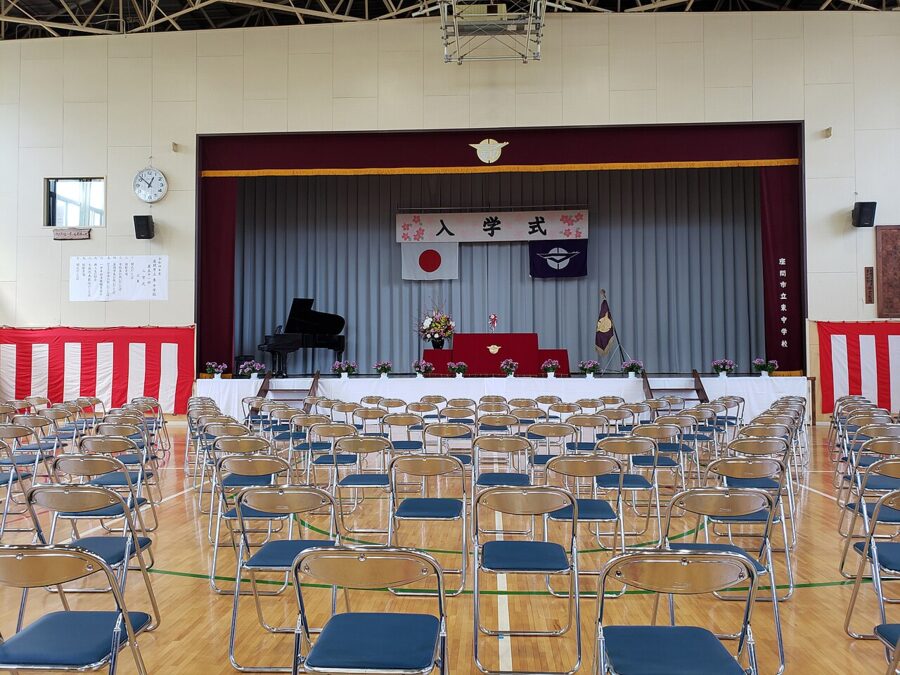

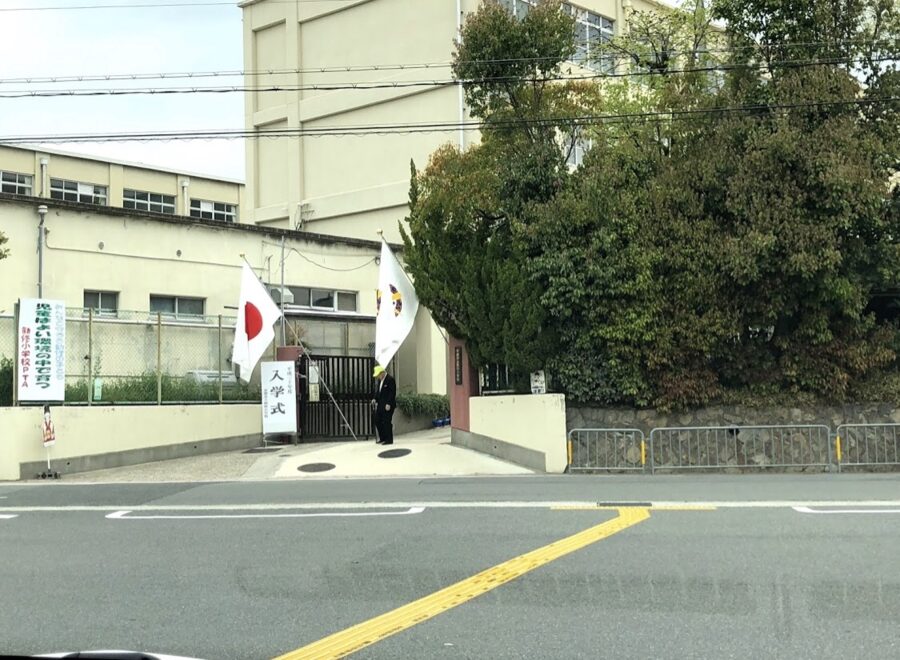
入学式 (nyūgakushiki), the entrance ceremony, falls in the first week or so of April. 入学 (nyūgaku) is “entering school” and 式 (shiki) is “ceremony,” as in 結婚式 (kekkonshiki), a wedding. The congratulation is 入学おめでとう (nyūgaku omedetō), casual, or 入学おめでとうございます (nyūgaku omedetō gozaimasu), polite.
Each term opens with a 始業式 (shigyōshiki), a start-of-term assembly, and closes with a 終業式 (shūgyōshiki), the day students carry home their 通知表 (tsūchihyō), the report card.
卒業式 (sotsugyōshiki), the graduation ceremony, is in March: early March for most high schools, mid to late March for everyone else. Graduates walk up one at a time to take a 卒業証書 (sotsugyō shōsho), a diploma, from the principal with both hands, then bow. Teachers cry about as often as students.
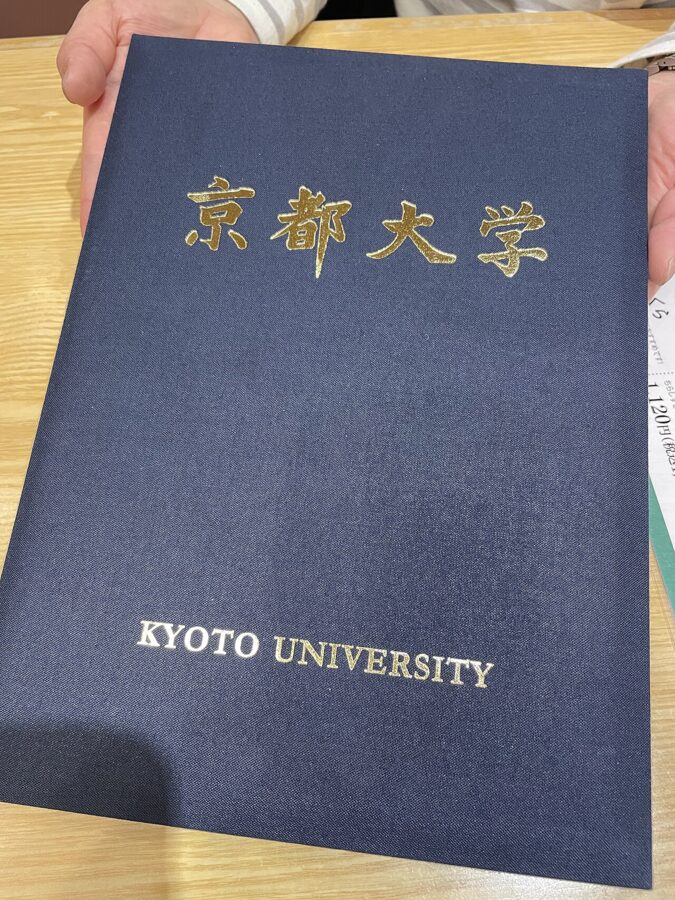

Two graduation customs are familiar from manga. Where boys wear the stand-collar 学ラン (gakuran), a girl may ask a graduating boy for his 第二ボタン (dai-ni botan), the second button, the one nearest the heart. And women graduating from university often wear kimono with 袴 (hakama), pleated trousers, and boots, the look of female students a century ago. Public school teachers also rotate between schools, so late March brings a 離任式 (rininshiki), a farewell ceremony for those leaving.
Sports day, school trips and the culture festival
Between the ceremonies come the events students remember. 運動会 (undōkai), sports day, is the elementary school name; junior high and high schools often say 体育祭 (taiikusai). The school splits into 紅組 (akagumi) and 白組 (shirogumi), red and white teams, and families arrive early with picnic sheets. It used to be an autumn fixture, but many schools now hold it in May or June.
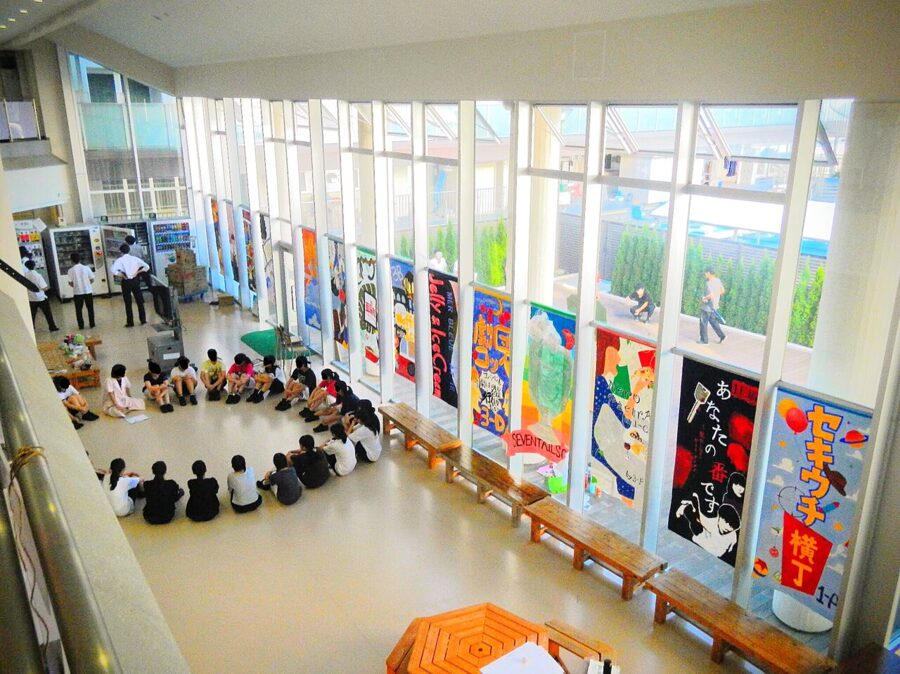
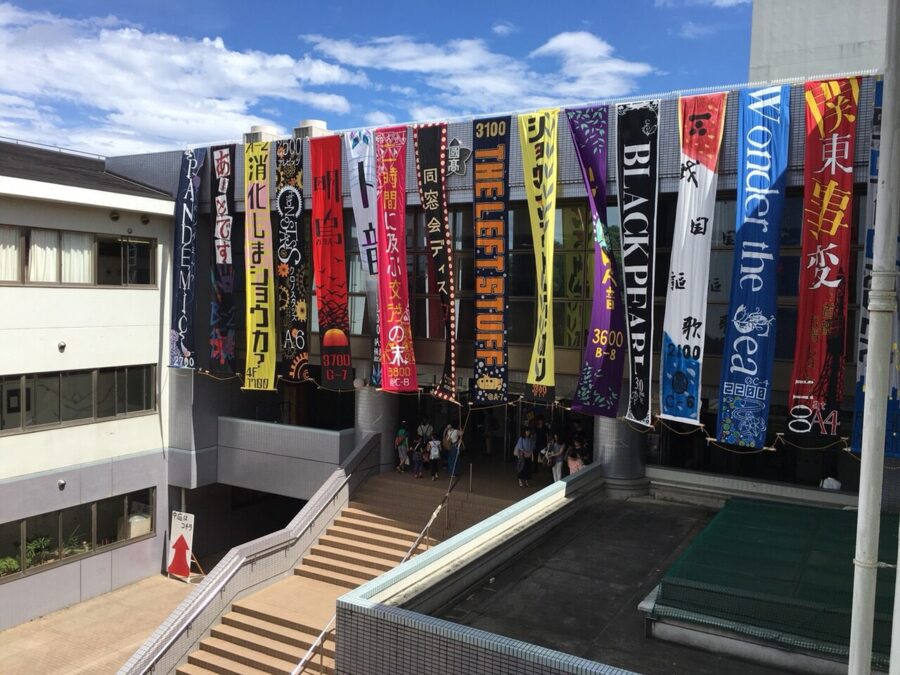
The culture festival, 文化祭 (bunkasai), usually comes in autumn and opens the school to visitors with class cafés, haunted houses and concerts. I cover it in the gakuensai, Japan’s school festivals, including how to visit one.


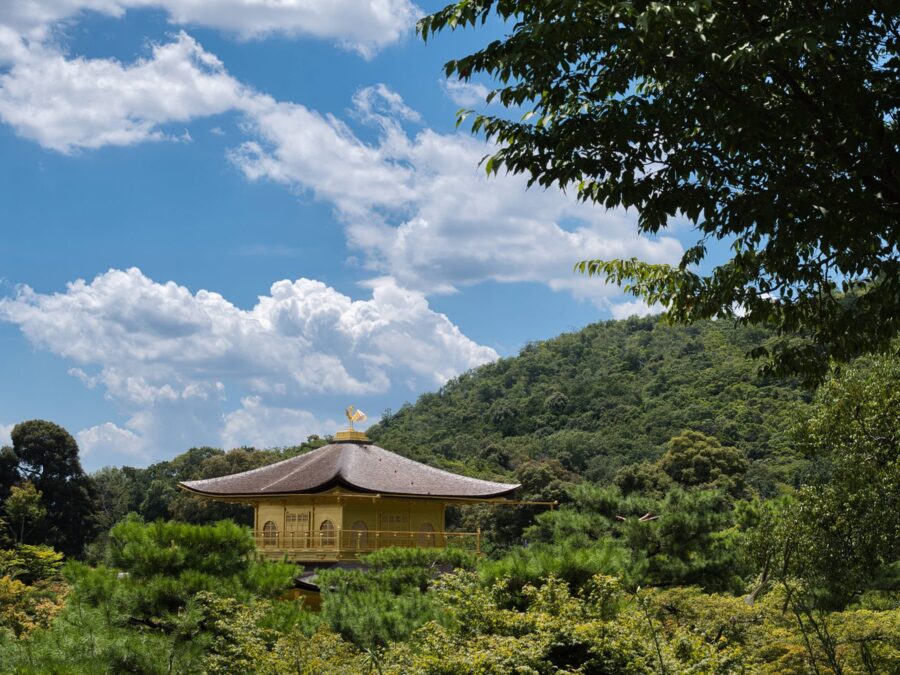
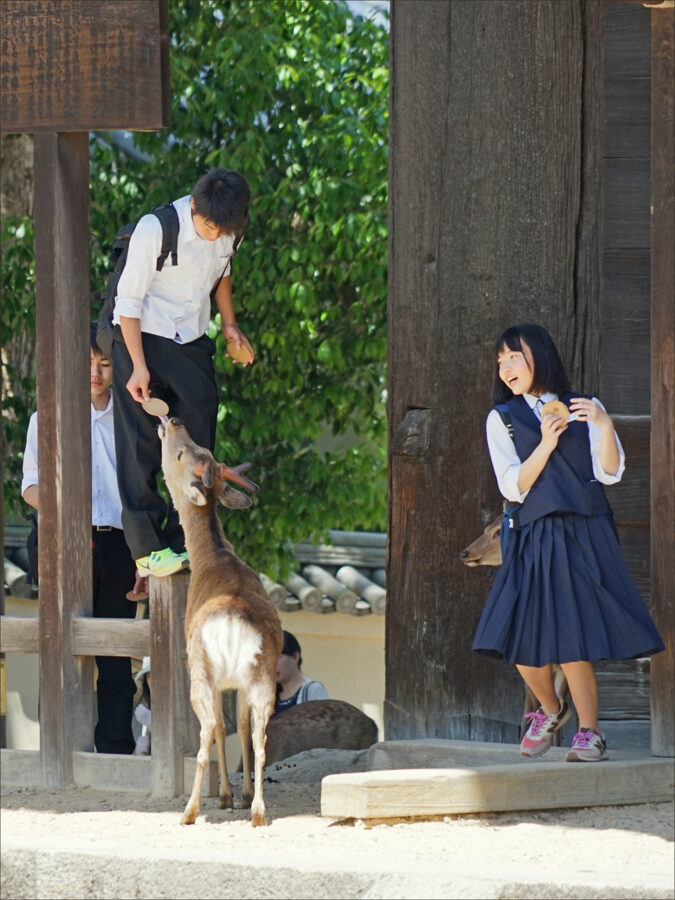
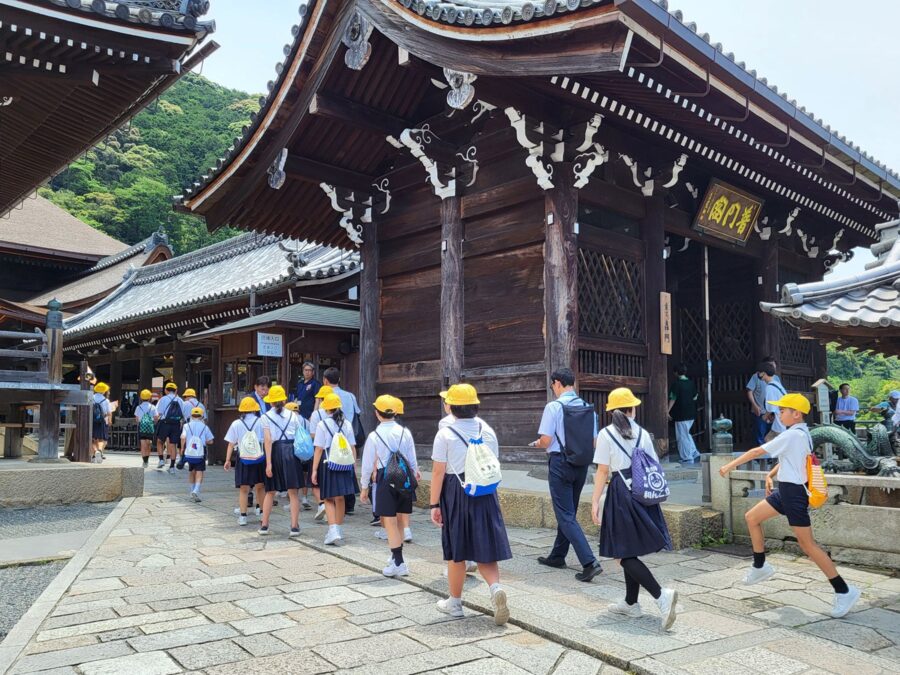
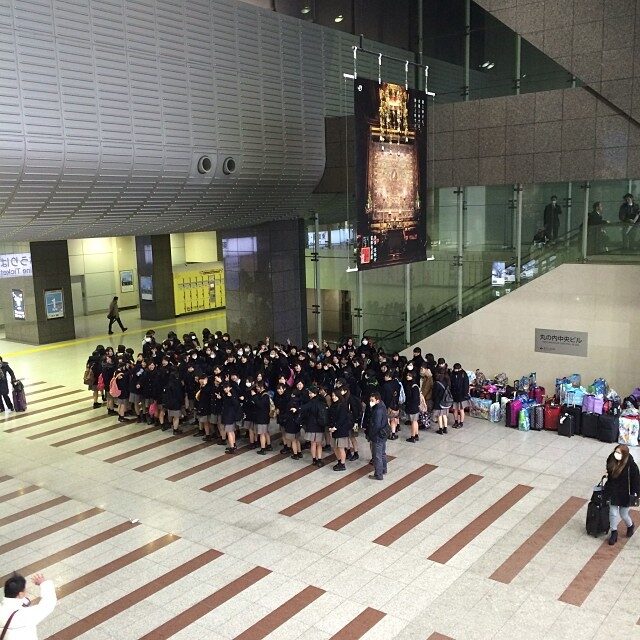
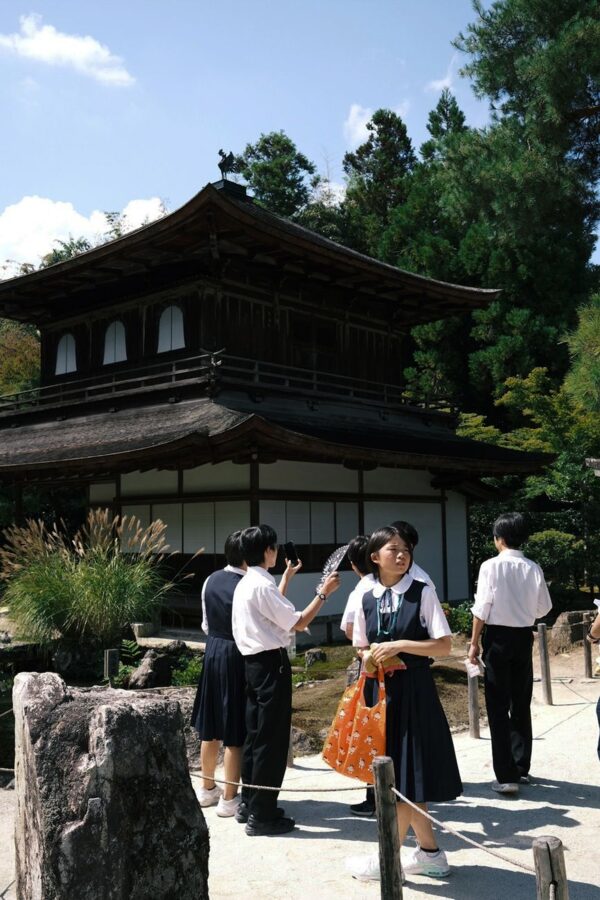
The 修学旅行 (shūgaku ryokō), the school trip, is far bigger than a museum outing: a whole grade travels together for two to four nights, usually in the last year of each school level. Junior high schools have sent students to Kyoto and Nara for generations, many of them in spring; elementary schools lean to autumn. Students carry a しおり (shiori), a booklet of schedules, rules and room lists.

A school day, from the gate to the club room
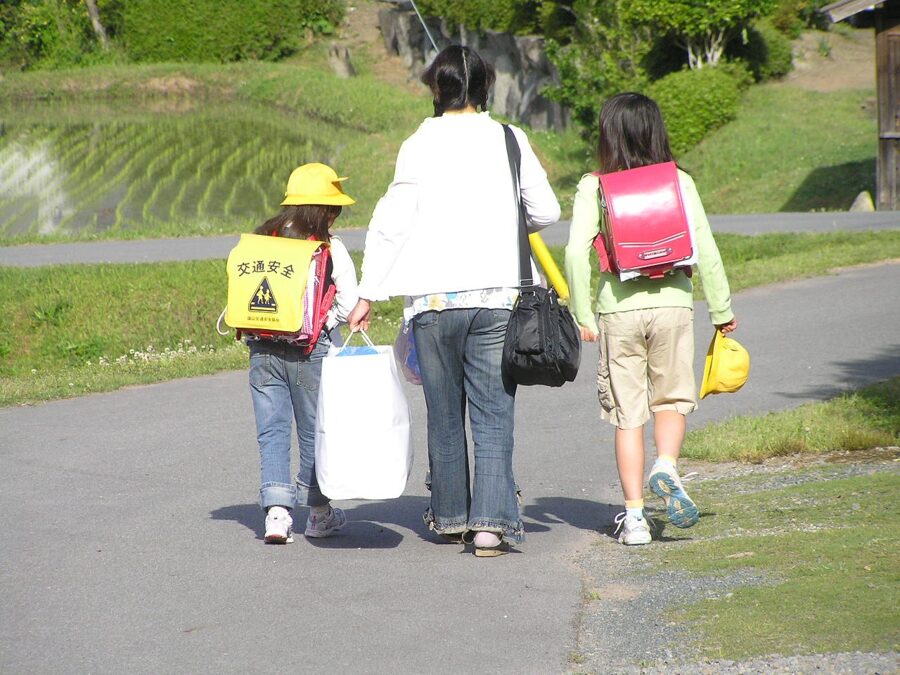
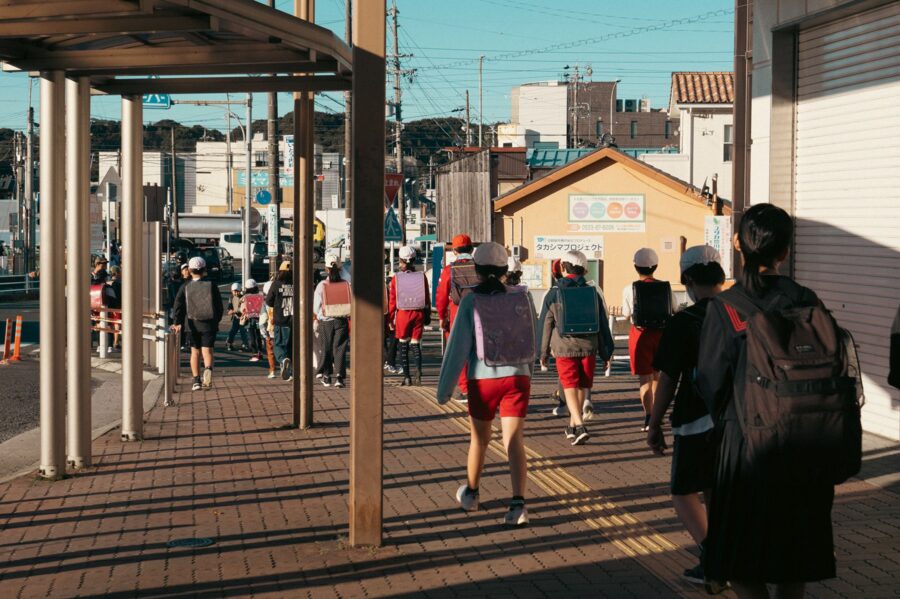
Elementary children walk to school; there are almost no school buses. In many areas they meet at a corner and walk in a line behind the oldest child, a habit called 集団登校 (shūdan tōkō). Junior high students walk or cycle, and high school students often take the train.

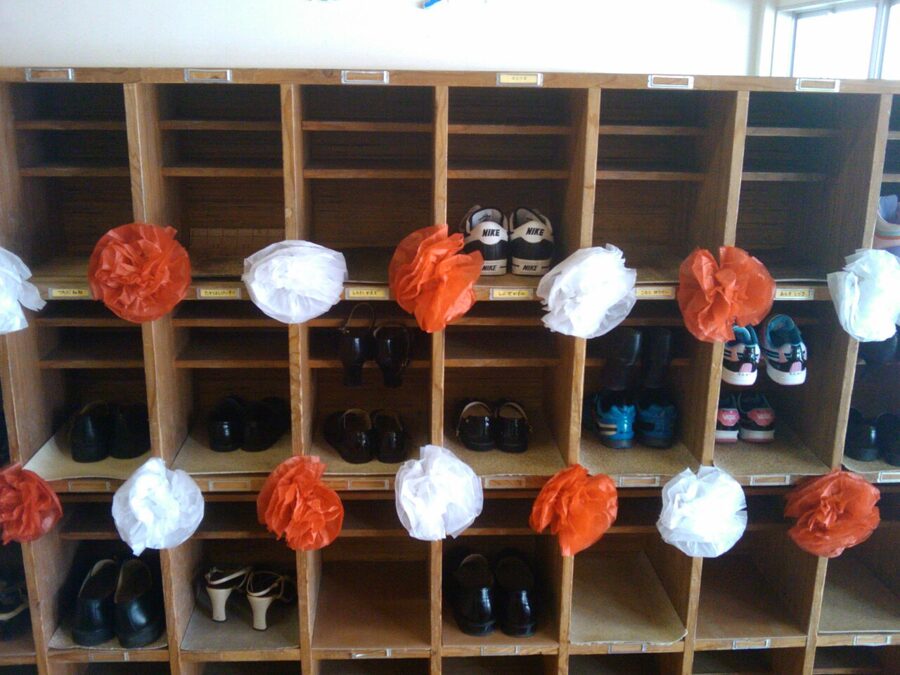
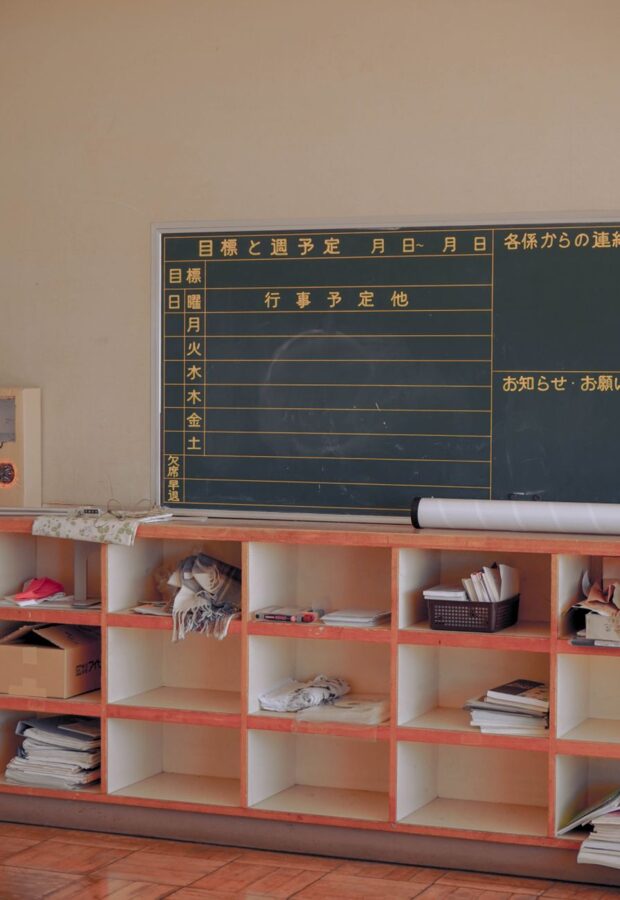
At the door, outdoor shoes go in the getabako and uwabaki go on. The day starts with 朝の会 (asa no kai), the morning meeting, led by the homeroom teacher, the 担任 (tannin). The 日直 (nicchoku), students on daily duty, call 起立 (kiritsu), stand, 礼 (rei), bow, and 着席 (chakuseki), sit, at the start of each lesson.
Lessons are 45 minutes in elementary school and 50 in junior high and high school. The 学級 (gakkyū), the class, keeps its own room, and the teachers come to it.
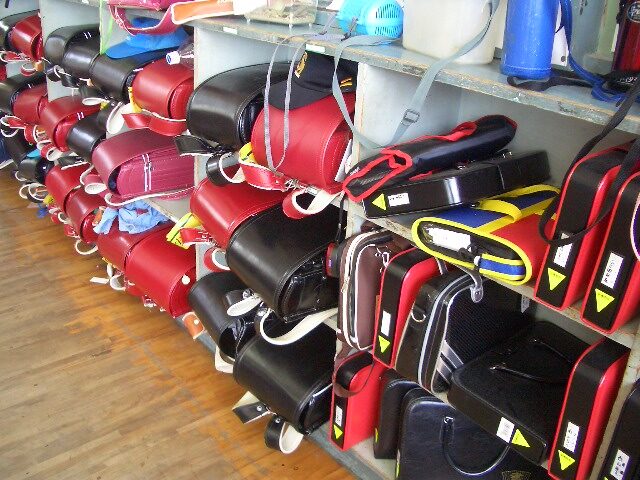

The word randoseru comes from the Dutch ransel, a soldier’s pack. The randoseru makers’ association survey for April 2026 starters put the average price at ¥62,034, with nearly half of families paying ¥65,000 (about $420) or more. Shopping starts so early that it has a nickname, ラン活 (rankatsu), randoseru hunting.
School lunch, and what changed in April 2026
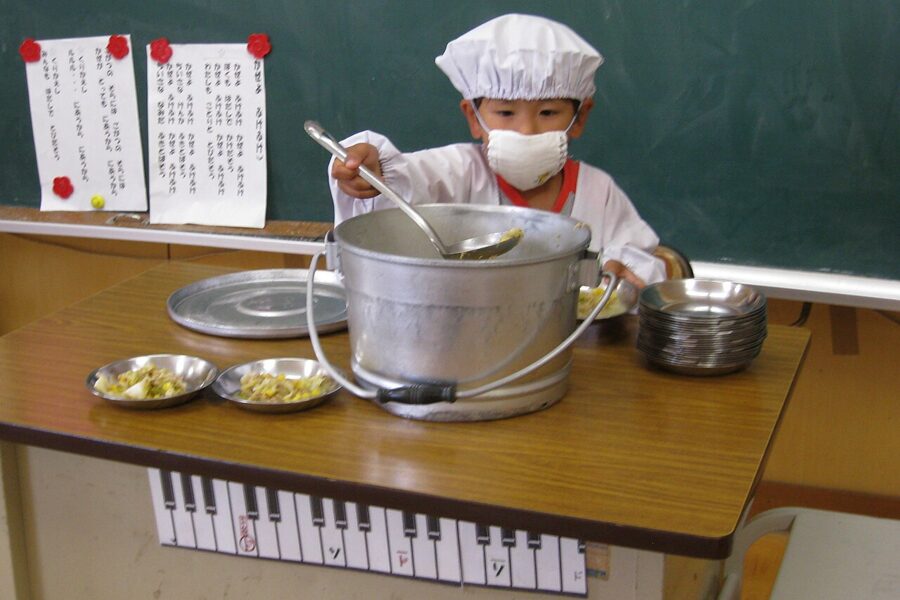
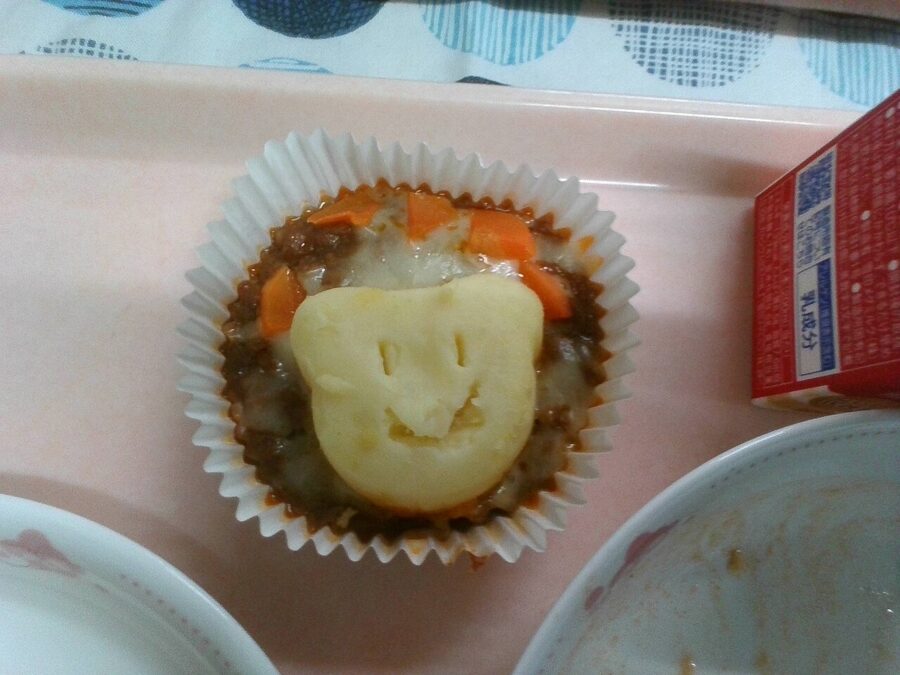
Most public elementary and junior high schools serve 給食 (kyūshoku), school lunch, eaten together in the classroom. There is no cafeteria and no choice of dish. Students on 給食当番 (kyūshoku tōban), lunch duty, put on white smocks and caps, fetch the food from the kitchen and serve everyone else.

A tray holds rice or bread, a main dish, a soup or side and a carton of milk. The bread is often a コッペパン (koppepan), the soft roll that has a place in my guide to Japanese bread. Ask adults about school lunch and curry rice and 揚げパン (agepan), sugared fried bread, come up again and again.
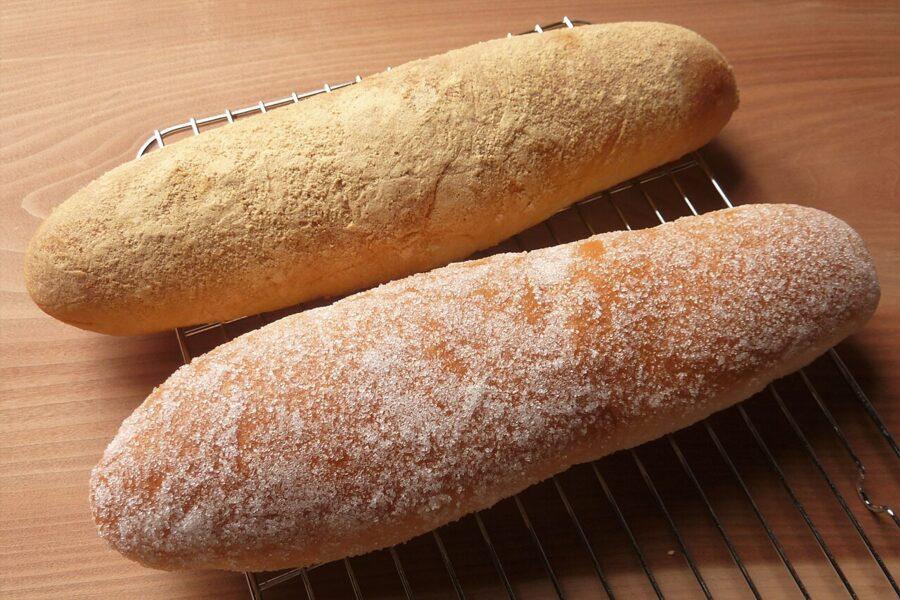
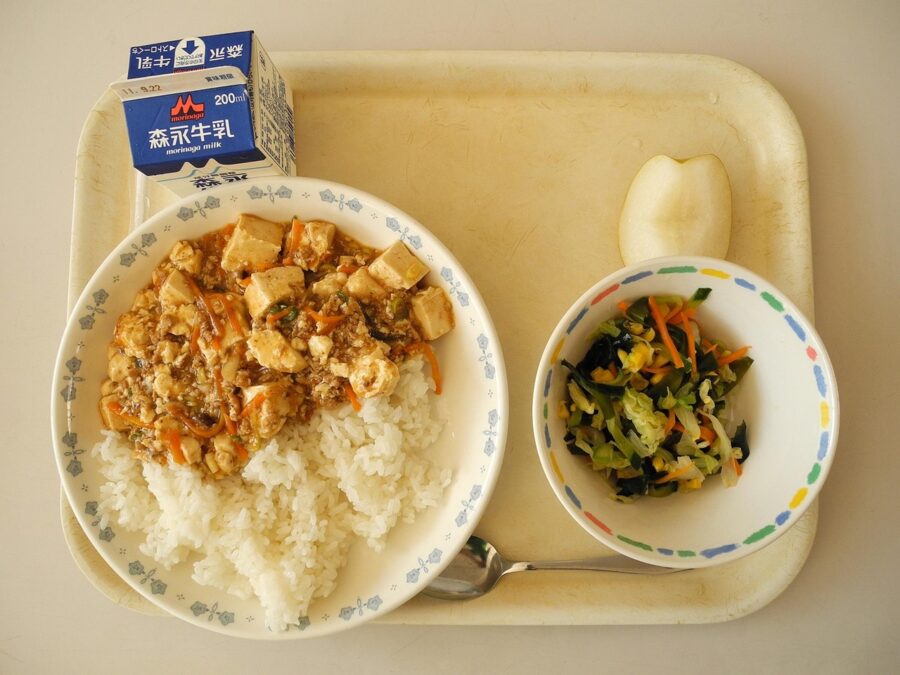
The big change is recent. From April 2026, under what the Ministry of Education calls the radical reduction of school lunch costs, the state pays local governments ¥5,200 (about $34) per public elementary pupil per month toward lunch, for eleven months a year. The ministry avoids the phrase “free lunch”: a city whose lunches cost more can still charge parents the difference. Others, such as Saitama and Yokohama, top it up so parents pay nothing, and junior high lunch is outside the national scheme.
Cleaning time: お掃除 (o-sōji)
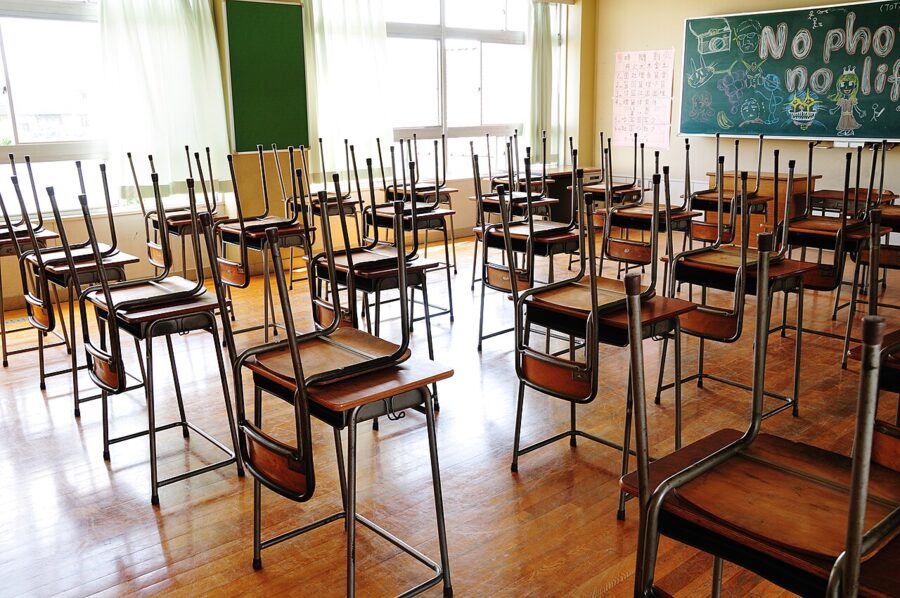
After lunch or at the end of the day, students clean their own school. 掃除の時間 (sōji no jikan), cleaning time, is usually fifteen to twenty minutes: chairs go up on the desks, desks go to the back, and teams sweep, wipe the floor with damp cloths called 雑巾 (zōkin), clean windows and scrub toilets. Most schools have no janitor doing this.

Those school toilets have folklore of their own: Hanako-san, the girl who answers when you knock on the third stall, belongs to 学校の怪談 (gakkō no kaidan), the school branch of Japanese ghost stories.
Uniforms
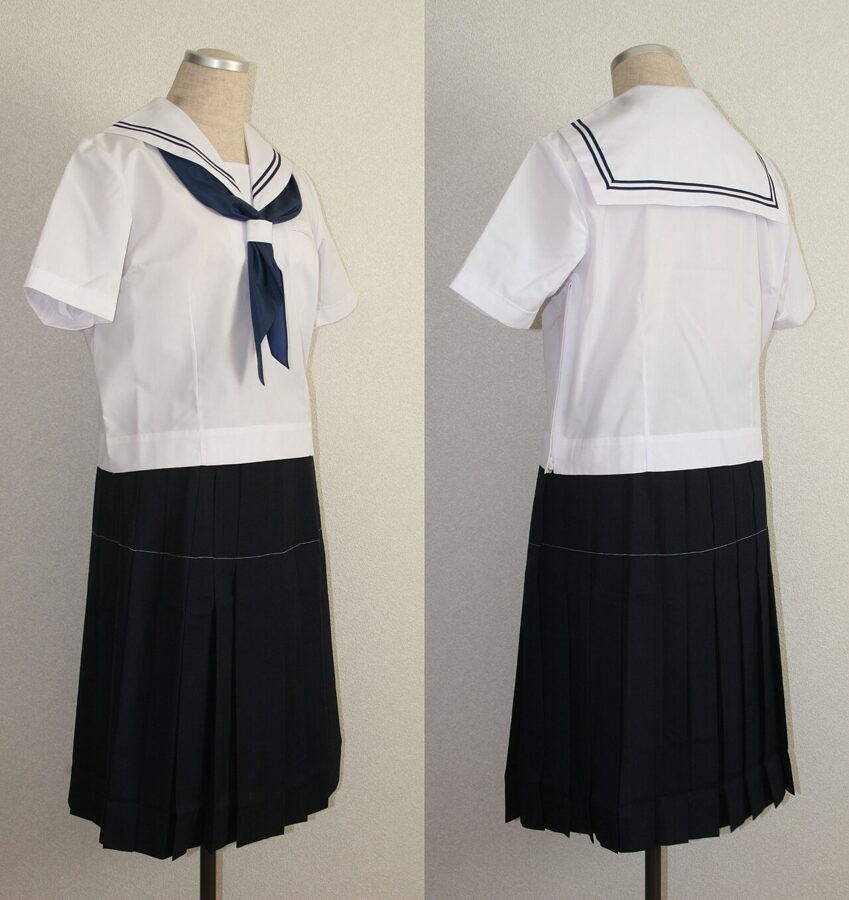
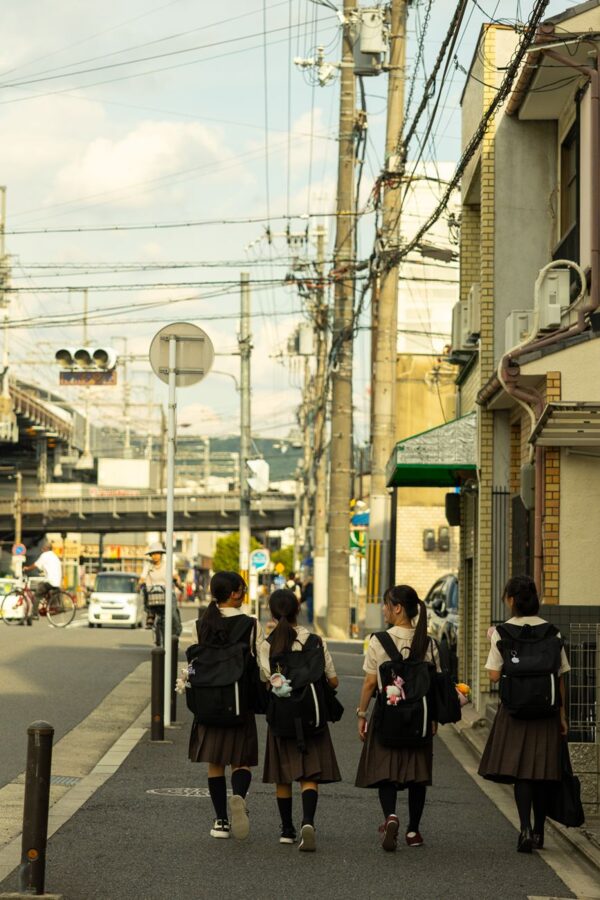
Most junior high and high schools have a 制服 (seifuku), a uniform; most public elementary schools don’t. The classic pair is the black 学ラン and the sailor-collar セーラー服 (sērā-fuku), but blazers, ブレザー (burezā), are now more common, and many schools have added trousers as an option for girls.

Bukatsu: club life, and the 2026 reform
After classes, most junior high and high school students go to 部活 (bukatsu), club activities. 運動部 (undōbu) are sports clubs; 文化部 (bunkabu) are culture clubs such as brass band, art and calligraphy. Clubs practice most weekdays and often weekends, and a high school baseball team’s year builds toward the national tournament at Kōshien.
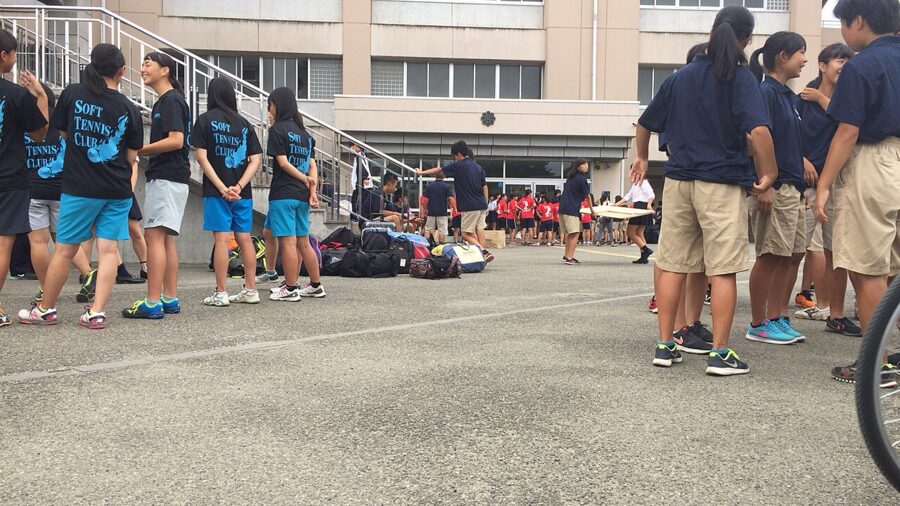

Clubs teach the age ladder: older members are 先輩 (senpai), younger ones 後輩 (kōhai), and first-years use polite Japanese with a senpai one year older. Which ending goes on a classmate’s name, -san, -kun, -chan or -senpai, is covered in Japanese name suffixes.
Club life is changing. Teachers have run clubs on top of their classes for decades, largely as unpaid overtime, and shrinking schools can no longer field teams. The Ministry of Education’s club reform plan began a six-year “reform implementation period” in April 2026, aimed mainly at public junior high schools. By March 2032, weekend club activities are in principle to move to local community clubs, while weekday practice stays at school.
Juken: the exam season from January to March
受験 (juken) is sitting an entrance exam, and a 受験生 (jukensei) is a student preparing for one. Public elementary and junior high schools take every child in their district, but high school and university mean passing an exam, so the last year of junior high and of high school are both exam years.
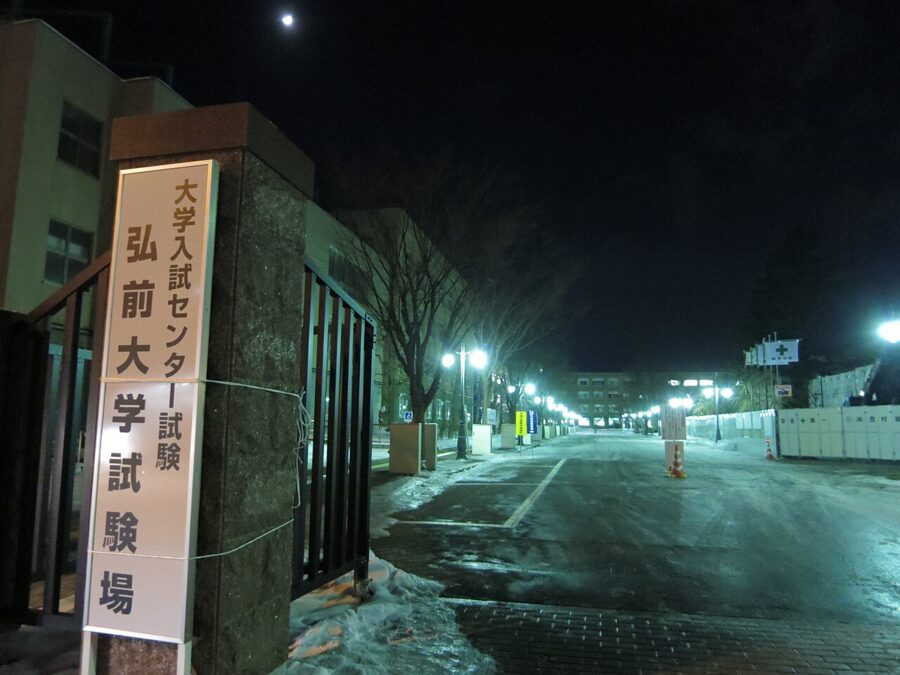

The season opens in January with the 大学入学共通テスト (daigaku nyūgaku kyōtsū tesuto), the Common Test for University Admissions, which replaced the older Center Test in 2021. The whole country sits the same papers on one weekend: the next Common Test is on January 16 and 17, 2027, with a make-up on January 23 and 24. It is mostly multiple choice, and English includes listening played on individual devices.
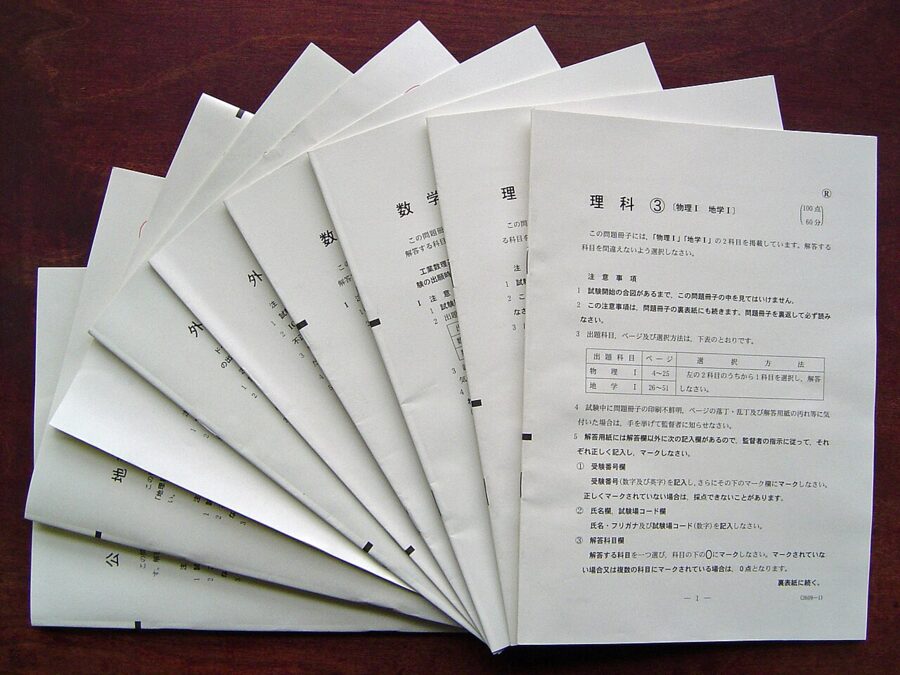
Public universities then hold their own exams. National universities start the main round on February 25, with results in early March and a smaller second round in mid-March. Private universities test from late January through February, and most prefectures hold public high school exams between late February and mid-March.
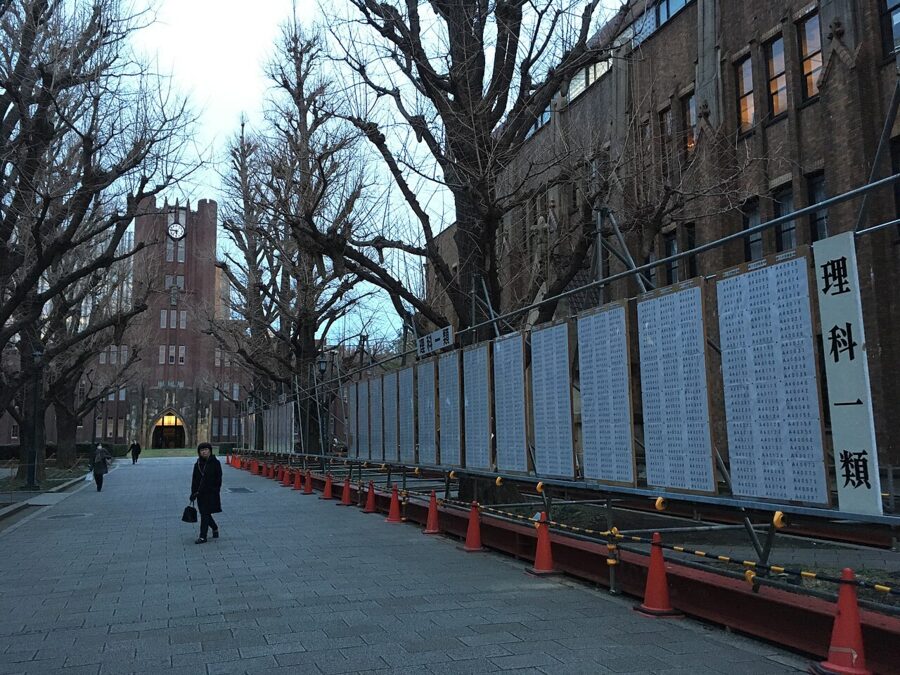

Passing is 合格 (gōkaku), and the results day is 合格発表 (gōkaku happyō). A student who spends a year studying to try again is a 浪人 (rōnin), the old word for a masterless samurai. An old telegram code survives too: サクラサク (sakura saku), “the cherry blossoms bloom,” means you passed; サクラチル (sakura chiru), “the blossoms fall,” means you didn’t.
Juku, the second school
Much of the preparation happens at 塾 (juku), private evening classes, also called 学習塾 (gakushū juku). Some children start in the upper grades of elementary school, especially in big cities where private junior high schools set their own exams. 予備校 (yobikō) are the larger prep schools for university exams, where many rōnin spend their year.
Is school harder in Japan than in the United States? Elementary school is gentle, with no entrance exam and no repeating a year. The pressure piles up in the two exam years, and juku adds the hours. Families buy luck too: Kit Kats are a standard exam-season gift because the name sounds like きっと勝つ (kitto katsu), “you’ll surely win.”

The words of the school year
Here are the key words in one place. If you keep vocabulary flashcards, they make a tidy deck: ceremonies first, then daily life, then exams.
| Japanese | Romaji | Meaning |
|---|---|---|
| 年度(ねんど) | nendo | School or fiscal year, April to March |
| 学期(がっき) | gakki | Term |
| 入学式(にゅうがくしき) | nyūgakushiki | Entrance ceremony |
| 始業式(しぎょうしき) | shigyōshiki | Start-of-term assembly |
| 終業式(しゅうぎょうしき) | shūgyōshiki | End-of-term assembly |
| 卒業式(そつぎょうしき) | sotsugyōshiki | Graduation ceremony |
| 担任(たんにん) | tannin | Homeroom teacher |
| 日直(にっちょく) | nicchoku | Student on daily class duty |
| 給食(きゅうしょく) | kyūshoku | School lunch |
| 掃除(そうじ) | sōji | Cleaning |
| 上履き(うわばき) | uwabaki | Indoor school shoes |
| 制服(せいふく) | seifuku | Uniform |
| 部活(ぶかつ) | bukatsu | Club activities |
| 先輩(せんぱい)/後輩(こうはい) | senpai / kōhai | Senior / junior student |
| 運動会(うんどうかい) | undōkai | Sports day |
| 文化祭(ぶんかさい) | bunkasai | Culture festival |
| 修学旅行(しゅうがくりょこう) | shūgaku ryokō | School trip |
| 受験(じゅけん) | juken | Sitting an entrance exam |
| 塾(じゅく) | juku | Cram school |
| 合格(ごうかく) | gōkaku | Passing an exam |
| 浪人(ろうにん) | rōnin | Student retaking exams after a year |
And some sentences to use them in. A time word takes the particle に: 四月に (shigatsu ni), in April.
| Japanese | Romaji | Meaning | Level |
|---|---|---|---|
| 日本の学校は四月に始まります。 | Nihon no gakkō wa shigatsu ni hajimarimasu. | Japanese schools start in April. | polite |
| 部活は何をしていましたか。 | Bukatsu wa nani o shite imashita ka? | What club were you in? | polite |
| テニス部だった。 | Tenisu-bu datta. | I was in the tennis club. | casual |
| 来年、高校を受験します。 | Rainen, kōkō o juken shimasu. | I’m taking high school entrance exams next year. | polite |
| 合格おめでとう! | Gōkaku omedetō! | Congratulations on passing! | casual |
| ご卒業おめでとうございます。 | Go-sotsugyō omedetō gozaimasu. | Congratulations on your graduation. | formal |
“What club were you in?” is one of the most common small-talk questions in Japan, and “none” is a fine answer: students call it 帰宅部 (kitakubu), the go-home club. School is a good topic for exactly that reason while you’re learning Japanese: everyone has a story.
What the school calendar means if you’re visiting
The school year shapes Japan’s travel calendar, and Kyoto shows it most. Kyoto City’s 2025 tourism survey counted about 670,000 school-trip students that year. Its monthly figures peak in May, almost all junior high schools, with October close behind as elementary and high schools arrive, and June, September and November not far below.
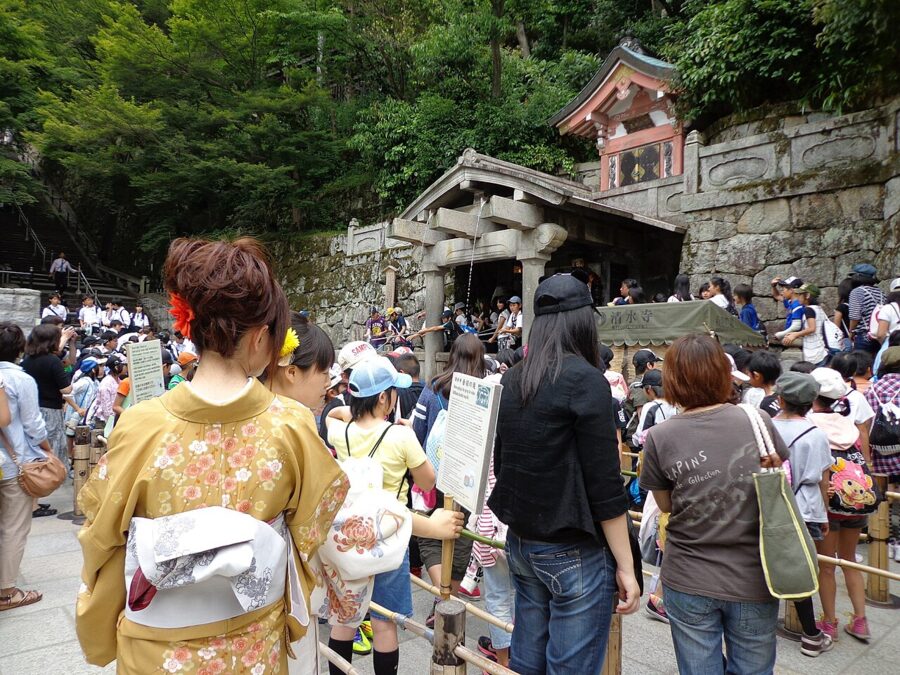

So Kiyomizu-dera, Kinkaku-ji, Fushimi Inari and Nara Park fill with uniforms on weekdays in May and through the autumn. School groups keep weekday daytime schedules, so early morning is the calmest time. For a learner the crowds are a bonus: listen for the teacher’s 集合 (shūgō), gather, and 時間厳守 (jikan genshu), be on time.

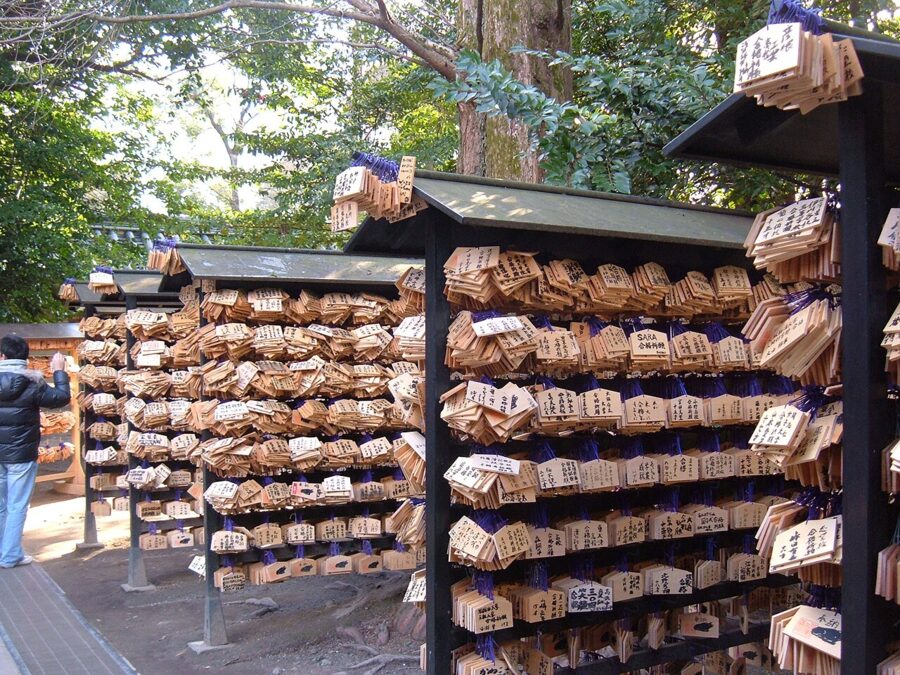
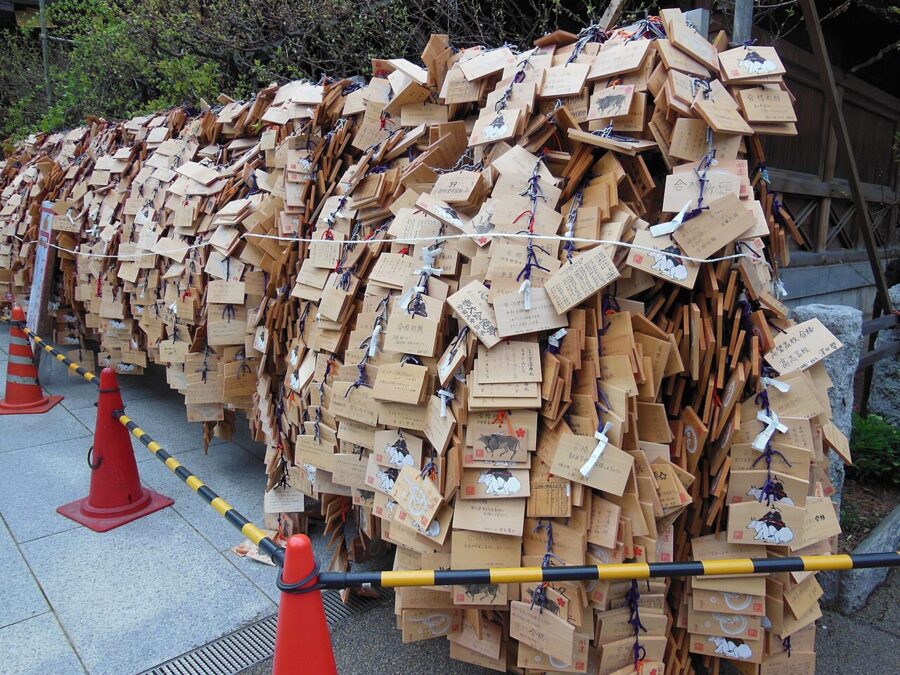
Exam season shows up at the Tenmangū shrines. In January and February, Kitano Tenmangū in Kyoto, Yushima Tenjin in Tokyo and Dazaifu Tenmangū near Fukuoka are busy with students and parents buying charms and hanging ema. It’s a fine time to practise reading handwritten Japanese: the plaques are short, the kanji are mostly school names, and the grammar is ~ますように (-masu yō ni), “may it be that.”

March and early April are the most visible part of the year. University graduates in hakama fill platforms in late March, families in suits pose at school gates in early April, and spring break puts students on trains and in theme parks. University students about to start work also take a 卒業旅行 (sotsugyō ryokō), a graduation trip, in February and March.
None of this should put you off a spring trip. It’s the season when the whole country starts something new, and it hands you a question for anyone under the cherry trees: 新学期、どうですか (shin-gakki, dō desu ka), “How’s the new term going?” Learn 入学式, 卒業式, 部活 and 受験 tonight, and the next time you see a six-year-old at a school gate with a randoseru bigger than her back, you’ll know exactly what day it is.