
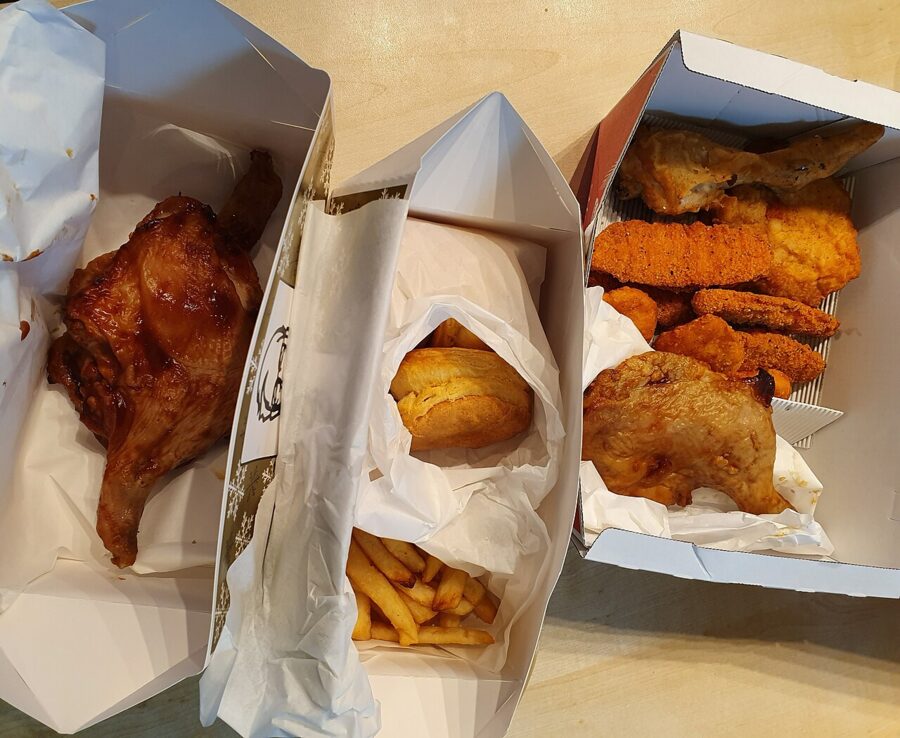
On December 24, KFC Japan does about ten times the business of an ordinary day, and most of that chicken was paid for weeks before. The bucket goes home at seven, a white cake with strawberries comes out of the fridge at nine, and nobody in the house thinks either is strange. That is Christmas dinner in Japan for millions of families, and it took a fast-food chain and a Yokohama cake shop to build it.
None of it is old. Christmas here is a set of habits that stuck: chicken booked in November, a strawberry shortcake collected on the Eve, a walk under the lights. On the 26th it all vanishes and the country turns to New Year food that really is traditional. You can join every part of it, and the Japanese you need is short.


Everyday eating is in the guide to Japanese food, and the rest of the festival year in the culture guide. Here I stay with December.
目次 Contents
Three words to learn before December
The first word is クリスマスイブ (kurisumasu ibu), Christmas Eve. In Japan it is the main event, so when someone asks about your Christmas plans, they usually mean the night of the 24th.
The second is クリスマスケーキ (kurisumasu kēki), the Christmas cake. The bar ー marks the long ē. Say it with five short, even beats, ku-ri-su-ma-su, and a clear long vowel in kēki, and you will be understood at any counter.
The third, and the one that does the most work, is 予約 (yoyaku), a reservation or advance order. Chicken, cake, restaurant tables and New Year boxes are all yoyaku items in December. You will see it on posters as 予約受付中 (yoyaku uketsuke-chū), “now taking orders”, from late summer onward.

| Japanese | Romaji | English | Where you see it |
|---|---|---|---|
| クリスマスイブ | kurisumasu ibu | Christmas Eve | speech, adverts |
| クリスマスケーキ | kurisumasu kēki | Christmas cake | bakeries, konbini posters |
| 予約 | yoyaku | reservation, advance order | everywhere in December |
| 予約受付中 | yoyaku uketsuke-chū | now taking orders | shop windows |
| 早割 | hayawari | early-booking discount | KFC, konbini, department stores |
| 締め切り | shimekiri | deadline | order forms |
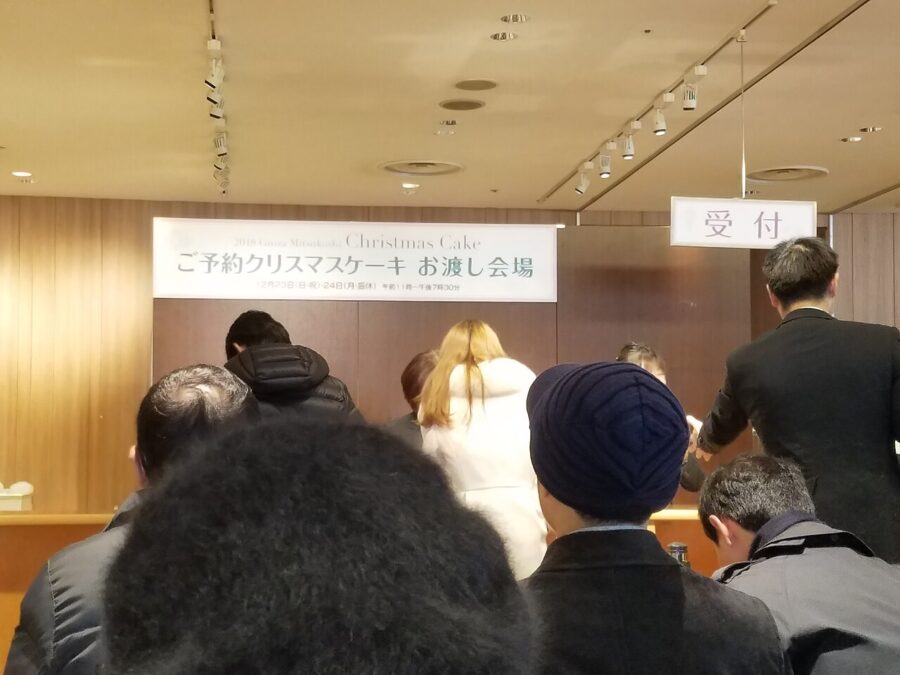
| 受け取り | uketori | pickup, collection | order slips, apps |
| お渡し | owatashi | handover (shop’s polite word) | pickup counters |
| 〜号 | -gō | cake size, in 3 cm steps | cake listings |
A 号 (gō) is the old unit 寸 (sun), about 3 cm, so a 4号 cake is about 12 cm across and feeds two to four, and a 5号 is about 15 cm. When a clerk asks 何号ですか (nan-gō desu ka), they are asking which size you want.
Two polite (desu/masu) sentences cover ordering and collecting:
| Japanese | Romaji | English |
|---|---|---|
| クリスマスケーキを予約したいんですが | kurisumasu kēki o yoyaku shitai n desu ga | I’d like to order a Christmas cake |
| 予約した〜です。受け取りに来ました | yoyaku shita ___ desu. uketori ni kimashita | I’m ___, I have a reservation. I’ve come to collect it |
If you keep a deck of vocabulary flashcards, these make a good December set.

A night for couples, a party for kids
Christmas in Japan is not a religious holiday for most people. The Agency for Cultural Affairs’ religious yearbook counts about 1.87 million Christian adherents as of the end of 2024, roughly 1.5 percent of the population. December 25 is an ordinary working day; from 1989 to 2018 the 23rd was a holiday for the Emperor’s birthday, but that ended with the change of reign.
So the day split in two. For children it is presents from サンタさん (Santa-san) left by the pillow overnight, cake and a party, right at the start of the winter break in the Japanese school year. For couples, Christmas Eve is a date night closer to Valentine’s Day in the West: a booked dinner, a gift, a walk through the illuminations.


How KFC became Christmas dinner
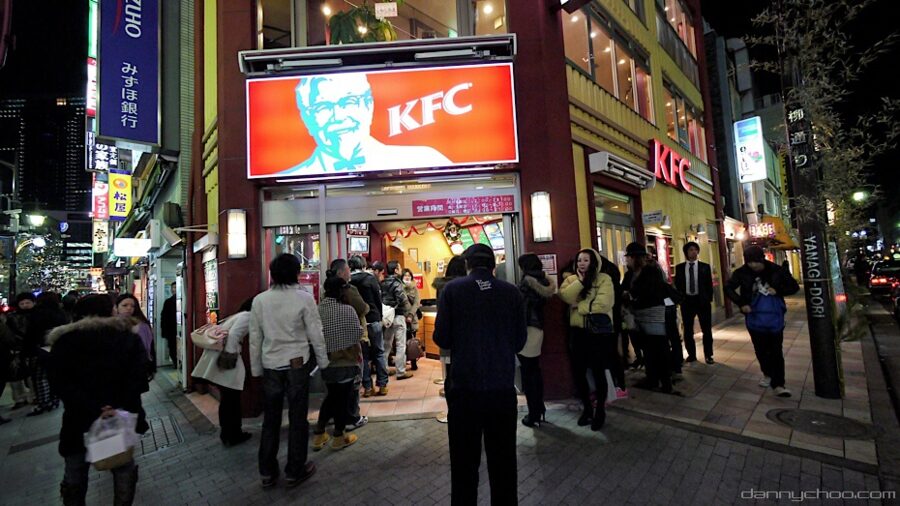
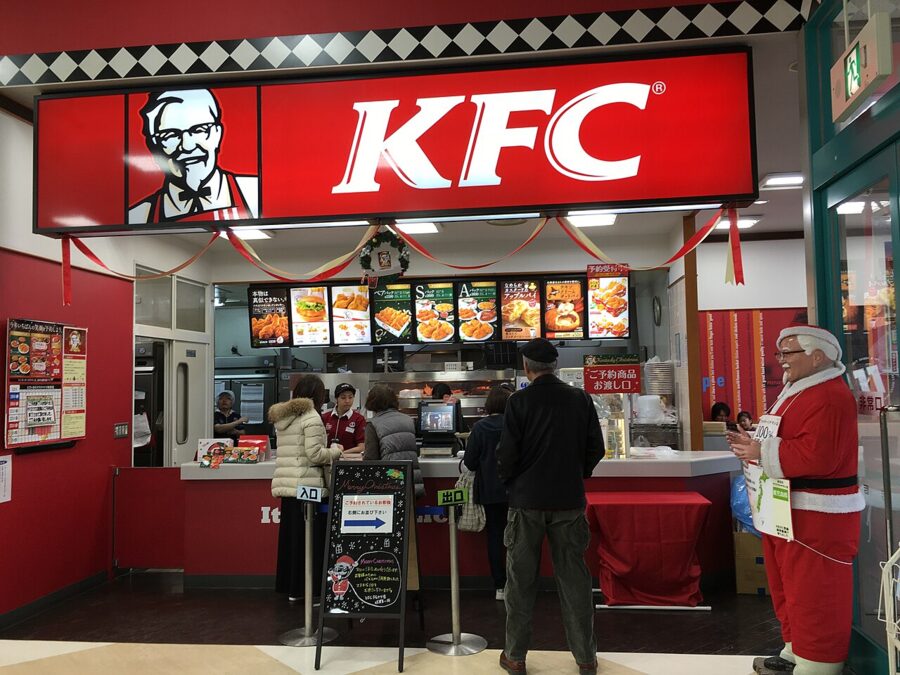
Kentucky Fried Chicken came to Japan in 1970. According to the company’s own timeline, a test shop at the Osaka Expo in March sold up to 2.8 million yen of chicken in a day, the Japanese company was set up with Mitsubishi in July, and the first store opened in Nagoya’s Nishi Ward in November. The same timeline gives December 1974 for the first Christmas campaign.

The company’s story
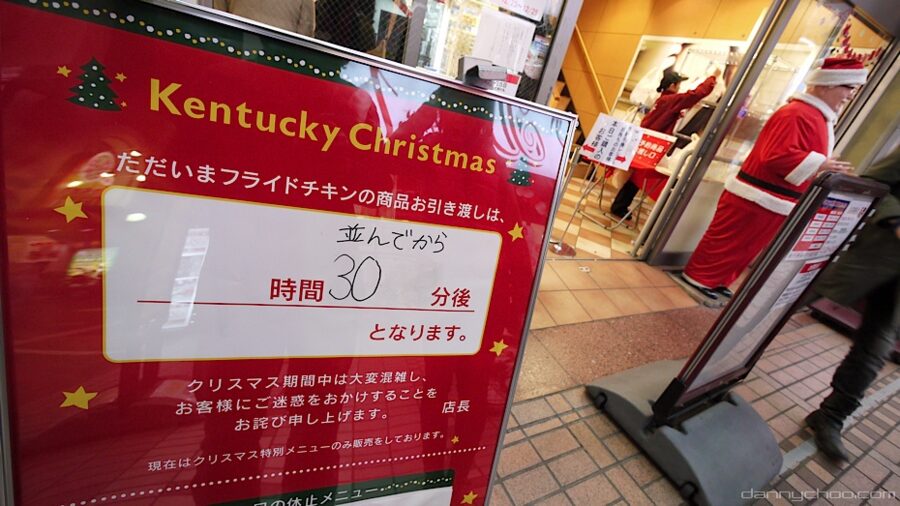
KFC’s own telling, published in 2020, starts with home Christmas parties catching on in the late 1960s, mostly for children and pushed by confectionery makers selling cakes and sweets. Then a foreign customer at a Tokyo KFC on Christmas Day said they could not get turkey in Japan, so they would have to celebrate with Kentucky Fried Chicken. Someone on the sales team overheard, and the 1974 campaign followed: a bucket of chicken with a bottle of wine, pitched as a Christmas party for grown-ups as well as children, under the slogan クリスマスにはケンタッキー (kurisumasu ni wa kentakkī), “Kentucky for Christmas”.
The manager’s story
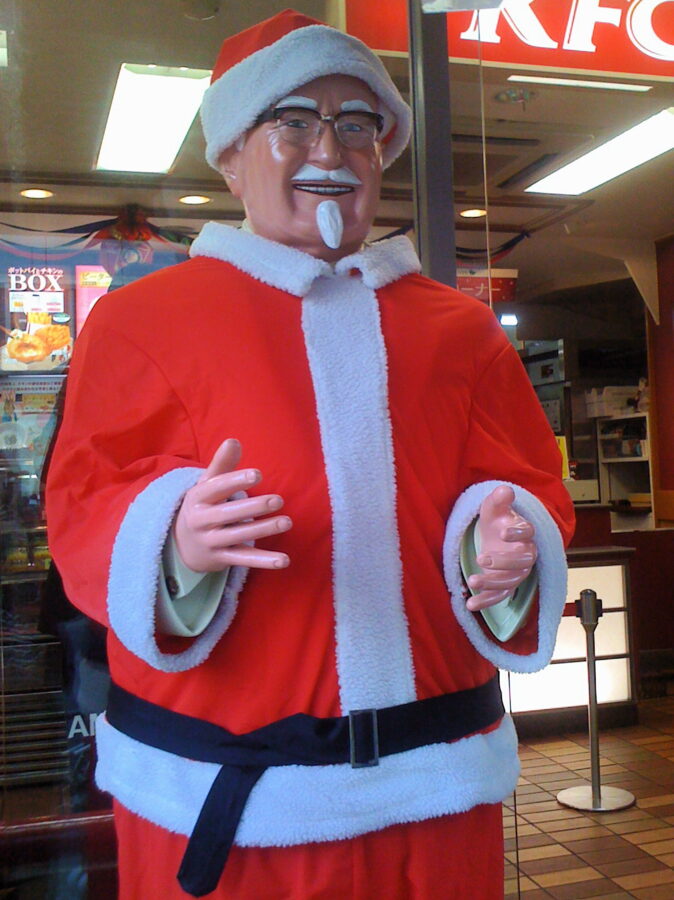
The other version centers on Takeshi Okawara, who managed the first store and later ran the company as president from 1984. In a 2018 interview he described a mission kindergarten nearby asking him to come to its Christmas party as Santa with fried chicken; he danced through the room with a bucket, and a second kindergarten asked for the same. He also said that when a TV interviewer asked whether Westerners really eat fried chicken at Christmas, he said yes, knowing they ate turkey, and that he still regrets the lie.
Both stories have a turkey dinner Japan could not easily copy, few home ovens big enough for a bird, and a chain that saw an empty date on the calendar. I would trust the dates in the company timeline and treat both anecdotes as the kind of thing people say about a success afterwards.

Why it stuck
The campaign never stopped. In a 2011 release, KFC Japan reported three-day Christmas sales of about 5.78 billion yen (about $36 million at today’s rates) across 1,148 stores, credited 37 years of “Kentucky for Christmas” advertising, and noted that its seasonal song, Mariya Takeuchi’s すてきなホリデイ (Suteki na Horidei), was written for the chain. Ordering weeks ahead became part of the ritual, which is why yoyaku is the word to learn first.
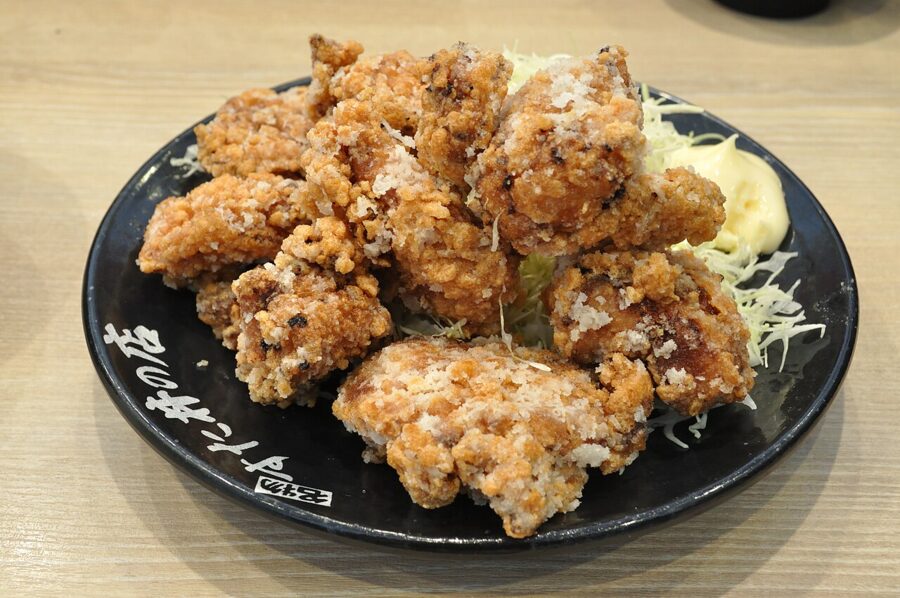
The taste helps too. Japan already loved 唐揚げ (karaage), fried chicken in small pieces, and a bucket suits a small kitchen: no oven, no carving.
Ordering a Christmas barrel in 2026
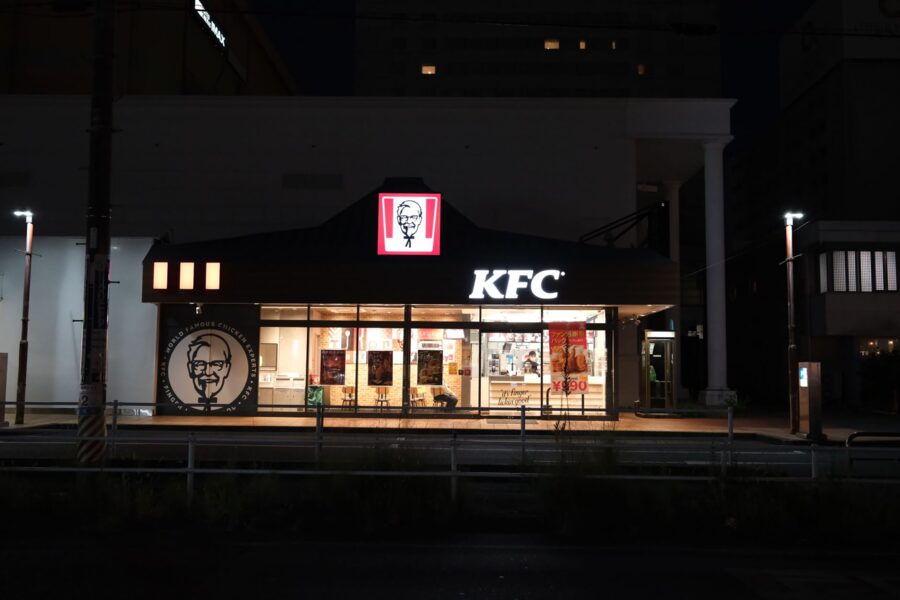
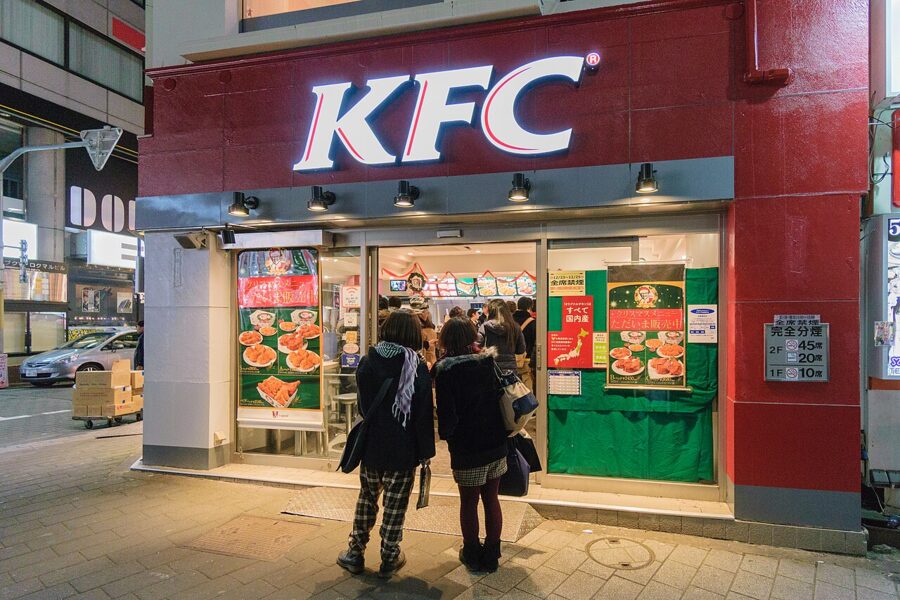
As of November 2026, the KFC Japan 2026 Christmas menu is taking reservations. Orders opened on November 11 in shops and through KFC Net Order, the chain’s website and app, and every reserved item is collected between December 19 and 25. Shops stop taking orders when they reach their planned numbers, so the closer you get to the 24th, the fewer choices you have.
The headline item is the パーティバーレル (pātī bāreru), the Party Barrel, at 5,990 yen (about $37). Order it by December 13 and the 早割 (hayawari) early price is 5,490 yen (about $34). This year’s barrel adds a macaroni-and-cheese gratin made with bow-tie pasta, after the Colonel’s tie, and a chocolate mousse cake about 17 cm across.
| Item (Japanese name) | What is in it | Price, tax included |
|---|---|---|
| Party Barrel Original (パーティバーレル オリジナル) | 8 pieces Original Recipe chicken, mac and cheese gratin, chocolate mousse cake | 5,990 yen (5,490 by Dec 13) |
| Party Barrel Variety (パーティバーレル バラエティ) | 4 pieces chicken, 2 chicken tenders, 2 biscuits, gratin, cake | 5,990 yen (5,490 by Dec 13) |
| Christmas Pack Pair (クリスマスパック ペア) | 2 pieces chicken, barbecue chicken, 2 tenders, 5 nuggets | 3,090 yen (about $19) |
| Roast leg (五穀味鶏ローストレッグ) | bone-in roast chicken leg, garlic and herbs | 1,890 yen (about $12) |
| Breast roast (五穀味鶏胸肉ロースト) | roast breast filled with shrimp, mushroom and cheese cream sauce | 1,990 yen (about $12) |
KFC also runs an オフピーク予約 (ofu pīku yoyaku), an off-peak reservation, through Net Order only. Choose a pickup any time from December 19 to 23, or before 13:00 or after 20:00 on the 24th and 25th, book a barrel or Christmas pack by December 18, and you get a voucher for a free burger to use online between January 6 and March 31, 2027. If you can eat on the 23rd, I would take that deal and skip the Eve queue completely.
For a visitor, Net Order is easier than the counter if you can read the menu names and register with an email address. A few shops take counter bookings only, and shops selling the new 11 Spice chicken pack their sets differently. At the counter, point at the poster, say パーティバーレルを予約したいんですが (pātī bāreru o yoyaku shitai n desu ga), and give a pickup day and time. Keep whatever slip or order number you get; on the day, show it and say 受け取りに来ました.

The strawberry Christmas cake
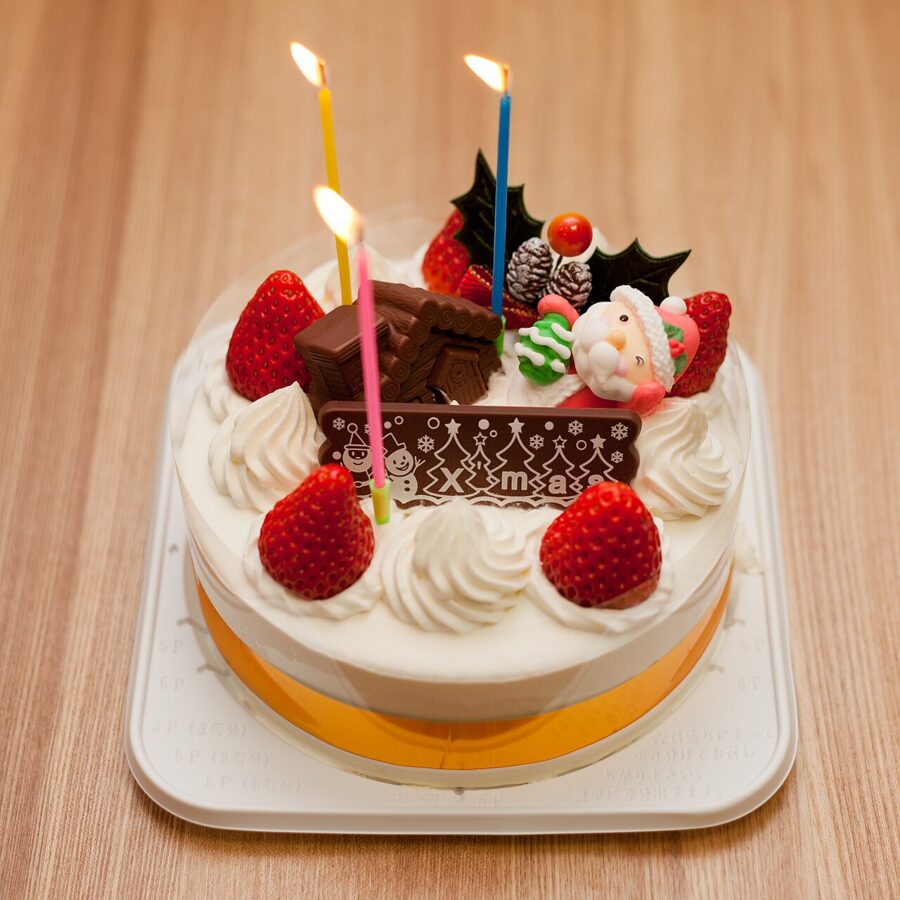
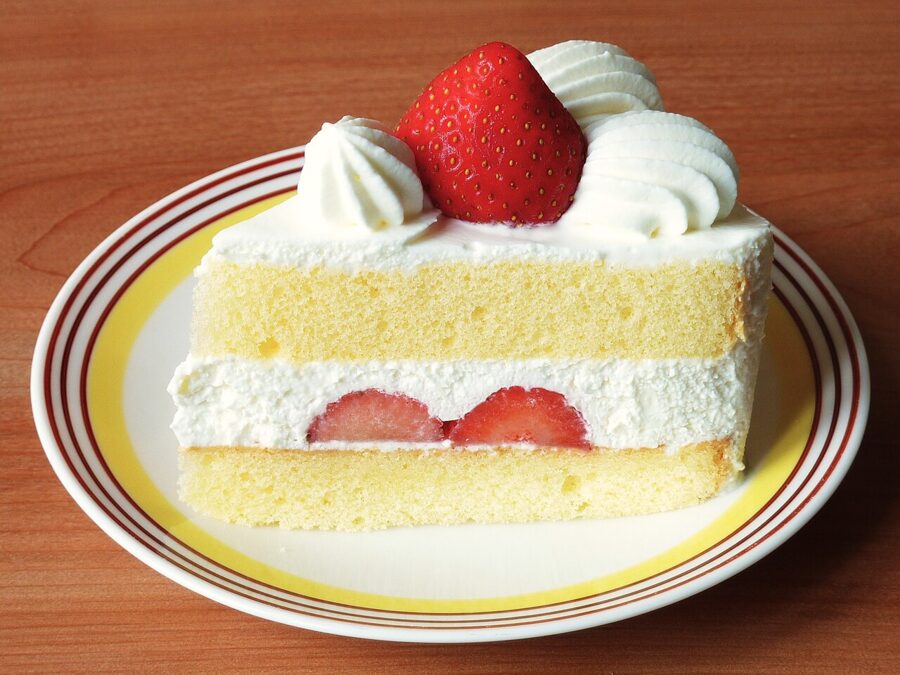
The cake on Japanese tables is a ショートケーキ (shōtokēki), strawberry shortcake: soft sponge in layers, whipped fresh cream, strawberries inside and on top. Japan’s version uses sponge where the American original used a biscuit. Bakeries sell it by the slice all year; at Christmas it becomes a whole round cake.

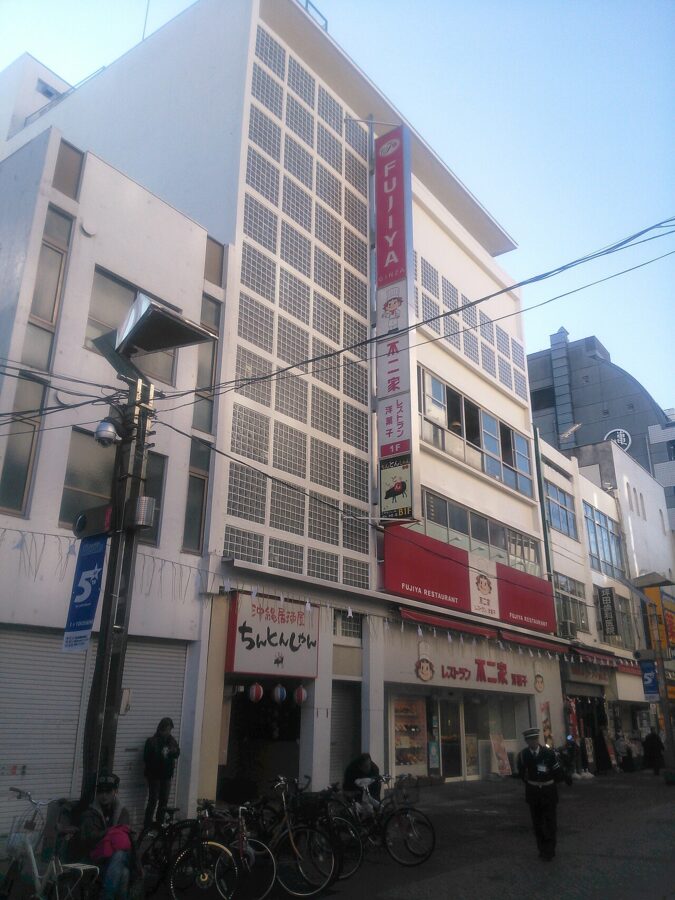
Fujiya, the confectioner with the Peko-chan mascot, opened in Yokohama’s Motomachi in November 1910, and its company history lists a Christmas cake on sale that same December. Its founder, Rinemon Fujii, went to America to study Western confectionery in 1912. Fujiya dates its shortcake to 1922, sold at the new Isezakicho shop for 8 sen a piece.

Credit for the first Japanese shortcake is disputed. The pastry chef Kikujiro Yoshida, writing about its history in a 2021 essay, notes a rival claim for Kuniteru Kadokura of the Tokyo confectioner Colombin in the 1930s and leans toward Fujiya. He also points out what held the cake back: fresh cream was scarce, and cream cakes only spread once refrigerators and chilled display cases arrived around 1955.
Why strawberries and cream? Many people point to 紅白 (kōhaku), red and white, the colors of celebration in Japan. I think the plainer reason is that the cake was already the country’s favorite.
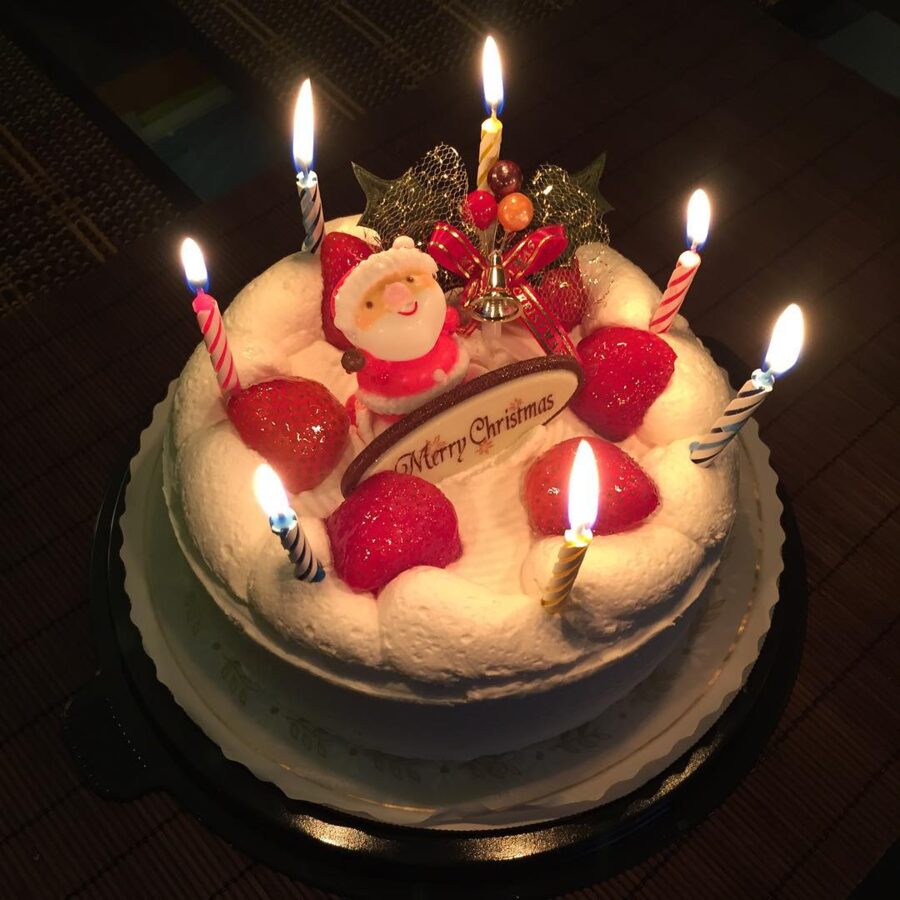

One old phrase is worth knowing so you can avoid it. Decades ago, an unmarried woman over 25 was sometimes called a Christmas cake, because cakes lose their value after the 25th. It now sounds dated and rude.
Pre-ordering a cake: convenience store, department store, patisserie
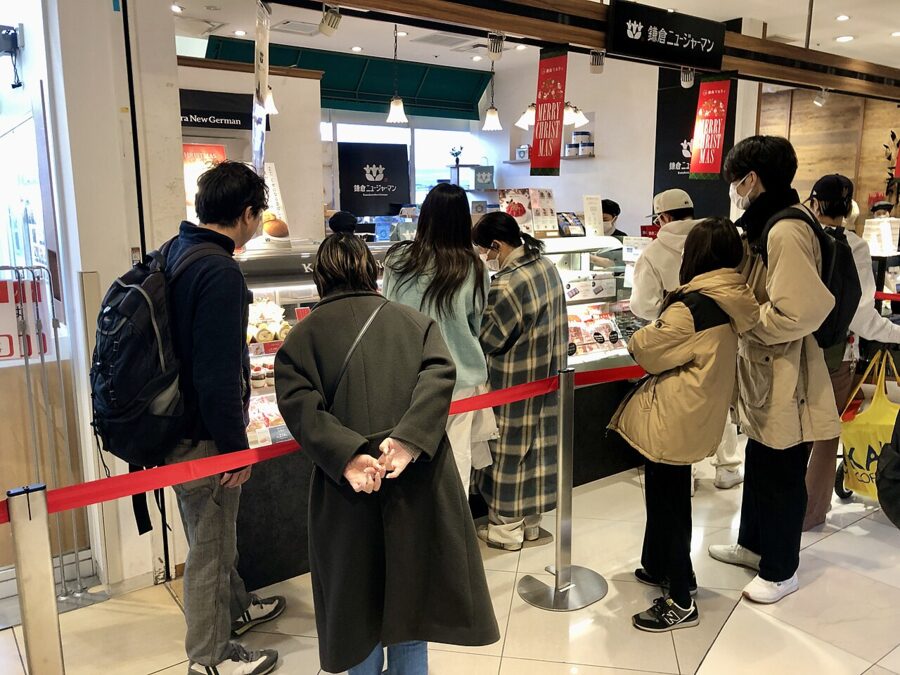
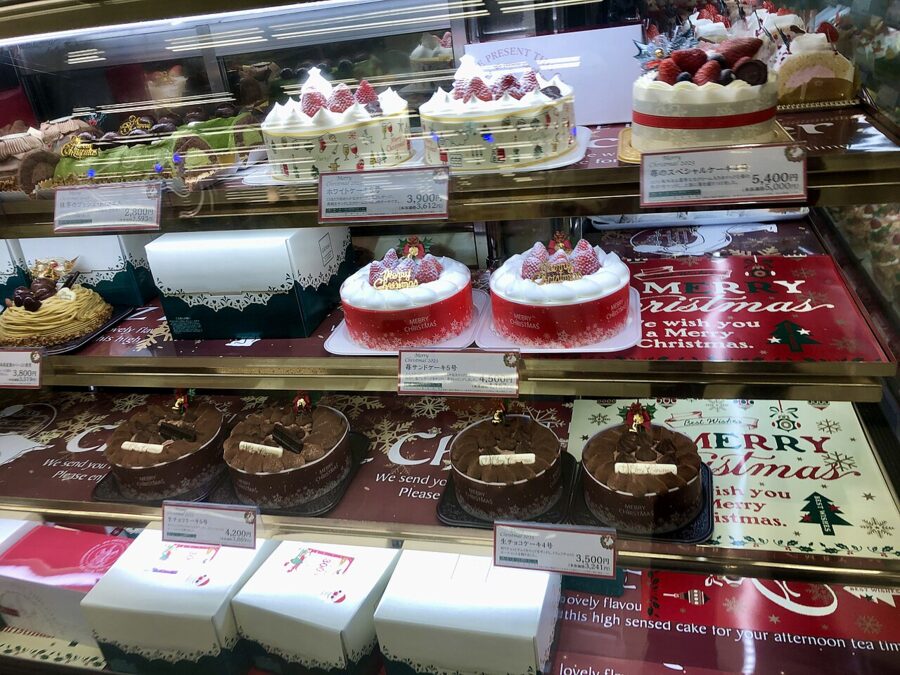
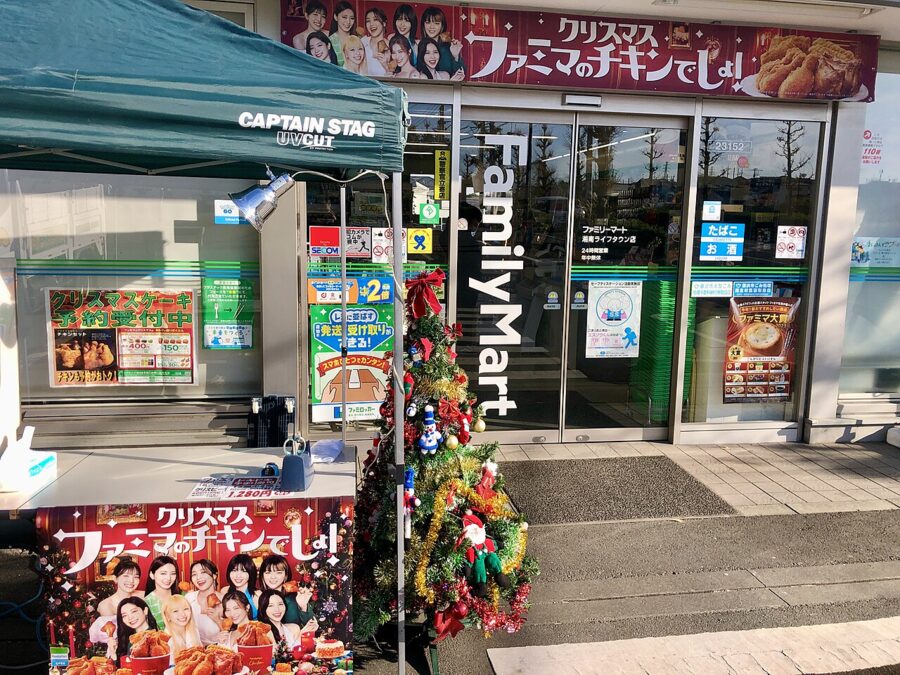
Nearly every cake is ordered in advance. Konbini cakes are cheap and easy to collect, department stores sell cakes from famous patisseries, and local cake shops sell out first. Details as of November 2026:
| Where | Example | Price | Ordering |
|---|---|---|---|
| 7-Eleven | Gâteau Fraise strawberry cake, size 4 (2 to 4 people) | 3,780 yen (about $24) | in store or the 7NOW app since September 14; in store by Dec 16 for pickup Dec 19 to 23, by Dec 19 for Dec 24 to 25 |
| Fujiya | Christmas strawberry special shortcake, size S, 14.5 cm (4 to 5 people) | 4,980 yen (about $31) | at Fujiya cake shops; on sale from December 1 |
| Daimaru Matsuzakaya | store-pickup cakes from its food halls, and frozen cakes by delivery | varies by patisserie | online until 10:00 on December 18; some payment methods close December 12 |
The 7-Eleven app adds a 10 percent 早割 on ten cakes for orders placed by November 30, and its best-known cake, かまくら (kamakura), named after a snow hut, turns 30 this year. If you cannot read Japanese menus, a konbini is the easiest start: the poster on the door has photos and prices, and you can order at the register.


Roast chicken, markets and lights
KFC is not the only chicken. Supermarkets, department-store food halls and convenience stores all sell ローストチキン (rōsuto chikin), roast chicken, mostly as single legs, and in Japanese a drumstick with the thigh is just レッグ (reggu). At 7-Eleven, a charcoal-roast chicken leg costs 650 yen (about $4) as of November 2026, collected December 19 to 25 and ordered at the counter two days before.
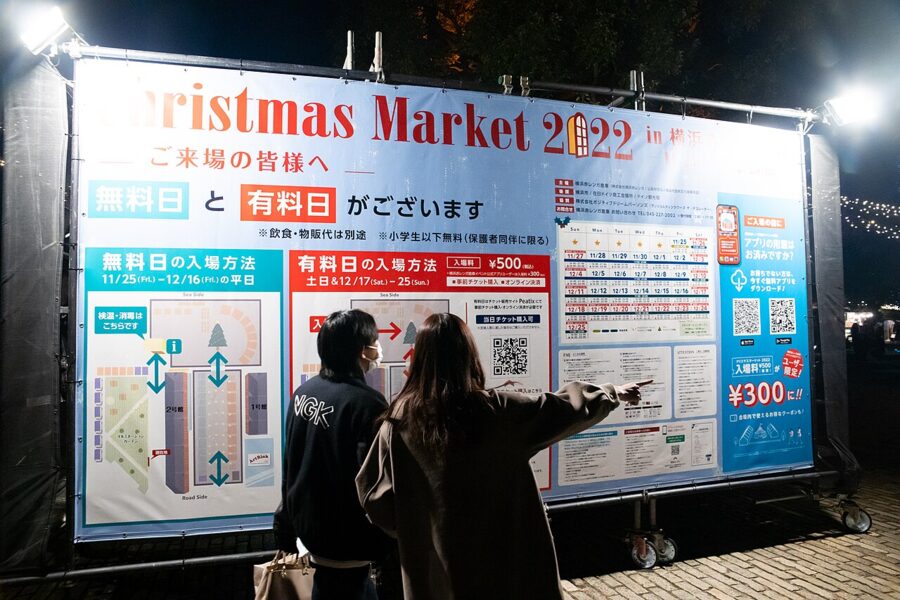
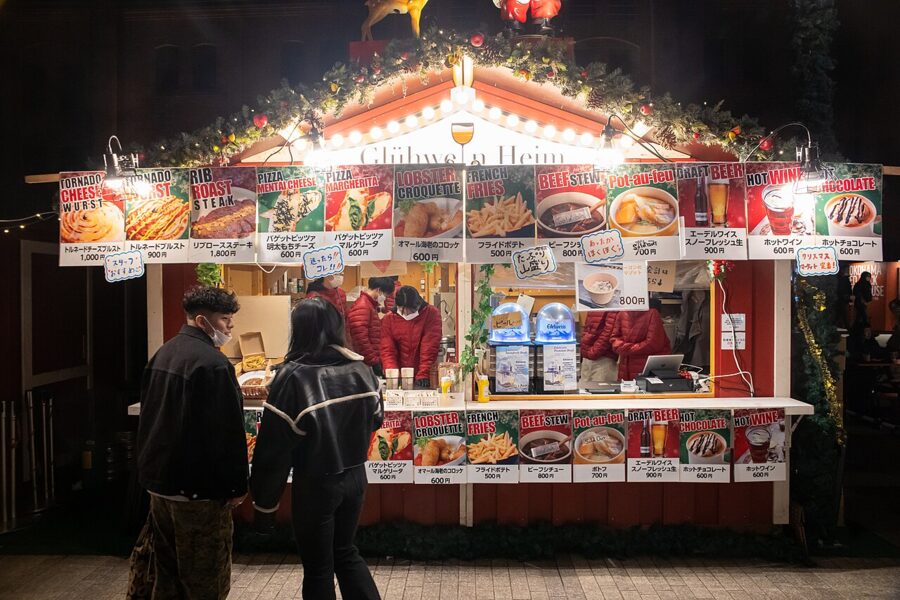
Christmas markets came later, copied from Germany and run by shopping complexes. One of the best known near Tokyo is the Christmas Market in Yokohama Red Brick Warehouse, running November 20 to December 25, 2026, from 11:00 to 21:00 until December 4 and to 22:00 after that. Entry is 500 yen (about $3) on ordinary days and 1,000 yen (about $6) on busy days, including December 24 and 25, with some free areas. Food and drink are paid for separately at the stalls.
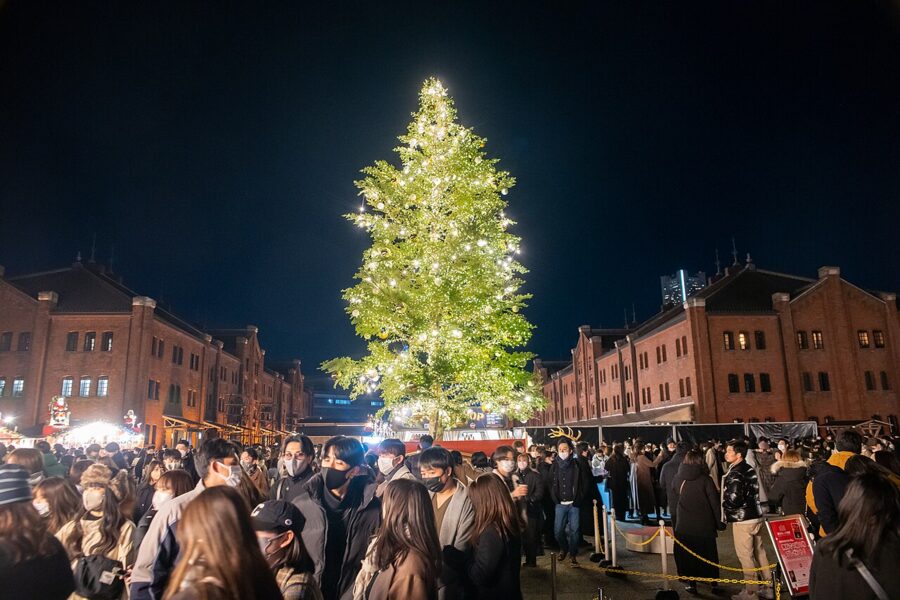



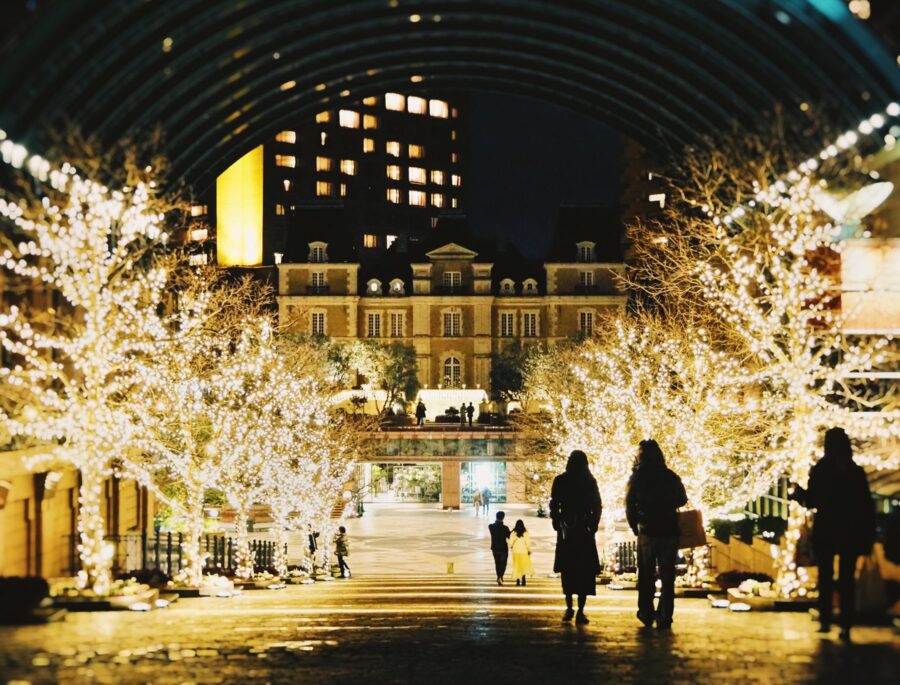
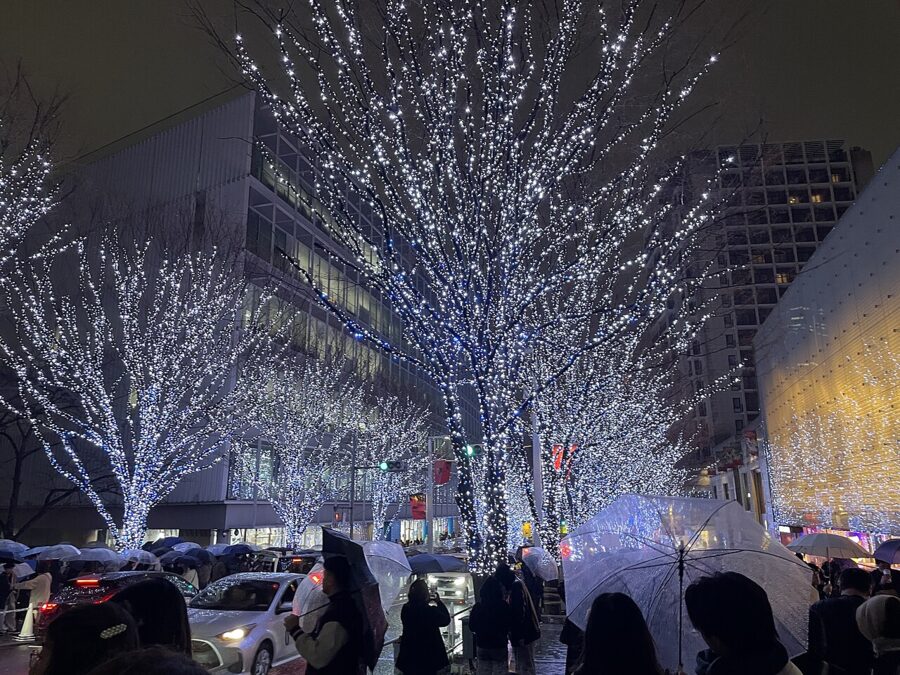
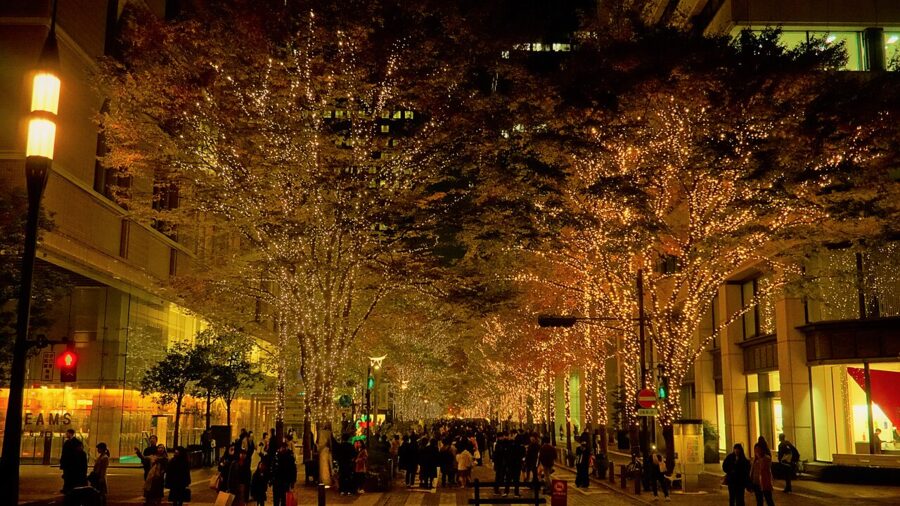
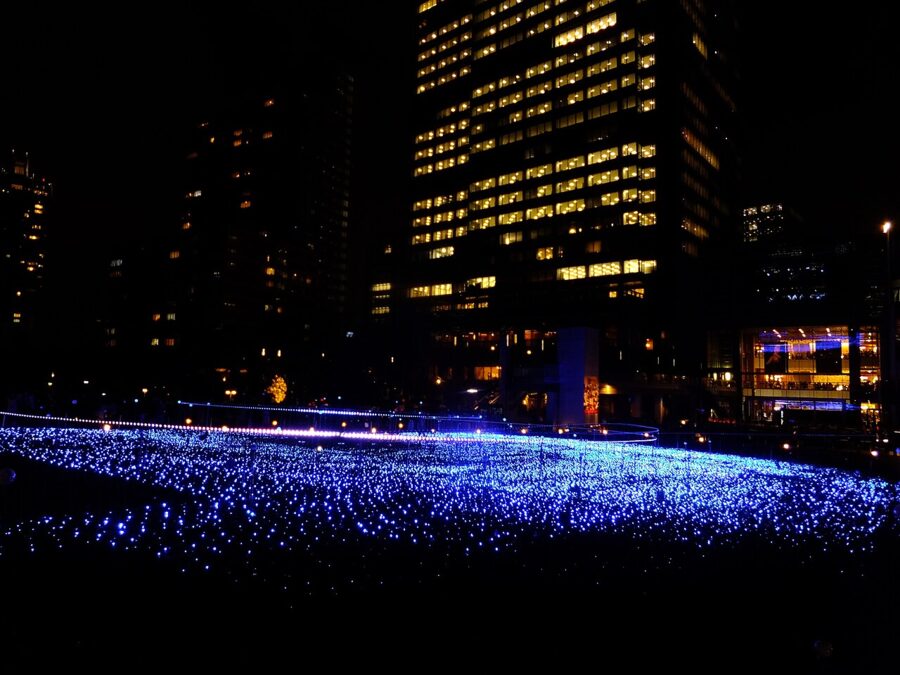
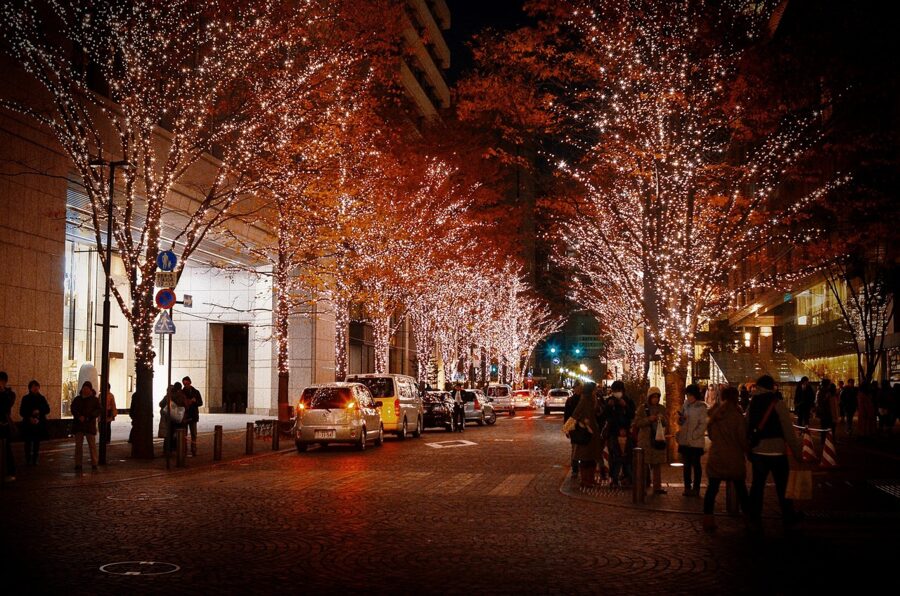
Then there is イルミネーション (iruminēshon), the season’s light displays, switched on at a 点灯式 (tentōshiki), a lighting ceremony, in November. As of November 2026, Tokyo Midtown lights its garden from November 26 to December 25 and Marunouchi‘s holiday lights run from November 12 to December 25. Roppongi Hills lights Keyakizaka through the season too, and all three are free to walk through.


December 26: the chicken gives way to osechi
Christmas in Japan ends fast. On the morning of the 26th, shops take down the trees and put up 門松 (kadomatsu), the pine-and-bamboo decorations that welcome the New Year god, and the Christmas music stops.
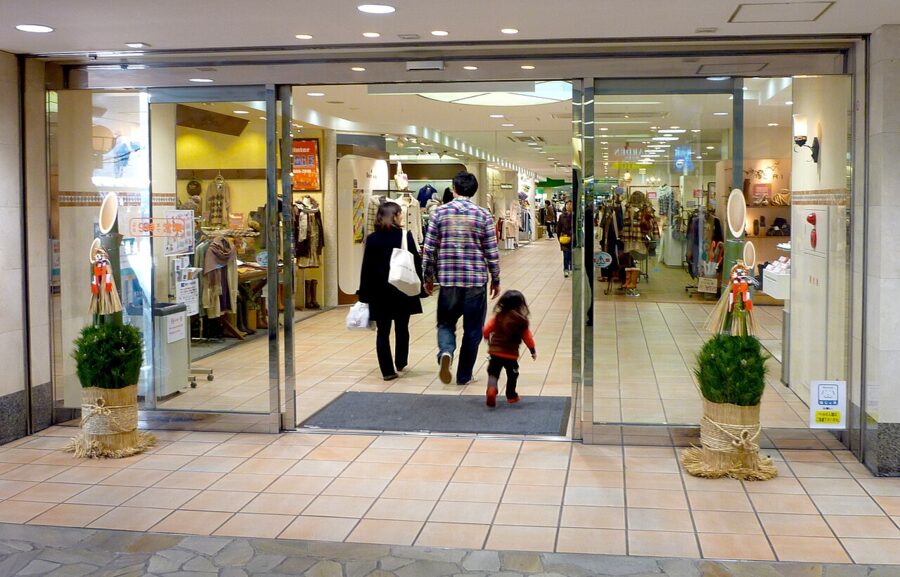

The New Year meal is おせち料理 (osechi ryōri), small dishes packed into stacked lacquer boxes called 重箱 (jūbako), each food with a wish attached: black beans for hard work, herring roe for children, prawns for a long life. This is the old family holiday. The New Year games come out after the meal.
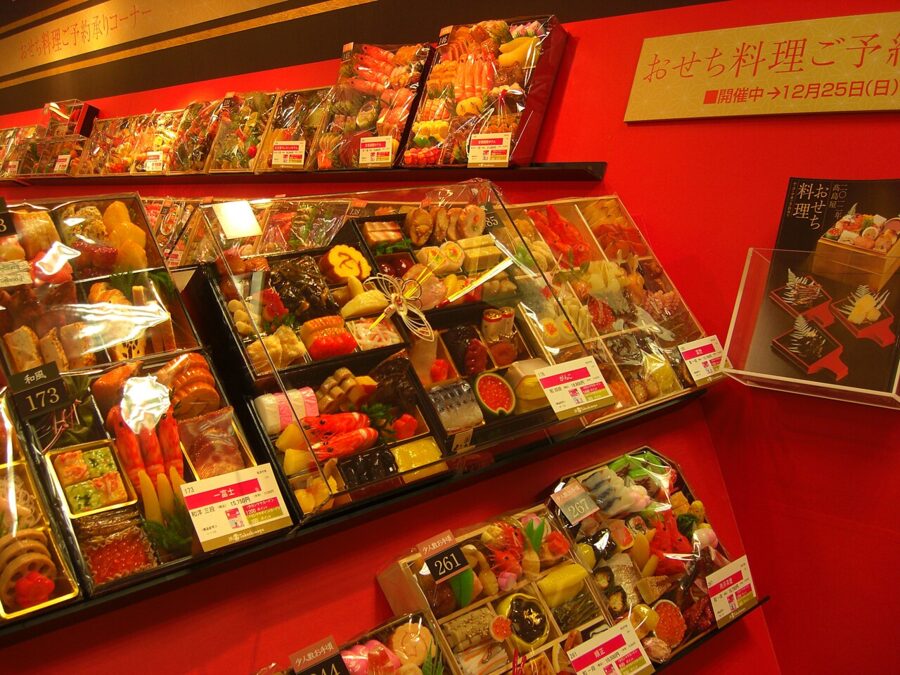

The ordering season overlaps with Christmas. Department stores start taking osechi orders in autumn, and on Daimaru Matsuzakaya’s osechi pages, orders for 2027 close at 10:00 on December 22, with some payment methods closing on December 16. Sets there run from around 12,000 yen (about $75) to well past 25,000 yen (about $160).
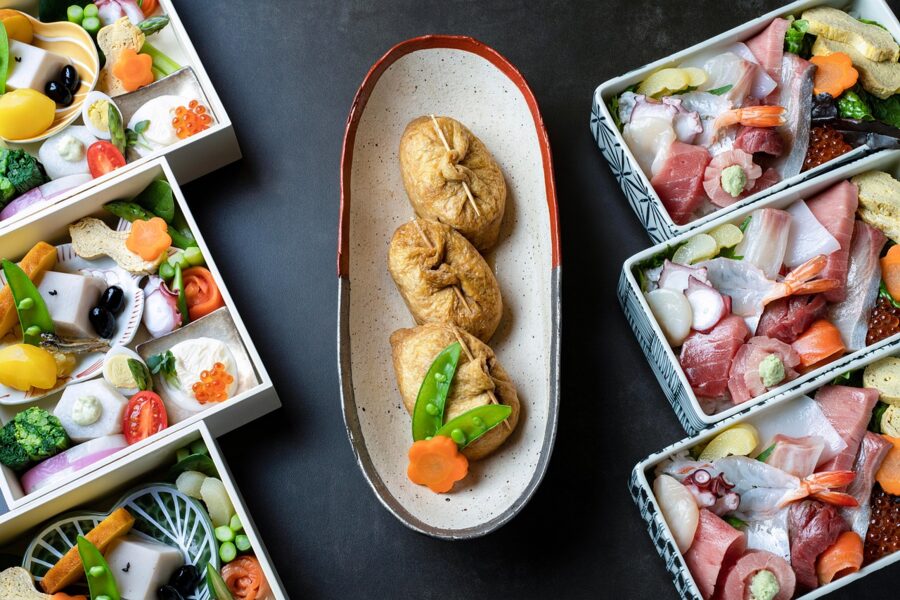
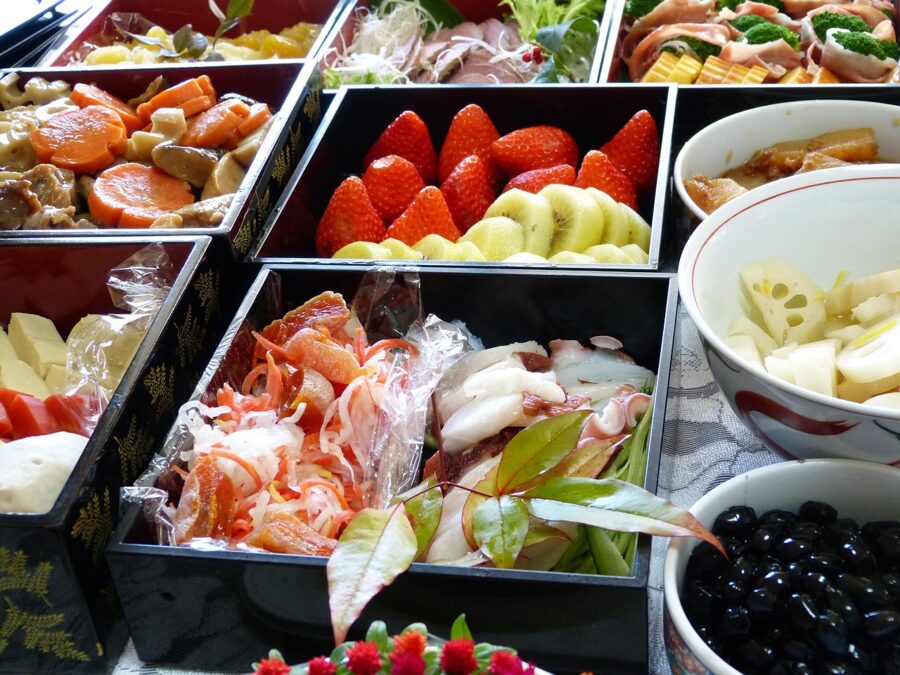
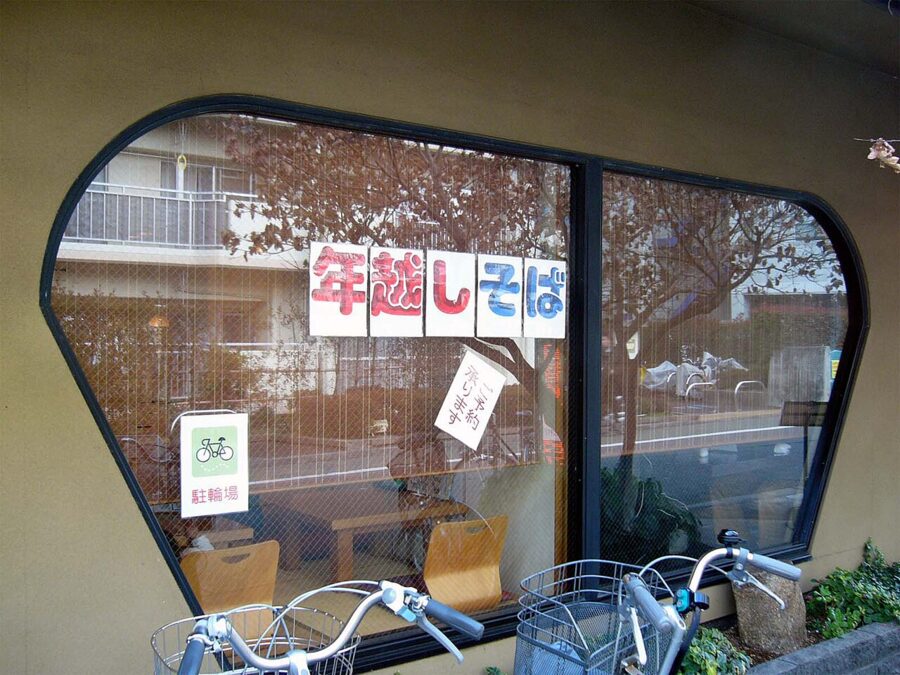
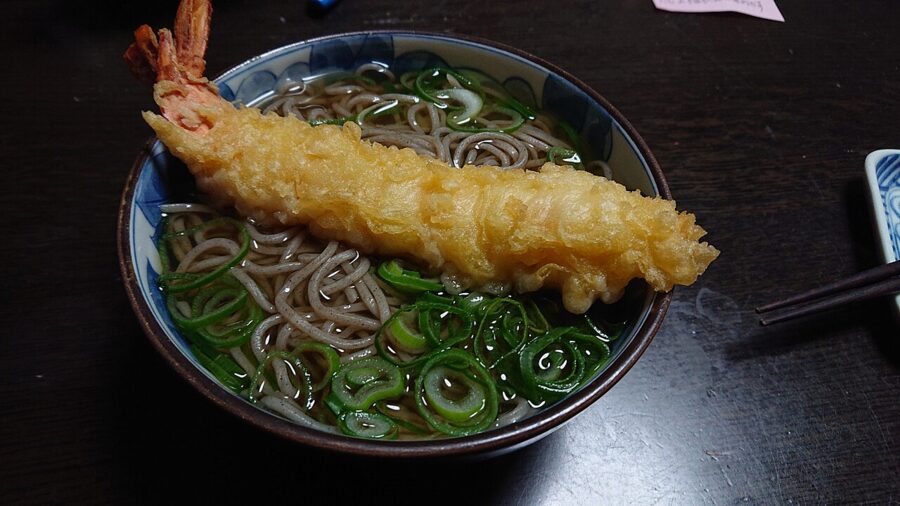
Between the two feasts comes 大晦日 (ōmisoka), New Year’s Eve, with a bowl of soba for a long life. In the days before it, people part with 良いお年を (yoi otoshi o), “have a good new year”, a phrase you say only in late December. From the 26th on, it replaces メリークリスマス (merī kurisumasu) completely.


If you have one December evening in Japan, do it the local way: order a cake with 予約 a week ahead, collect it on the 24th with 受け取りに来ました, and eat it with chicken. Then on the 26th, say 良いお年を to the clerk who sold it to you.