
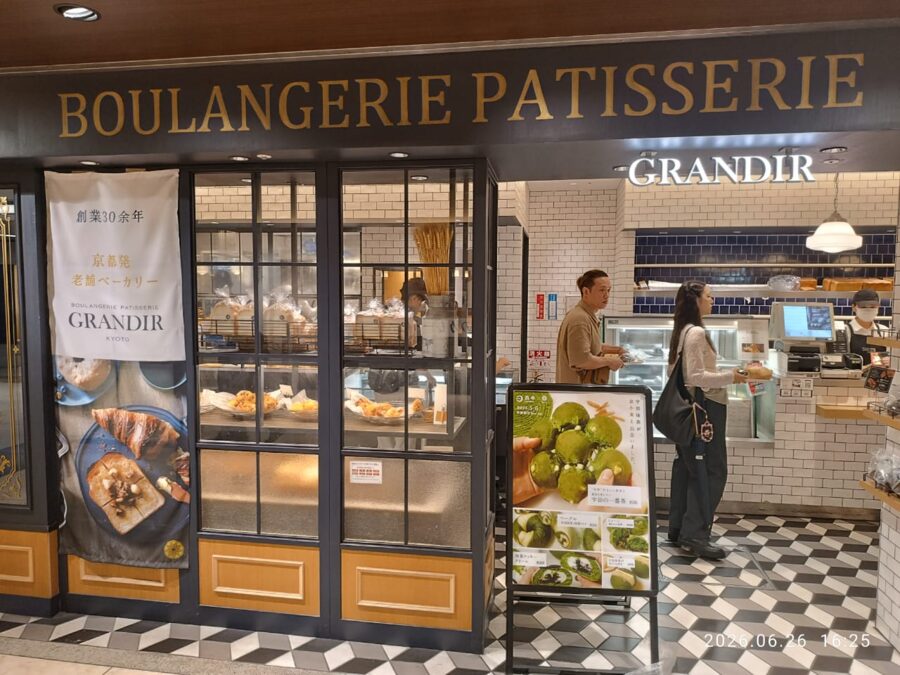
The first thing you pick up in a Japanese bakery is not bread. It is a tray and a pair of tongs from the stack by the door, and you walk the shelves loading the tray yourself before carrying it to the till. Somewhere on those shelves sits a bun of sweet red bean paste, a bun with a cookie shell named after a melon, and a fried bun full of curry. All three are called パン (pan), and none of them would pass for ordinary bread in Portugal, where the word came from.
Japanese bakery bread is softer, sweeter and far more often stuffed than European bread, and most of what fills the shelves was invented in Japan. A bakery is also one of the easiest places to practice reading: every bun has a card with its name and price, nearly all in katakana.
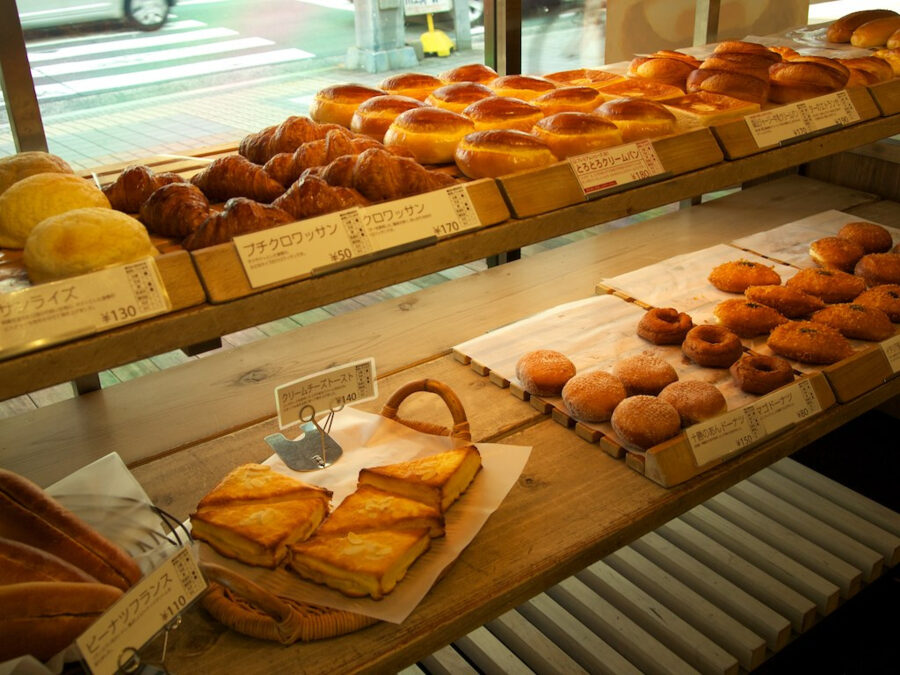

Learn the dates behind those cards and the shelf starts to make sense: a bean-paste bun from 1874, a jam bun from 1900, a custard bun from 1904 and a fried curry bun from 1927, each one a foreign dough wrapped around a filling Japanese customers already liked.
目次 Contents
The words: pan, pan-ya and the katakana on the sign
パン comes from Portuguese pão, and it is written in katakana like other loanwords even though it arrived more than four centuries ago. It has nothing to do with the English word pan. A frying pan is フライパン (furaipan), borrowed from English much later.
The bakery is パン屋 (pan-ya). The 屋 (-ya) turns a thing into the shop that sells it, as in 本屋 (hon-ya), a bookshop, and it belongs with the other Japanese suffixes worth learning early. Most people say パン屋さん (pan-ya-san), a little warmer than the bare word.
| Japanese | Romaji | English |
|---|---|---|
| パン屋 | pan-ya | bakery |
| ベーカリー | bēkarī | bakery, on shop signs |
| ブーランジェリー | būranjerī | bakery (from French) |
| 食パン | shokupan | sliced white loaf |
| 菓子パン | kashi pan | sweet bun |
| 惣菜パン | sōzai pan | savory filled bun |
| 食事パン | shokuji pan | plain bread for a meal |
| 焼きたて | yakitate | fresh from the oven |
Shop signs usually carry ベーカリー from English, ブーランジェリー from French, or パティスリー (patisurī) for a cake shop. Long vowels are written with the bar ー, which is why the katakana chart is the one to drill before your first bakery visit.
Bread has its own counters. A loaf of shokupan is measured in 斤 (kin), a slice is 枚 (mai), and a long unsliced loaf is 本 (hon). Bagged bread is sold as 6枚切り (rokumai-giri, cut into six) or 8枚切り (hachimai-giri), so the number tells you thickness. Put these on your vocabulary flashcards next to the bread names.
| Japanese | Romaji | English | Level |
|---|---|---|---|
| 食パンを一斤ください。 | shokupan o ikkin kudasai. | One loaf of shokupan, please. | polite |
| 六枚切りでお願いします。 | rokumai-giri de onegai shimasu. | Cut into six slices, please. | polite |
| これは何パンですか。 | kore wa nani pan desu ka. | What kind of bread is this? | polite |
How bread came to Japan
The Portuguese ship that brought the first European guns to Tanegashima in 1543 also brought bread, and Jesuit missionaries baked it for the next few decades. When the shogunate banned Christianity, bread faded with it, surviving mostly in Nagasaki for the Dutch traders on Dejima.
The Japanese baker who brought it back was a soldier. Egawa Tarozaemon, the shogun’s magistrate at Nirayama in Izu, feared a foreign landing after the Opium War and knew that cooking rice in the field sends up smoke an enemy can aim at. He brought in a cook trained at the Dutch house in Nagasaki and on April 12, 1842 baked the first batch of hard ration bread, 兵糧パン (hyōrō pan).
That date is why the 12th of every month is パンの日 (pan no hi), Bread Day, set in 1982 by the bread industry’s promotion council. Once Japan opened its ports in the 1850s, Yokohama and Kobe filled with foreigners and ships that needed bread. For Japanese customers, though, a plain loaf was still a strange thing to eat. Rice was the meal.
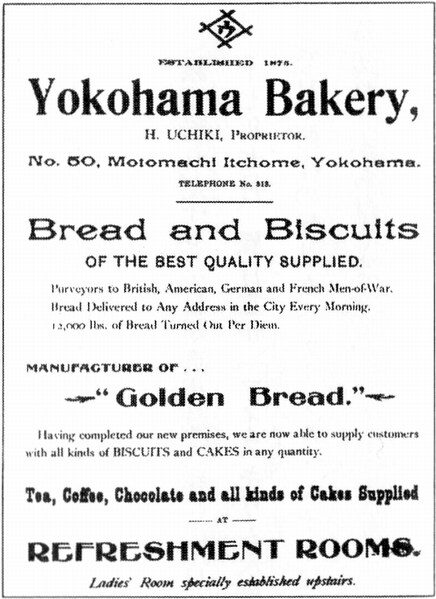
Bread became everyday food only after the Second World War, when school lunches built on American wheat aid served bread and skim milk to a generation of children. By 2011 the government’s household survey found families spending more on bread than on rice for the first time, though a rice-and-fish traditional breakfast still holds its place in many homes.
Kimuraya and the 1874 anpan
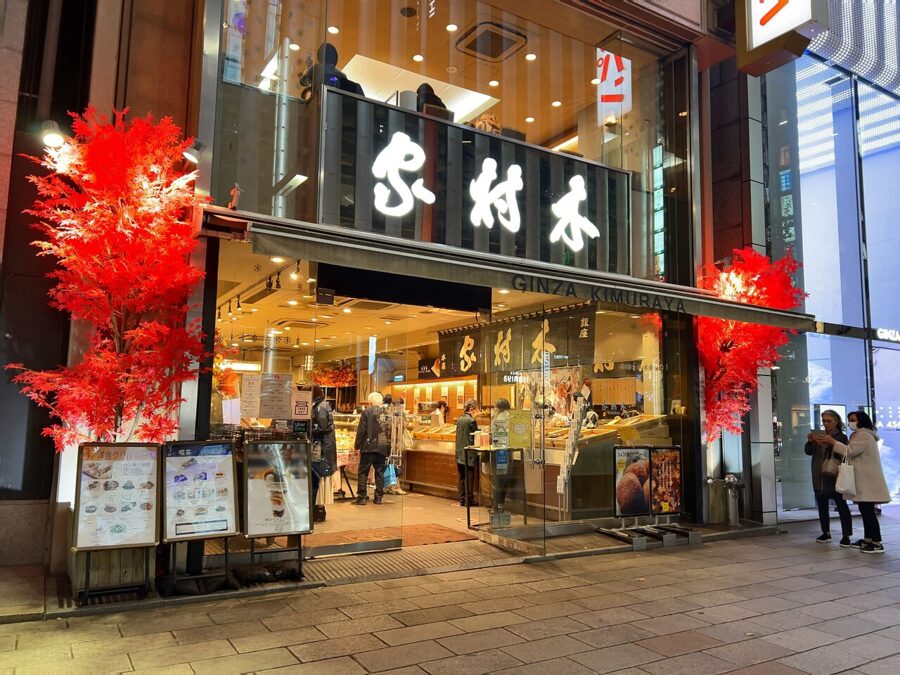
Kimura Yasubei was about fifty when he left a clerk’s job in 1869 and opened a bread shop called Bun’eidō in Shiba, Tokyo. The next year he moved toward what is now Ginza and renamed it 木村屋 (Kimuraya). In 1874, in the new brick district on Ginza 4-chome, he and his son Eizaburō sold a bun no one had tasted before.
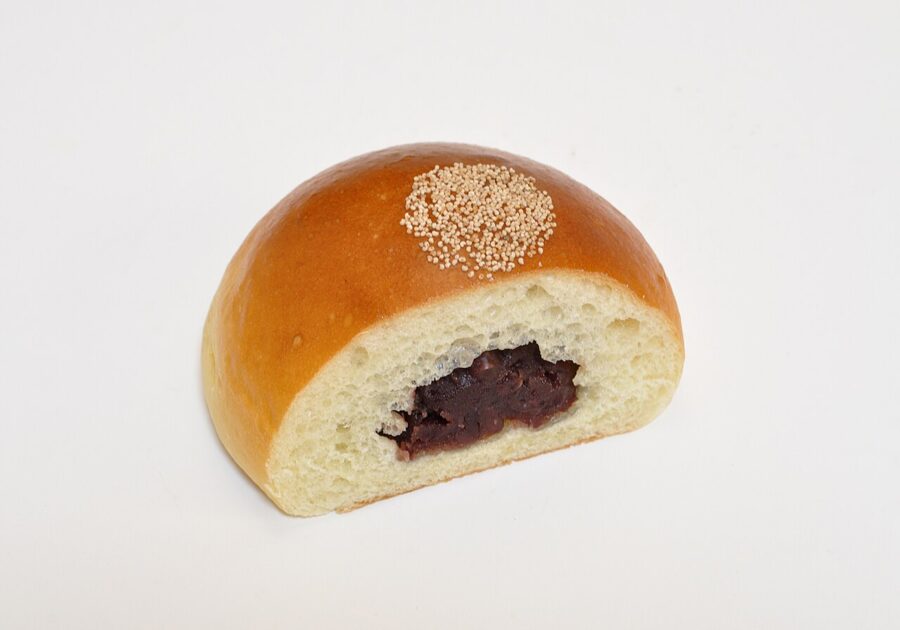
The bun was 酒種あんぱん (sakadane anpan). The dough rose on 酒種 (sakadane), a starter of rice and kōji, the mould used for sake, instead of European yeast, and inside went azuki bean paste, the filling of Japanese sweets for centuries. Kimuraya’s own history credits it with turning bread from a foreign curiosity into a snack ordinary people bought.
The breakthrough came on April 4, 1875. Yamaoka Tesshū, a chamberlain who knew Yasubei through swordsmanship, arranged for the anpan to be served to Emperor Meiji at the Mito domain’s riverside residence in Mukōjima. The bakers pressed a salted double cherry blossom from Yoshino into the navel of each bun. The Emperor liked it, the Empress liked it more, and the shop was asked to keep supplying the palace.
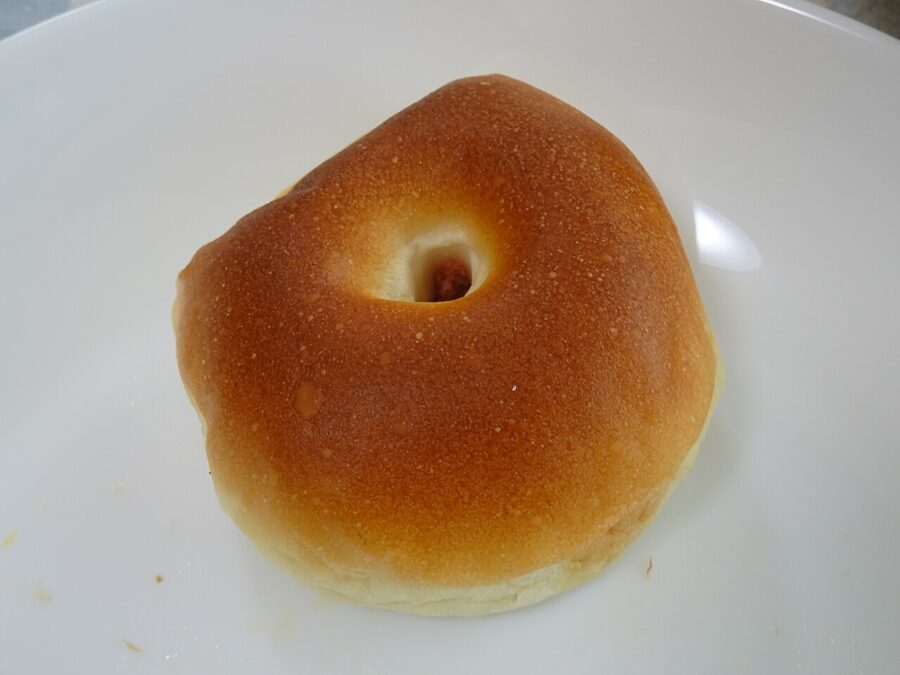

By 1882 the anpan was a Ginza specialty at one sen each, and by about 1897 it had spread across the country. Every sweet bun in a Japanese bakery descends from that idea of a familiar filling inside a foreign dough.
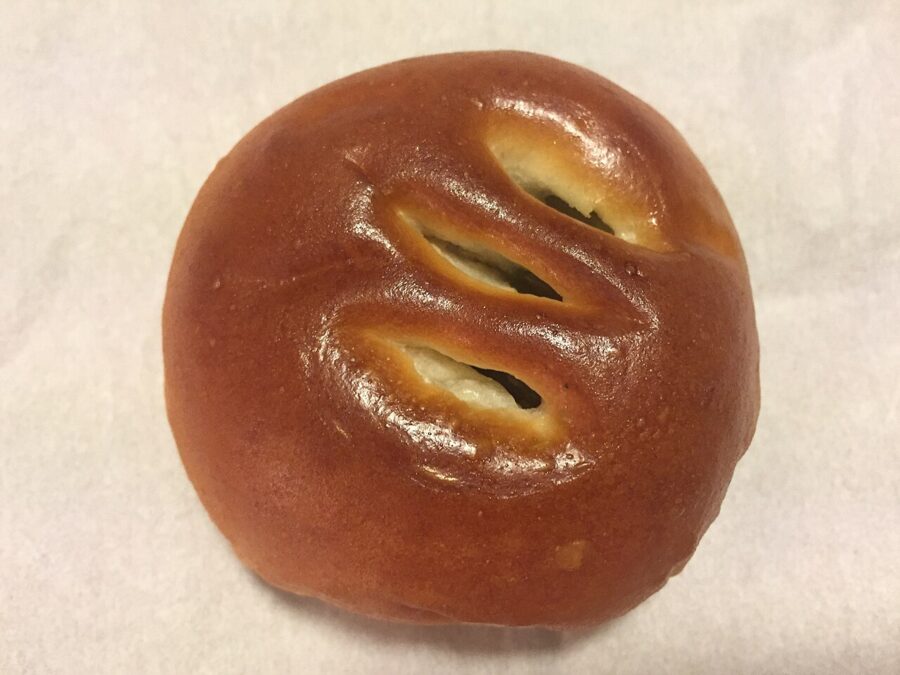

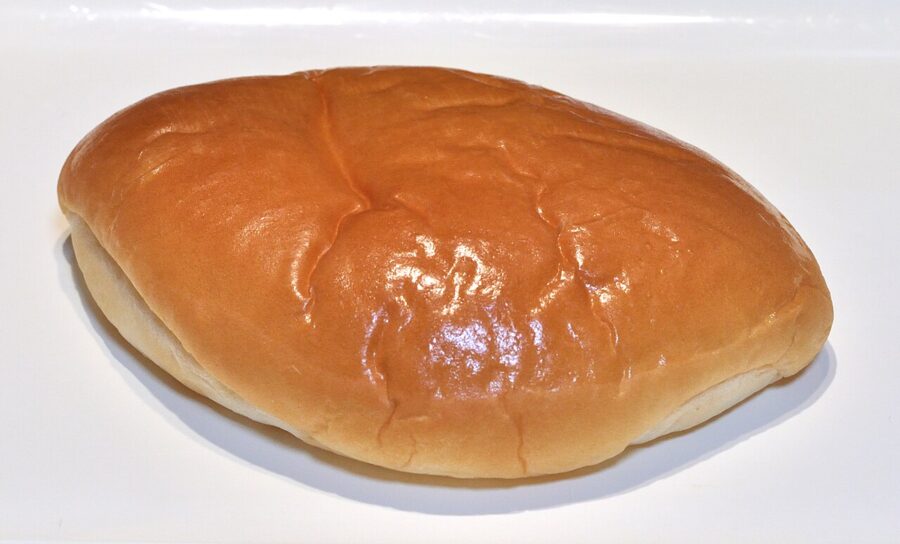
The third head of the family, Gishirō, added the next classic in 1900. Watching army biscuits being baked with jam, he swapped jam in for bean paste, and the ジャムパン (jamu pan) was born. Kimuraya still sells it.
Visiting Kimuraya in Ginza
The main store stands at Ginza 4-5-7, a short walk from Ginza Station, with the bakery on the ground floor and a café and restaurants upstairs. Ginza Kimuraya lists the building’s hours as 10:00 to 20:00, every day except New Year’s Eve and New Year’s Day, as of November 2026. Kimuraya’s online shop lists a box of five sakura sakadane anpan at 1,625 yen (about $10), roughly 325 yen a bun.
The breads, one by one
Anpan あんパン
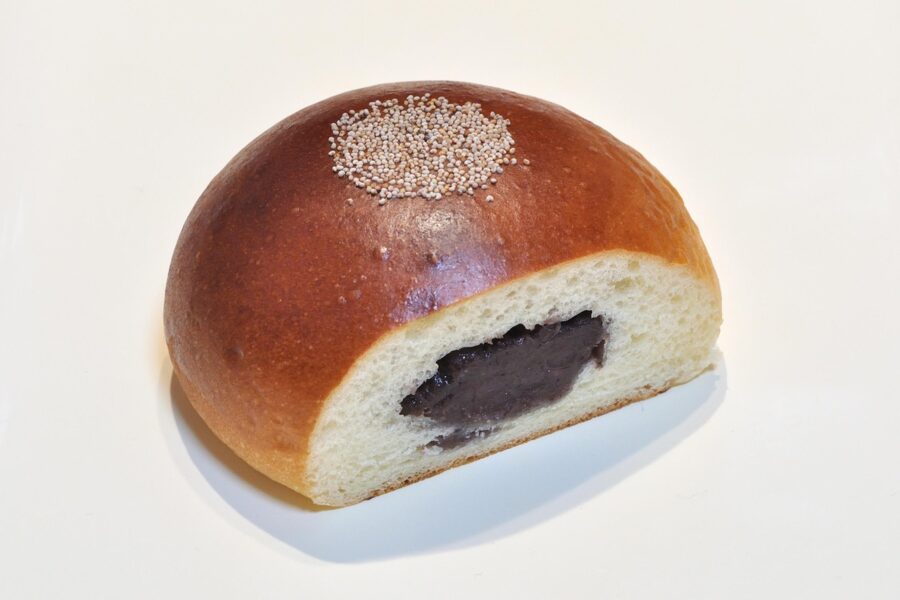
Anpan comes in two main fillings: つぶあん (tsubuan), coarse paste with the bean skins left in, and こしあん (koshian), smooth paste pushed through a sieve. Bakers mark them with different toppings, poppy seeds on one and sesame on another. At 7-Eleven in the Kanto region a 7 Premium koshian anpan costs 127 yen (about $0.80) as of November 2026.
Melon pan メロンパン
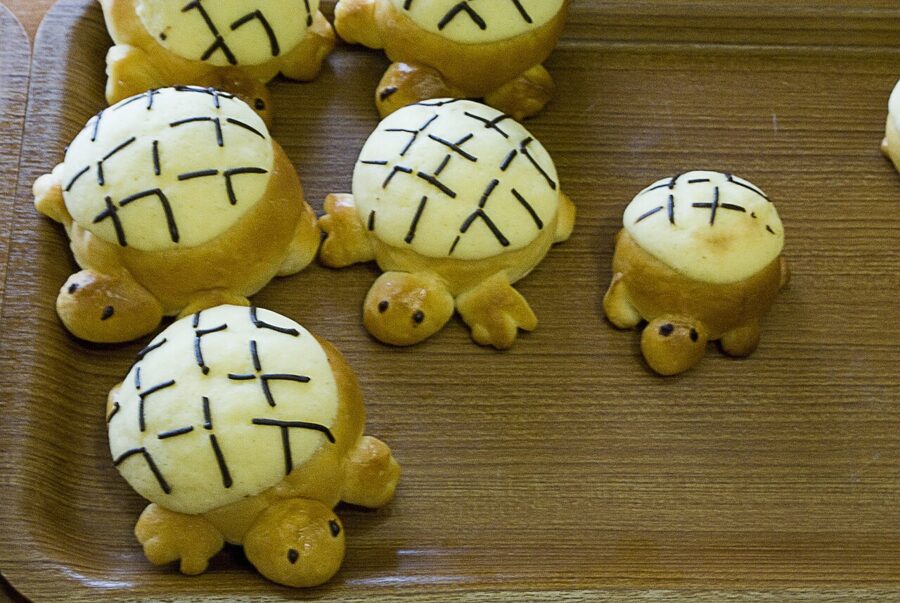
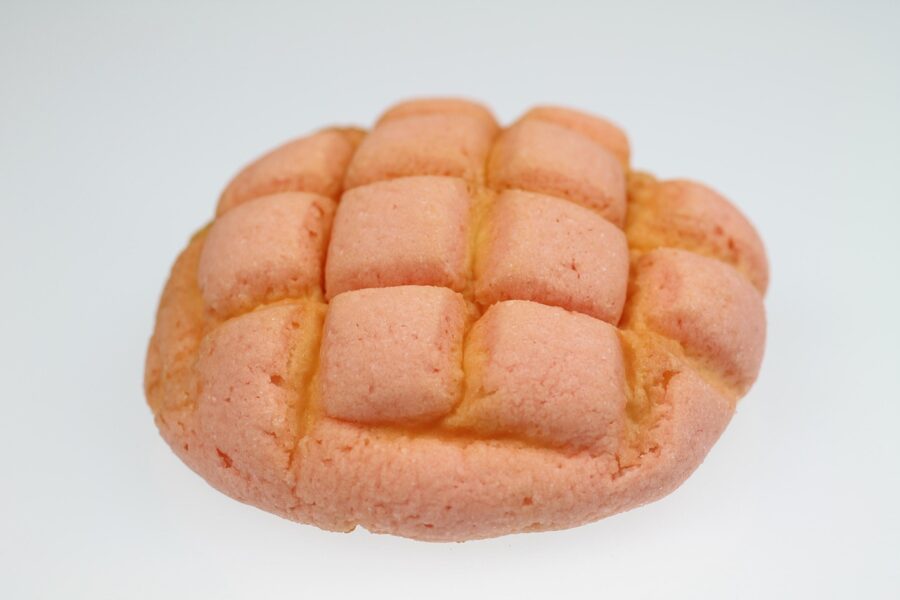
Melon pan is a round sweet bun under a crisp shell of cookie dough, scored in a crosshatch before baking, and usually there is no melon in it at all. The common explanation is that the cracked top looks like the rind of a muskmelon, a luxury fruit in prewar Japan. Sources agree it existed by the early Showa period, around the late 1920s, but not on who made the first one.
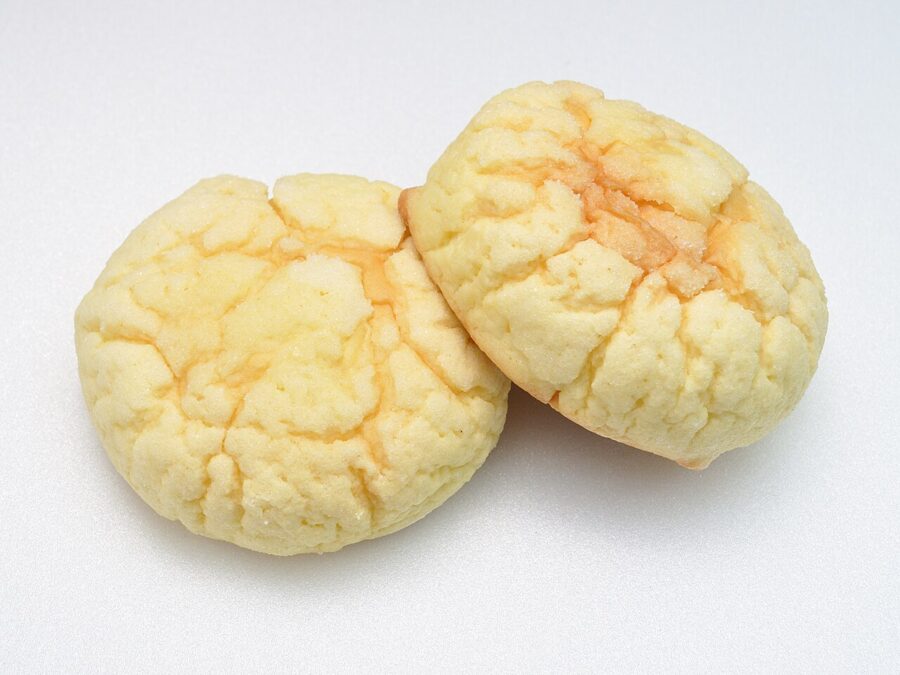
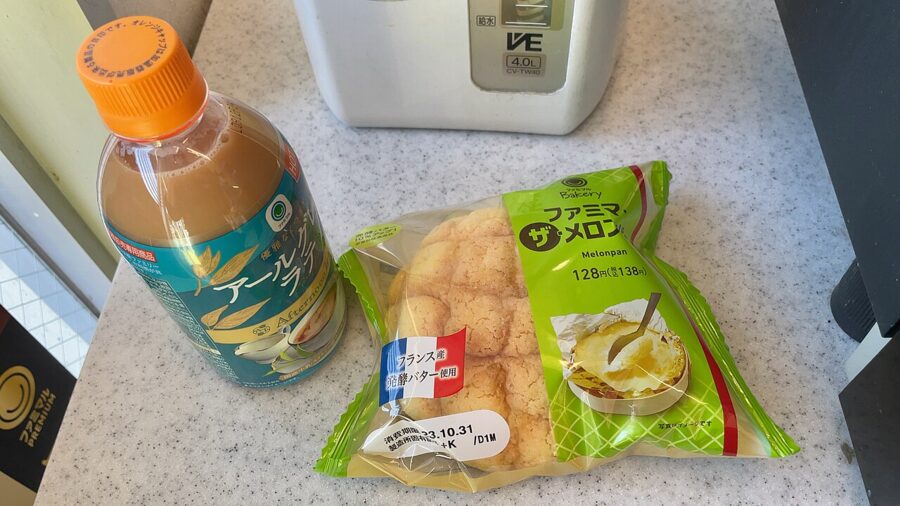
The name changes with the region. In much of Kansai, メロンパン traditionally means a spindle-shaped bun filled with white bean paste, and the round cookie-shell bun is called サンライズ, sunrise. At 7-Eleven in Kanto, ふんわりしっとりメロンパン costs 127 yen as of November 2026.

Cream pan クリームパン
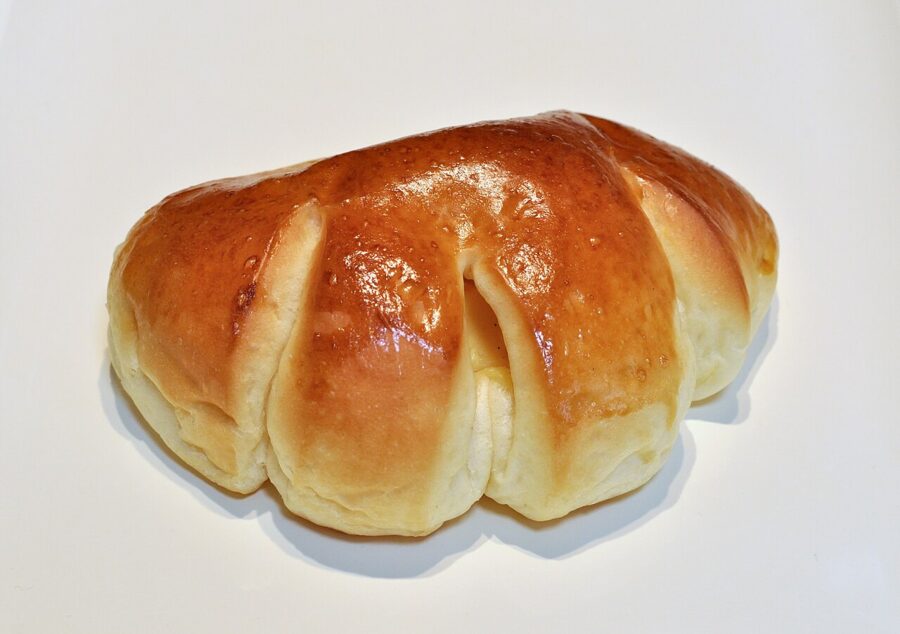
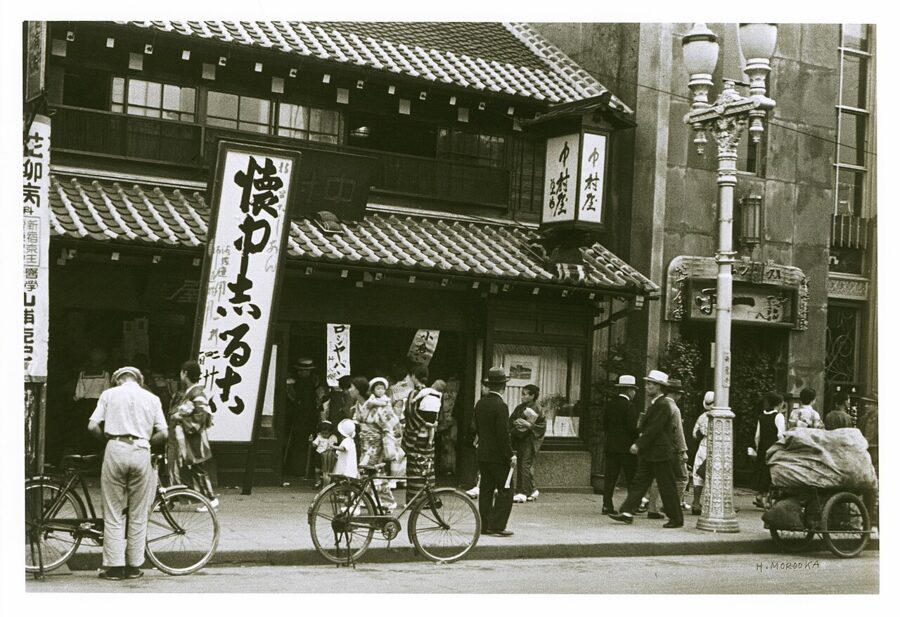
Cream pan is a soft bun filled with custard, and its inventor is on record. Sōma Aizō, founder of the Nakamuraya bakery, was so taken with the シュークリーム (shūkurīmu, cream puff) that he put its custard inside a bun in 1904, as Nakamuraya’s product history records. Nakamuraya had opened opposite Tokyo University’s Akamon gate in 1901 and added a Shinjuku branch in 1907, which became its home.
Curry pan, or kare pan カレーパン
Curry pan and kare pan are the same thing: カレー is read karē, and English menus spell it either way. It is a thick oval bun stuffed with stiff Japanese curry, rolled in panko and deep-fried, though baked versions are common now.
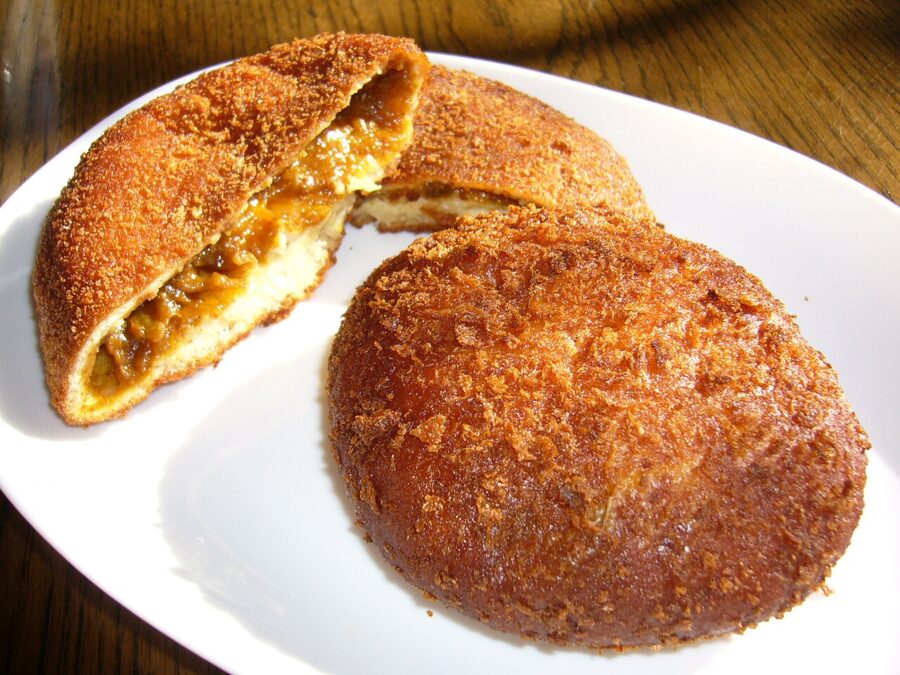

Several bakeries claim it, and the sources do not settle the question. The claim cited most often goes to Meikadō in Fukagawa, Tokyo, whose owner, rebuilding after the 1923 earthquake, wrapped curry in dough, breaded it like a cutlet and fried it. He sold it in 1927 as 洋食パン (yōshoku pan, “Western-food bread”) and registered the method that year; customers renamed it curry pan.
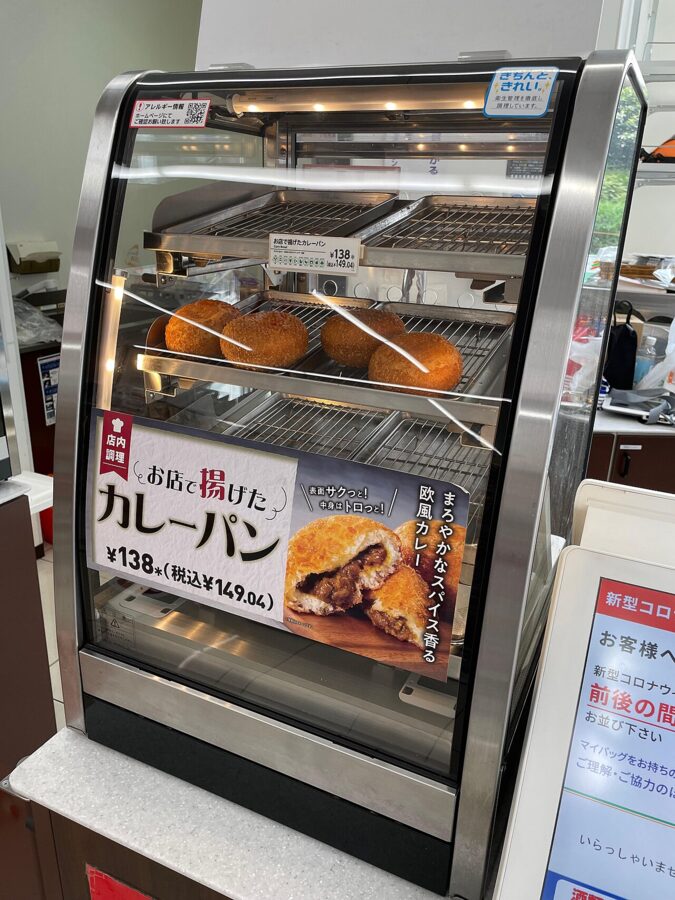
Curry pan was the first big savory bun, and it opened the door to everything on the sōzai pan shelf. At 7-Eleven in Kanto, スパイス香るコク旨カレーパン costs 170 yen (about $1.10) as of November 2026.

Yakisoba pan 焼きそばパン
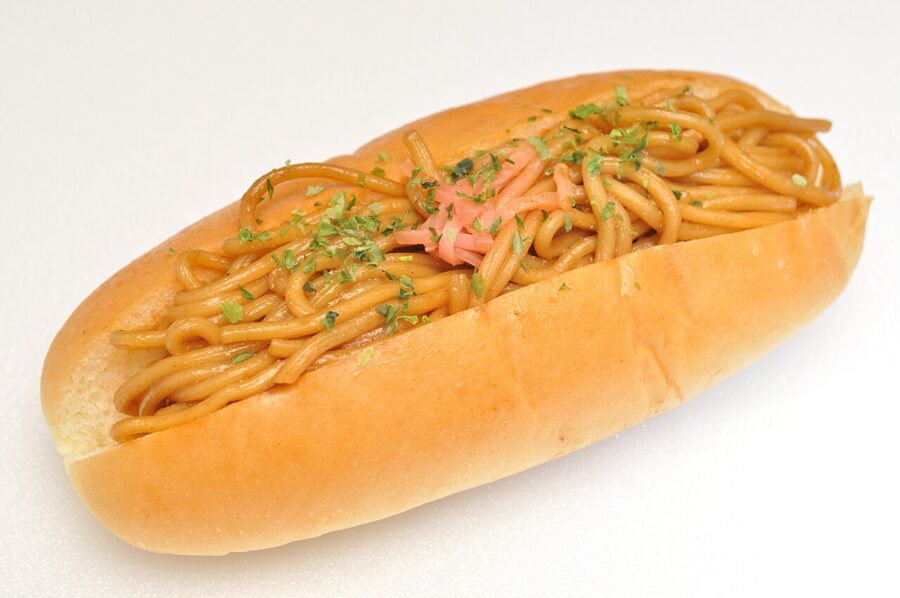
Yakisoba pan is fried noodles in a bun. The bun is a コッペパン (koppe pan), a soft oblong roll, split and filled with sauce-fried yakisoba and a little pickled red ginger, 紅しょうが (beni shōga). The usual story traces it to a shop in Minami-Senju, Tokyo, in the 1950s that sold yakisoba and rolls side by side, until a customer asked them to put one inside the other.
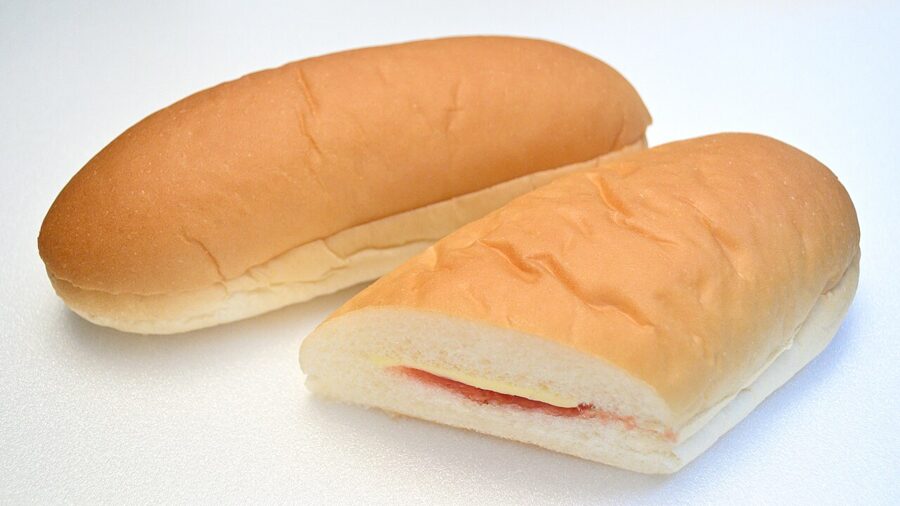
The koppe pan itself spread nationwide from 1950 as the staple of school lunches, until rice joined the lunch menu in 1976. To many Japanese adults it still tastes of the school year. A 7-Eleven egg-salad koppe pan, 7Pコッペパン たまご, is 138 yen (about $0.90) in Kanto as of November 2026.
Shokupan 食パン
Shokupan is the square white loaf, softer, sweeter and taller than most Western sandwich bread. The name is usually explained as short for 主食用パン, bread for a staple meal, the opposite of 菓子パン. It comes in two shapes: 角型 (kakugata), baked with a lid into a square, and 山型 (yamagata), baked open so the top rises into domes.
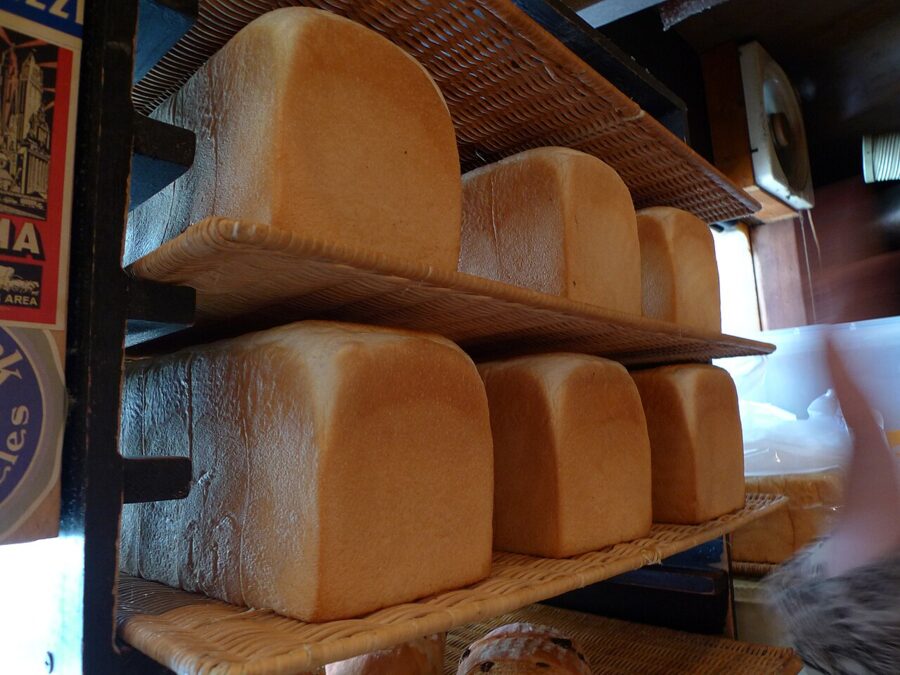

One 斤 is not a fixed weight. The bread kin comes from the English pound, about 450 grams, but the industry’s fair-trade rules only require at least 340 grams, so most loaves weigh 350 to 400 grams.
The sando サンド
サンドイッチ (sandoicchi) shortens to サンド (sando), and shokupan with the crusts cut off is what Japanese sandwiches are built on. カツサンド (katsu sando) holds a breaded pork cutlet with thick sweet sauce. たまごサンド (tamago sando) is egg salad heavy on mayonnaise, and フルーツサンド (furūtsu sando) is whipped cream and fruit, cut so the face shows a pattern.
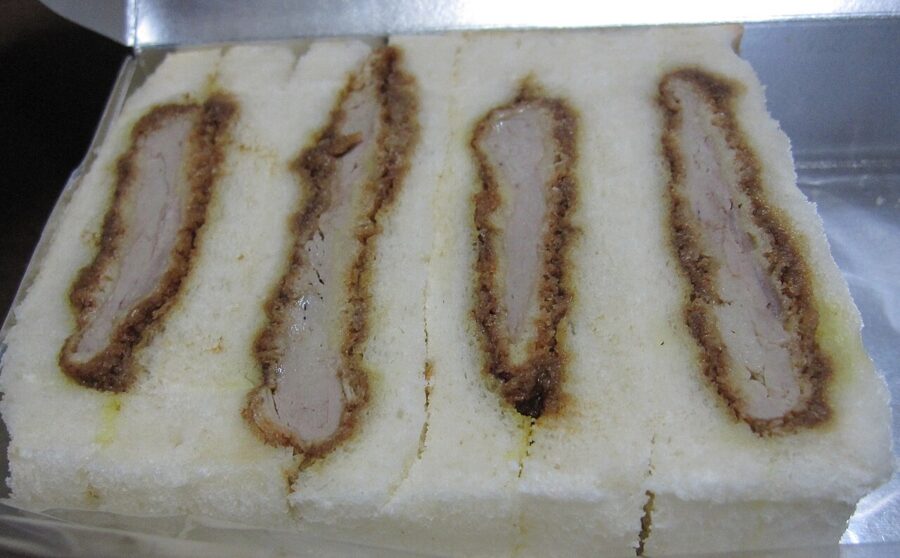
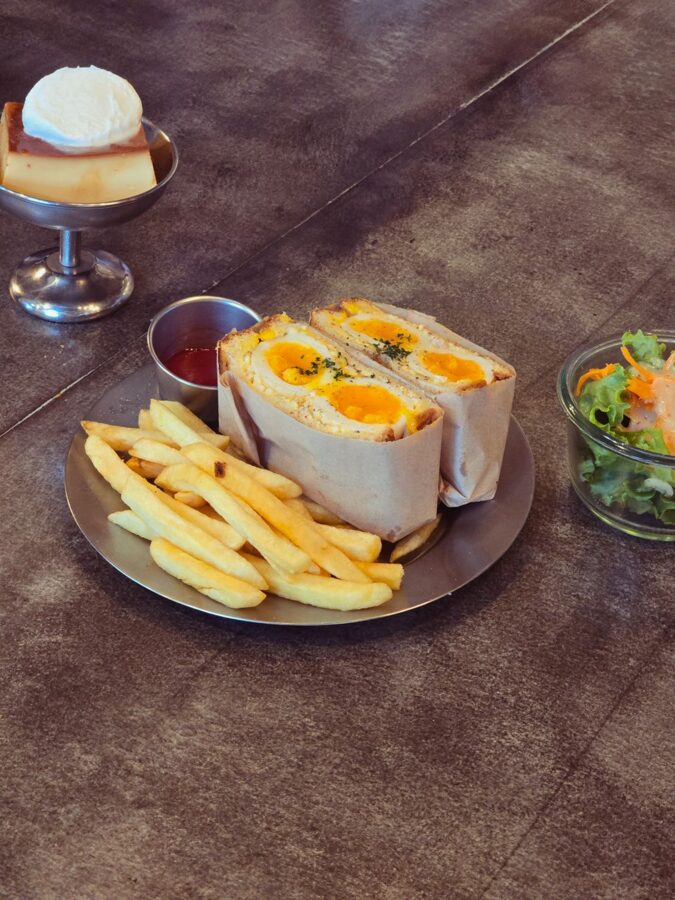
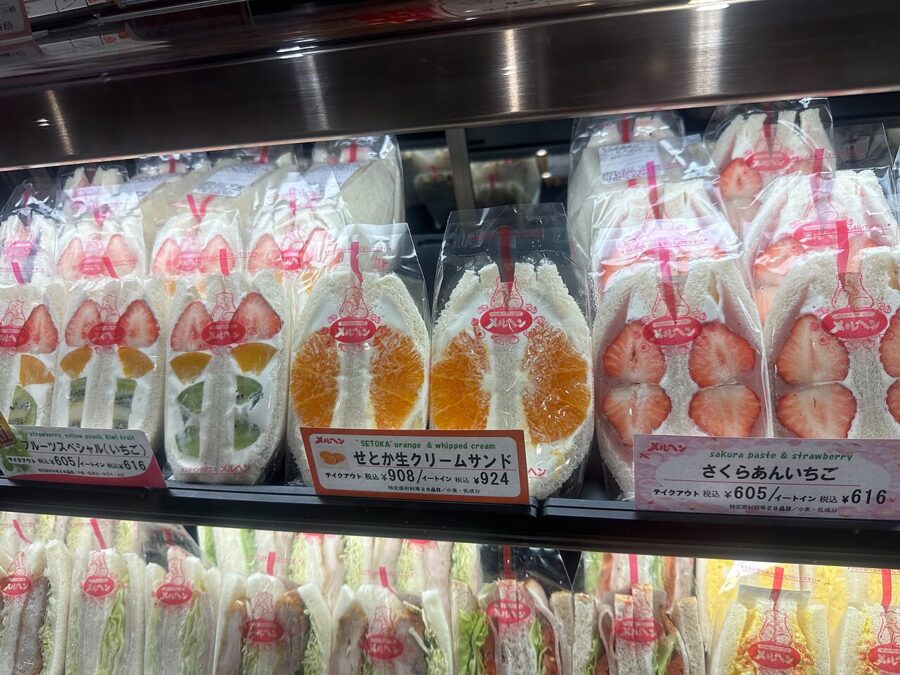

A fruit sando from a fruit shop costs as much as lunch. For the cakes and treats of December, food during Japanese Christmas picks up the story.
Why Japanese bread is so soft
The pull-apart softness of shokupan comes from 湯種 (yudane). Part of the flour is mixed with boiling water before the dough is made, which cooks the starch into a paste that holds far more water than raw flour. The bread comes out moist, springy and slow to go stale.
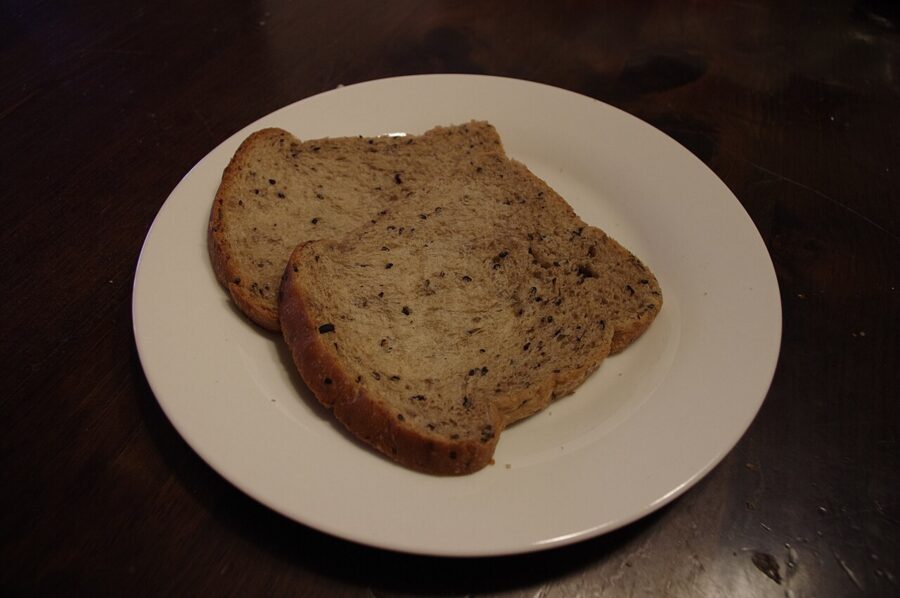
Tangzhong is the same characters read in Chinese, and names a close cousin: a little flour cooked with water or milk in a pan to about 65°C until it thickens. Yudane uses more flour, no stove and usually an overnight rest in the fridge. The rest of the softness is the recipe: high-protein bread flour, 強力粉 (kyōrikiko), plus milk, sugar and butter that a French loaf would never see.
Where to buy it, and how
Convenience stores
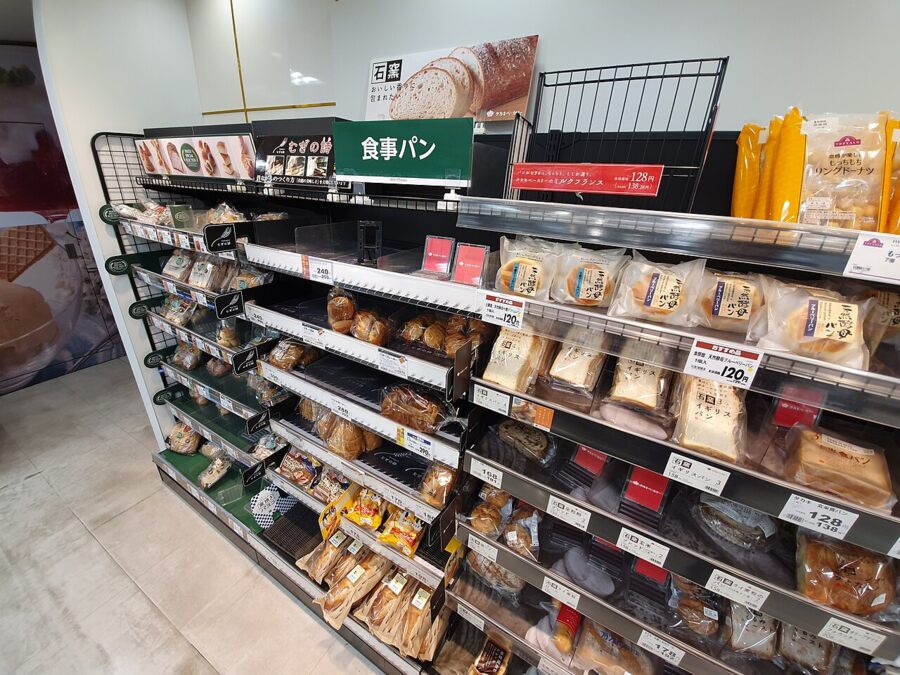
The konbini is the cheapest bakery in Japan and open all night. 7-Eleven, FamilyMart and Lawson each stock a wall of bagged bread from their own brands and big bakers such as Yamazaki and Pasco. These prices come from 7-Eleven’s bread lineup for Kanto, with the 8 percent take-out tax included, as of November 2026.
| Product | What it is | Price with tax |
|---|---|---|
| 7プレミアム こしあんぱん | smooth bean-paste anpan | 127 yen (about $0.80) |
| ふんわりしっとりメロンパン | melon pan | 127 yen (about $0.80) |
| 7Pコッペパン たまご | koppe pan with egg salad | 138 yen (about $0.90) |
| スパイス香るコク旨カレーパン | curry pan | 170 yen (about $1.10) |
| 7プレミアム 潤もち食パン 6枚入 | shokupan, six slices | 192 yen (about $1.20) |
| 7PG 金の食パン 4枚入 | premium shokupan, four thick slices | 343 yen (about $2.20) |

Depachika, station malls and bakery chains
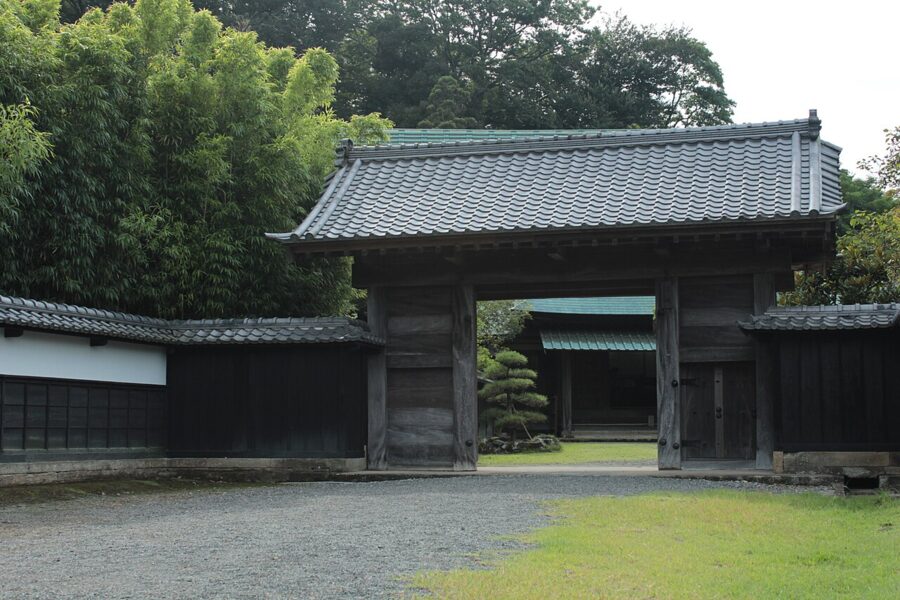
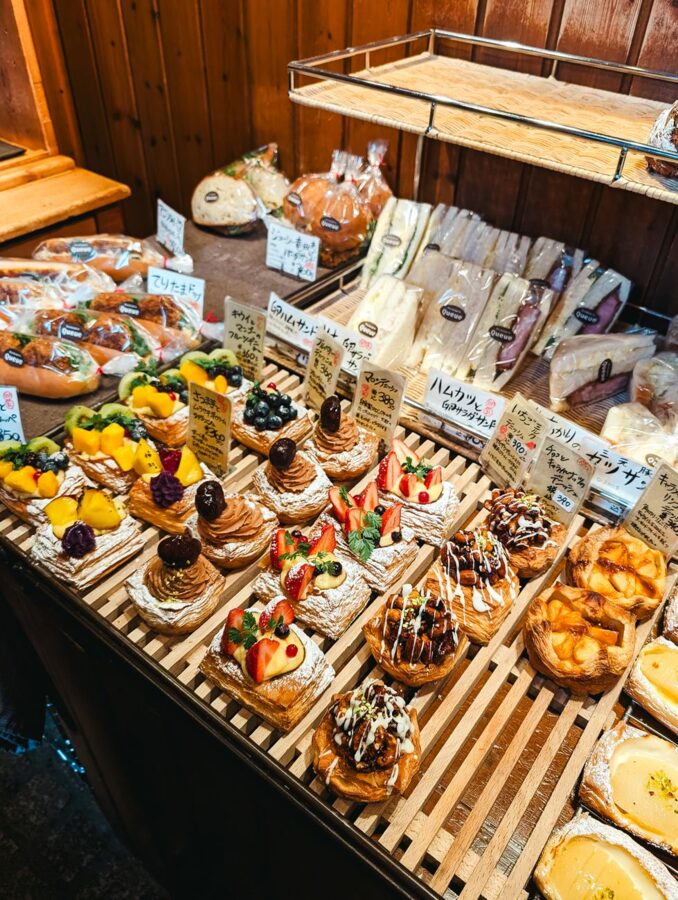
Department store food halls, デパ地下 (depachika), are where the old names sell. Kimuraya alone has counters in Ginza Mitsukoshi, Nihonbashi Takashimaya, Daimaru Tokyo, Shinjuku Isetan and Ikebukuro Tobu, and a depachika is the easiest place to compare several bakeries’ anpan in one trip. Station malls, like the Porta mall under Kyoto Station in the opening photo, do the same job for commuters.
Chains sit between konbini and craft bakery. VIE DE FRANCE keeps anpan, melon pan and cream pan on its regular menu next to croissants, and uses yudane in some sweet loaves. Bakery buns cost more than the konbini kind, and the price is on the card in front of every tray.
Tray, tongs and the register
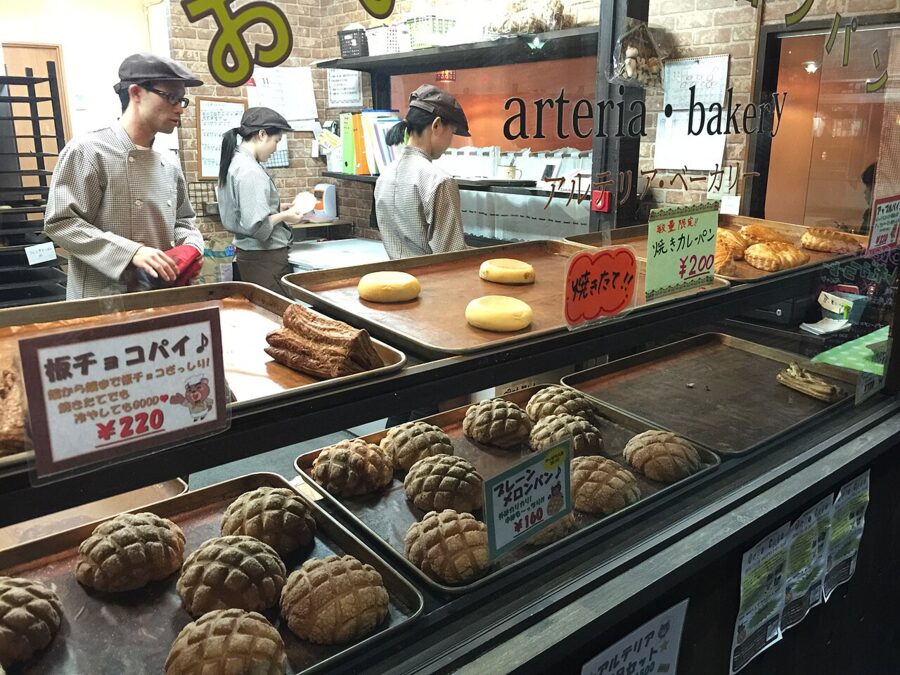
Take a トレー (torē, tray) and トング (tongu, tongs) from the stack near the entrance. Pick up only with the tongs, never your fingers, and treat anything on your tray as bought; most shops would rather you did not put it back. Carry the tray to the register, where staff bag each item, often wrapping sticky ones separately.

| Japanese | Romaji | English | Level |
|---|---|---|---|
| 袋はご利用ですか。 | fukuro wa go-riyō desu ka. | Would you like a bag? (staff) | formal |
| 袋は大丈夫です。 | fukuro wa daijōbu desu. | No bag, thanks. | polite |
| 温めますか。 | atatamemasu ka. | Shall I warm it up? (konbini staff) | polite |
| 店内で食べます。 | tennai de tabemasu. | I’ll eat here. | polite |
| 持ち帰りです。 | mochikaeri desu. | It’s to take away. | polite |
The eat-in question is about tax: take-out food is taxed at 8 percent and eating in at 10 percent. For the dishes you will meet beside bread, the Japanese food guide covers the rest of the table.
Baking shokupan at home
The only special step is the yudane. The night before, stir about 50 grams of bread flour into 50 grams of just-boiled water, cover, and chill it. Next day, knead it into a dough of roughly 200 grams more bread flour, a little sugar, salt, dry yeast, milk and butter, and let it rise.
Shape the dough into rolls laid side by side in a loaf tin, and leave the lid off for the domed yamagata top. Bake at around 180°C until deep gold, then let it cool fully before slicing; cut warm, the crumb squashes. On Japanese packets, bread flour is 強力粉 (kyōrikiko), dry yeast ドライイースト (dorai īsuto), and the loaf tin 食パン型 (shokupan-gata).
Next time you walk into a pan-ya, pick up the tray and tongs first, then read three cards before you choose. Say each name out loud, メロンパン, カレーパン, あんパン, and you have just read more katakana than most first-week learners.