
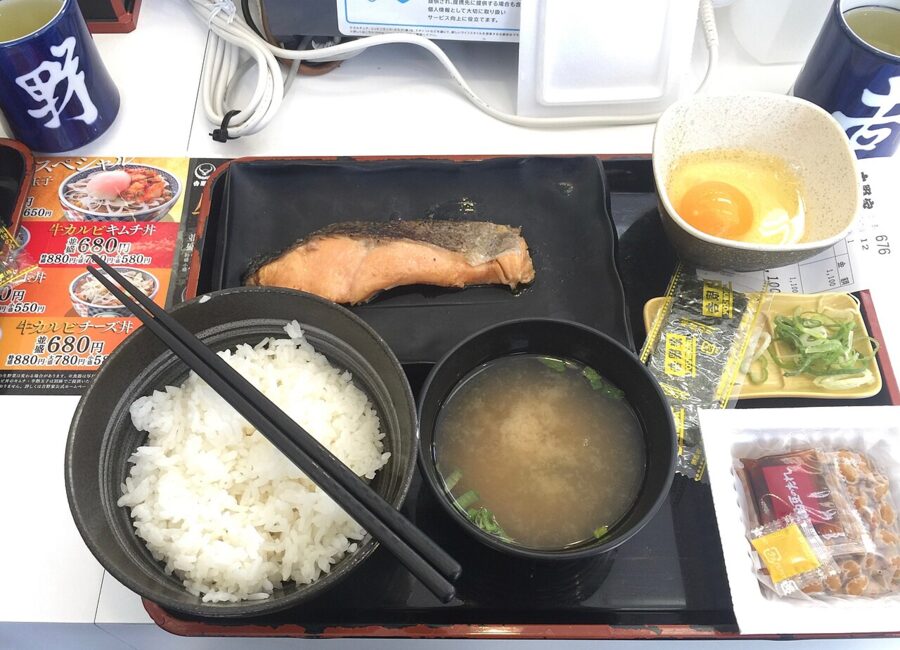
At five in the morning, most Sukiya branches in Japan will put grilled salmon, a bowl of rice, miso soup, a sheet of nori and a small seasonal side in front of you for 560 yen, about $3.50. The beef-bowl chain is open, the rice is hot, and whoever is two stools down is probably eating the same thing before a shift. That tray is the classic Japanese breakfast, and it is fish.
It surprises people who grew up on cereal. A traditional breakfast here is built like any other Japanese meal: rice, soup and a few side dishes, with grilled fish doing the job that bacon does in a diner. Ryokan serve it with ten small dishes, chains serve it with three, and plenty of families eat a version at home with leftovers from last night.
Breakfast is washoku at its plainest, the same rice, soup and sides pattern you meet in the food guide, scaled down for the morning. Every dish on that tray has a name worth learning, the tray has a layout, and the eating has an order. None of it is hard.


目次 Contents
The words before the food
Japanese has two everyday words for breakfast, and you will hear both on the first morning. 朝ごはん (asagohan) is the home word, literally “morning rice”, the one a parent calls up the stairs. 朝食 (chōshoku) is the written, slightly formal word you see on hotel signs, menus and booking pages.
Notice the rice in 朝ごはん. ごはん (gohan) means cooked rice and also simply “a meal”, which tells you how central the bowl is. Lunch is 昼ごはん (hirugohan) and dinner is 晩ごはん (bangohan) or 夜ごはん (yorugohan).
| Japanese | Romaji | English | Where you see it |
|---|---|---|---|
| 朝ごはん | asagohan | breakfast | speech, at home |
| 朝食 | chōshoku | breakfast | hotels, signs, menus |
| 和朝食 | wachōshoku | Japanese-style breakfast | hotel restaurants |
| 洋朝食 | yōchōshoku | Western-style breakfast | hotel restaurants |
| 朝定食 | asa teishoku | breakfast set meal | chain restaurants |
| モーニング | mōningu | coffee-shop morning set | cafés, especially around Nagoya |
The pair 和 (wa, Japanese) and 洋 (yō, Western) runs through the whole food vocabulary. A hotel that asks 和食と洋食、どちらになさいますか (washoku to yōshoku, dochira ni nasaimasu ka) is asking whether you want the Japanese or the Western breakfast, in formal keigo. Answer 和食でお願いします (washoku de onegai shimasu), polite, and the fish is on its way.
One soup, three sides
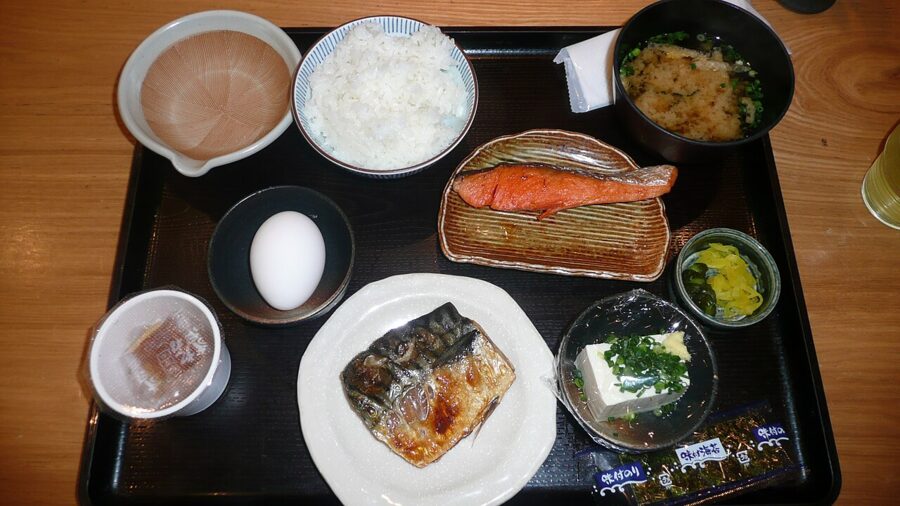
The Ministry of Agriculture, Forestry and Fisheries describes the shape of a Japanese meal as 一汁三菜 (ichijū sansai), “one soup, three sides”: rice and a soup, plus three おかず (okazu), the dishes you eat with the rice. Usually that means one main dish, often fish, and two smaller ones. The ministry’s own advice for families is that 一汁二菜 (ichijū nisai), one soup and two sides, is perfectly fine for everyday eating.
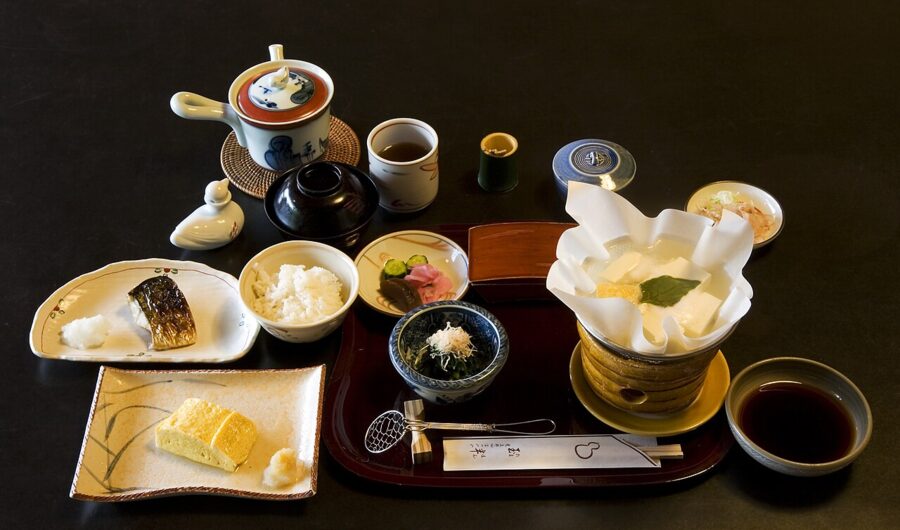
Breakfast tends to sit at the smaller end. A chain breakfast is rice, soup, fish and one or two small things; a ryokan breakfast runs well past three sides and still counts. The pattern is the point, not the count.

Where each bowl goes
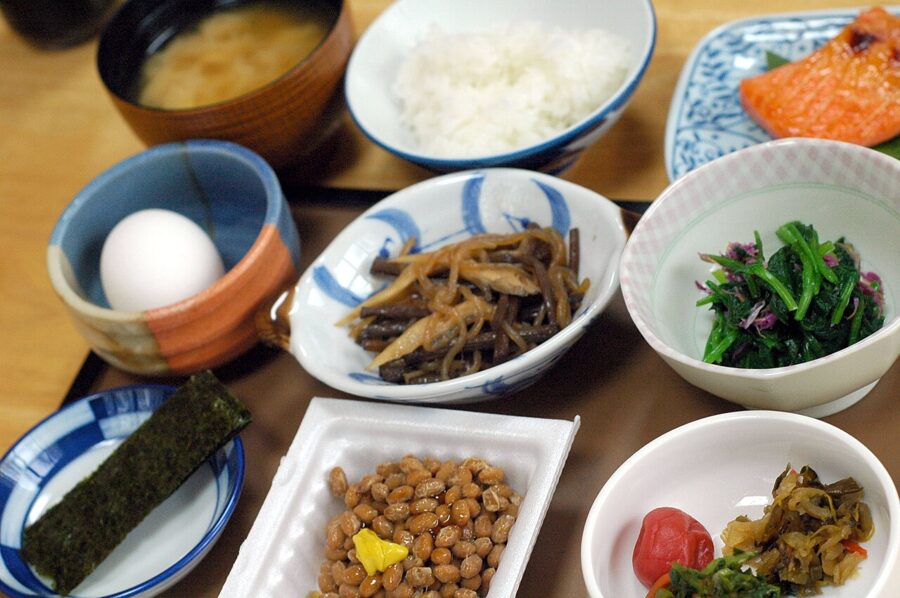
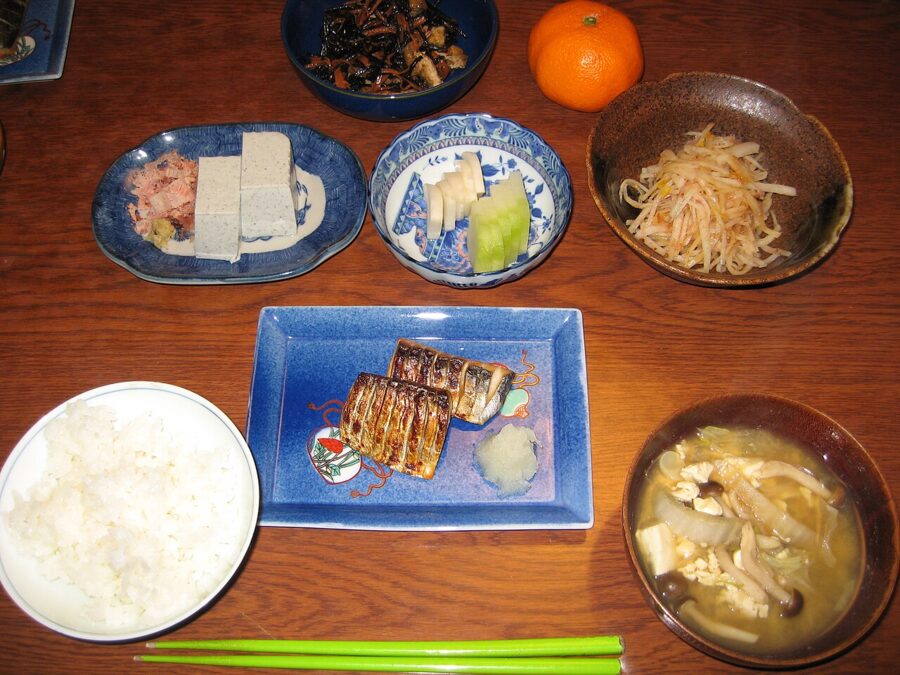
The tray has a layout, and once you know it you can read any set meal at a glance. Rice goes at the front on the left. The soup goes at the front on the right, next to the rice. The main dish, usually the fish, goes behind the soup on the right, and a side dish goes behind the rice on the left.
Small dishes such as pickles sit between or behind the two bowls. Chopsticks lie across the front of the tray, tips pointing left, on a little rest called a 箸置き (hashioki). Put the rice on the right and someone in the family will quietly swap it back.
The dishes, one bowl at a time
ご飯 (gohan): the rice
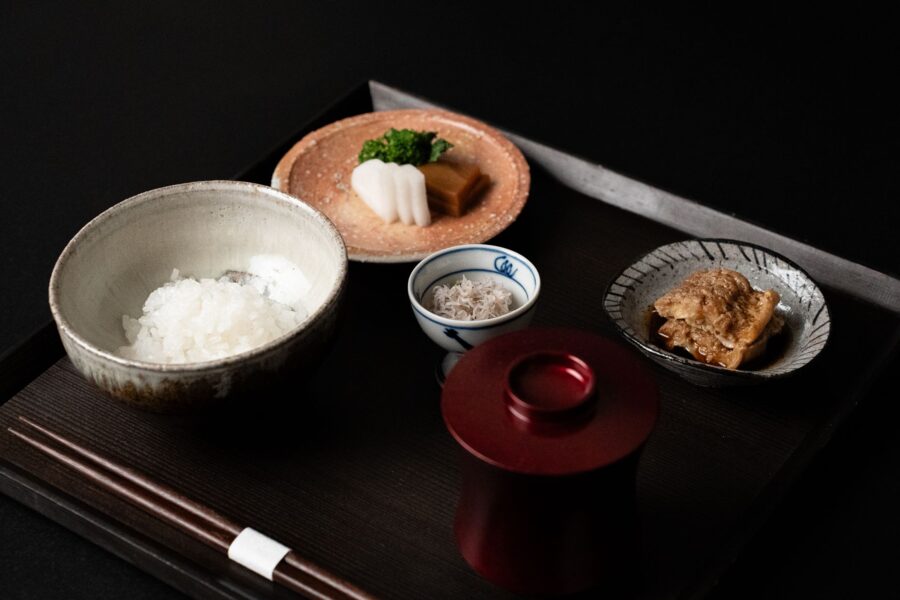
Plain white short-grain rice, served in a 茶碗 (chawan), the small bowl you hold in your hand. It is not seasoned and not buttered; the sides do the seasoning. At chains you choose the size when you order, and the words are worth learning: ミニ (mini) or 小盛 (komori) small, 並盛 (namimori) regular, 大盛 (ōmori) large.
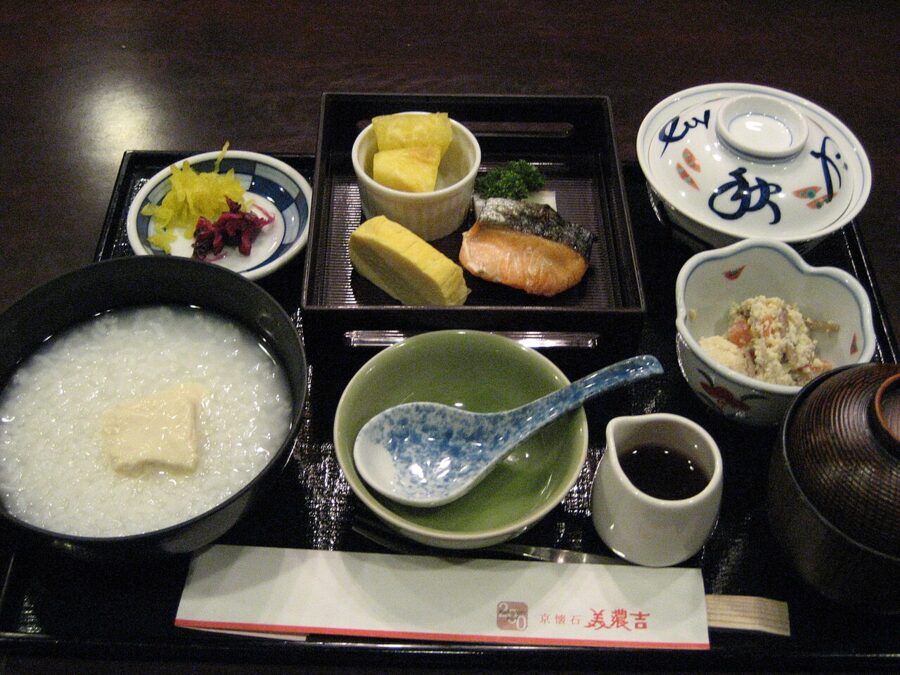
Some places swap the rice for お粥 (okayu), soft rice porridge, especially temples, some Kyoto restaurants and anyone feeding a cold. 朝粥 (asagayu), “morning porridge”, is a breakfast set built around it.

味噌汁 (misoshiru): the soup
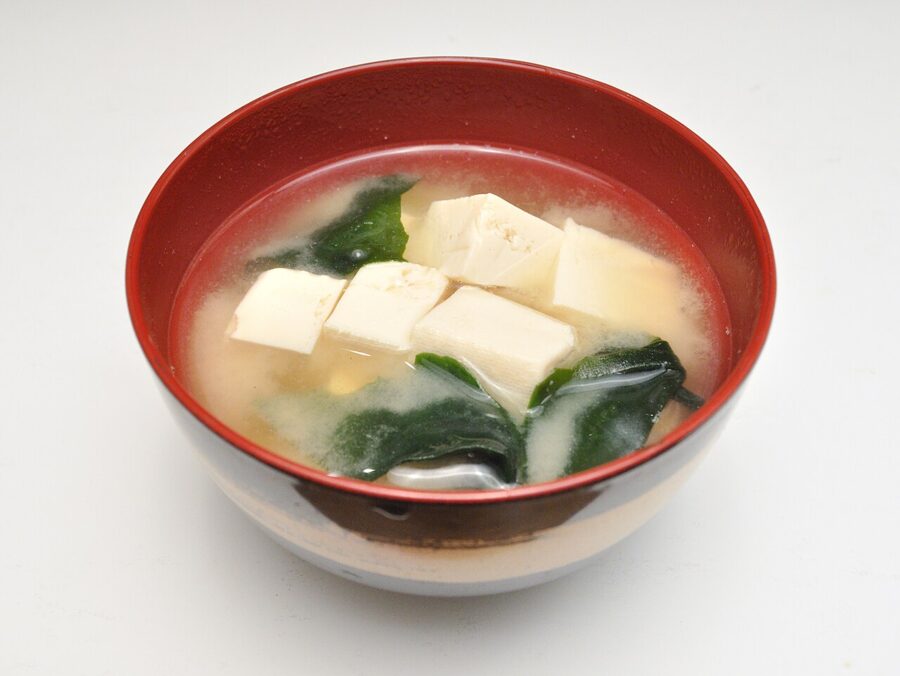
Dashi stock with miso stirred in, and a few 具 (gu), the solid bits. The breakfast regulars are 豆腐 (tōfu), わかめ (wakame) seaweed and ねぎ (negi), green onion. Clams such as しじみ (shijimi) or あさり (asari) make a famous morning version, and pork with vegetables turns it into 豚汁 (tonjiru), a heartier soup several chains let you swap in for a small charge.
You drink it straight from the bowl. There is no spoon on a Japanese breakfast tray, and you will not be offered one.
焼き魚 (yakizakana): the fish
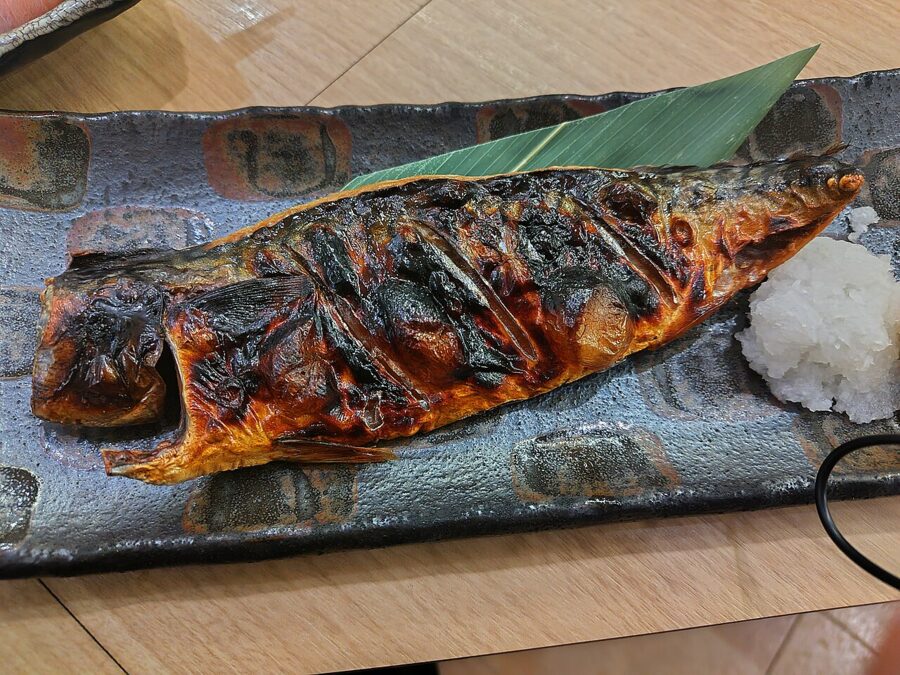
Grilled fish is the heart of the meal, and it is almost always salted before it is grilled. 塩焼き (shioyaki), “salt-grilled”, is the word you will see on menus. Three fish turn up most often.
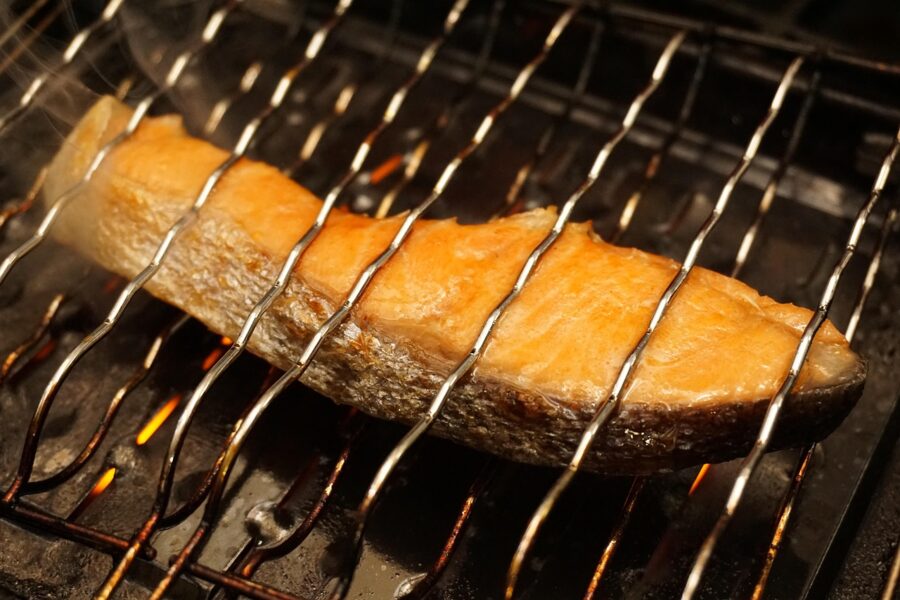
- 鮭 (sake or shake), salmon. Both readings are standard, and menus use both: Yayoiken writes しゃけ (shake) on its breakfast menu, while Yoshinoya and Sukiya write 鮭 or 焼鮭 (yakijake). Breakfast salmon is usually 塩鮭 (shiozake), salted ahead, so it comes out savory and firm.
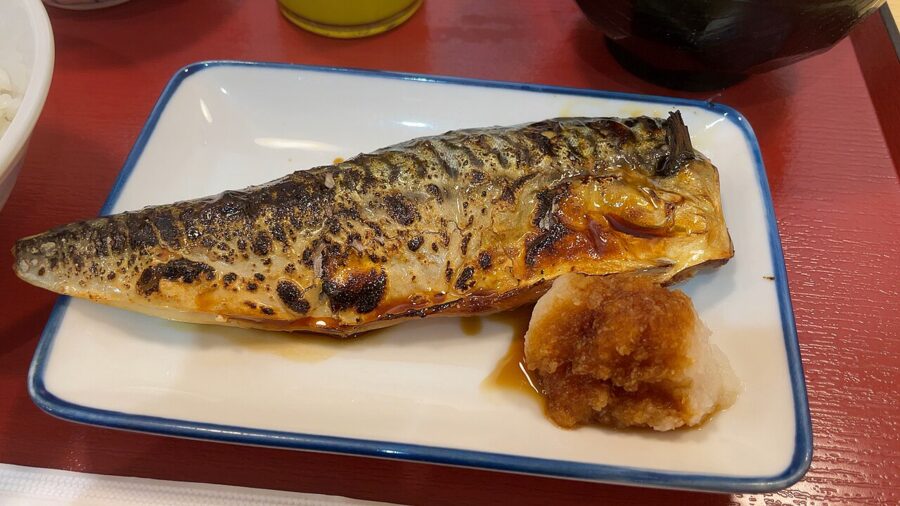
- 鯖 (saba), mackerel. Oily, rich and stronger than salmon. 塩さば (shiosaba) is salted mackerel, and Sukiya’s menu calls its version 炙り塩さば (aburi shiosaba), flame-seared.
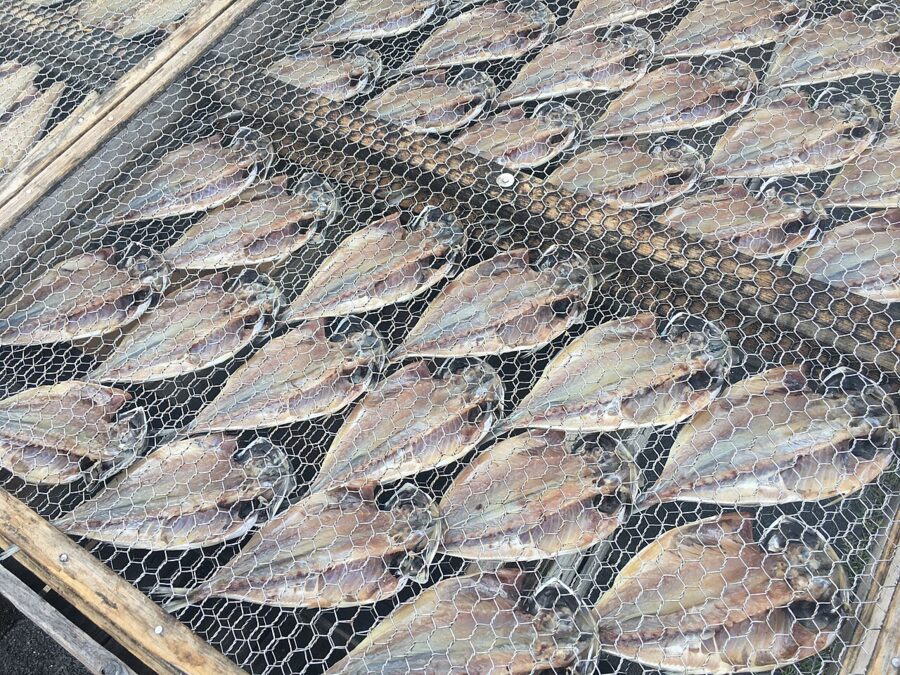
- 鯵 (aji), horse mackerel. Usually served as アジの開き (aji no hiraki), split open, salted and dried before grilling. That makes it a 干物 (himono), a dried fish, the classic inn and home breakfast fish.
An oily fish often comes with 大根おろし (daikon oroshi), a small mound of grated daikon radish. Put a few drops of soy sauce on it and eat a little with each bite of fish; it cuts the fat.


卵焼き (tamagoyaki): the rolled omelet
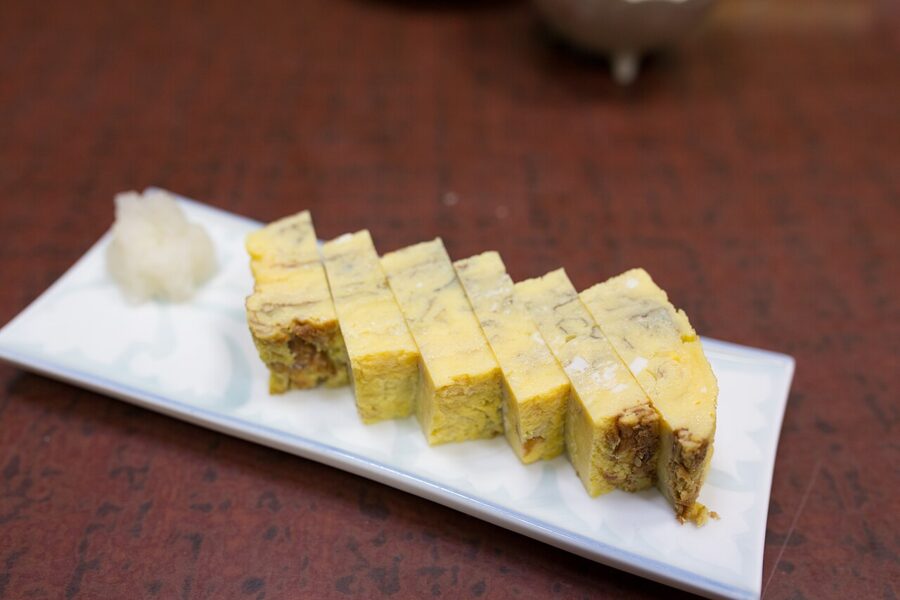
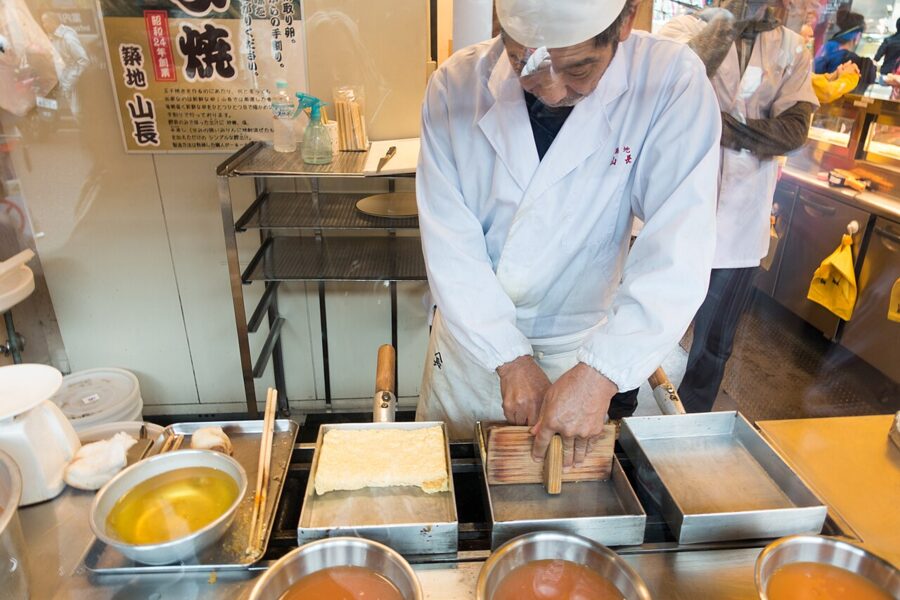
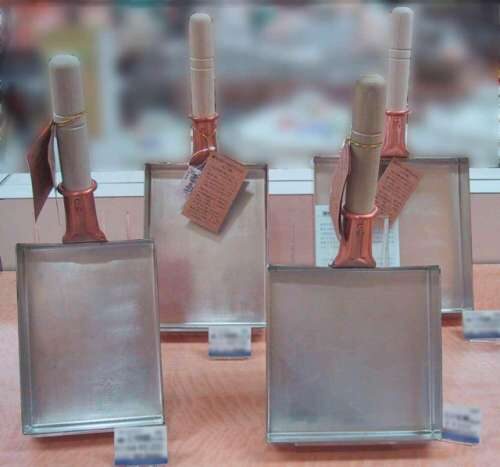
Thin layers of egg cooked one after another in a rectangular pan and rolled into a block, then sliced. Tokyo-style 卵焼き is often sweet. The Kansai version, だし巻き卵 (dashimaki tamago), folds dashi into the egg and comes out softer, juicier and savory.
If a menu writes 玉子焼き instead of 卵焼き, it is the same dish. Both kanji read たまご (tamago); 玉子 is the spelling you often see on menus for cooked egg.

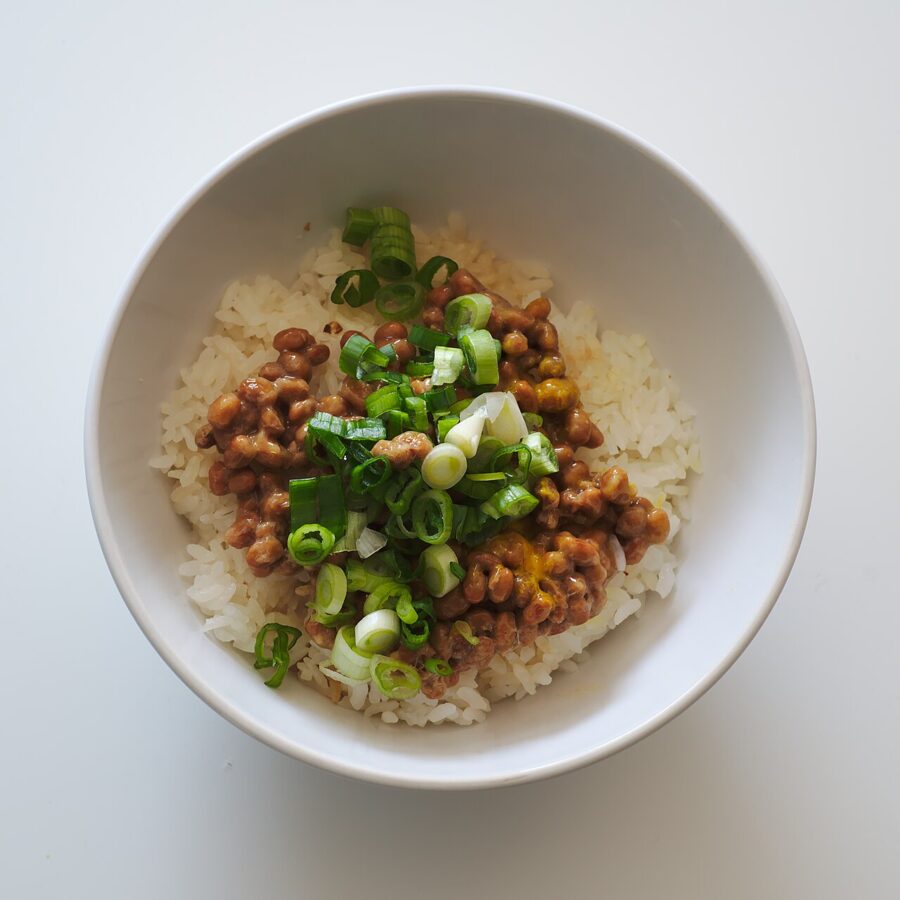
納豆 (nattō): fermented soybeans
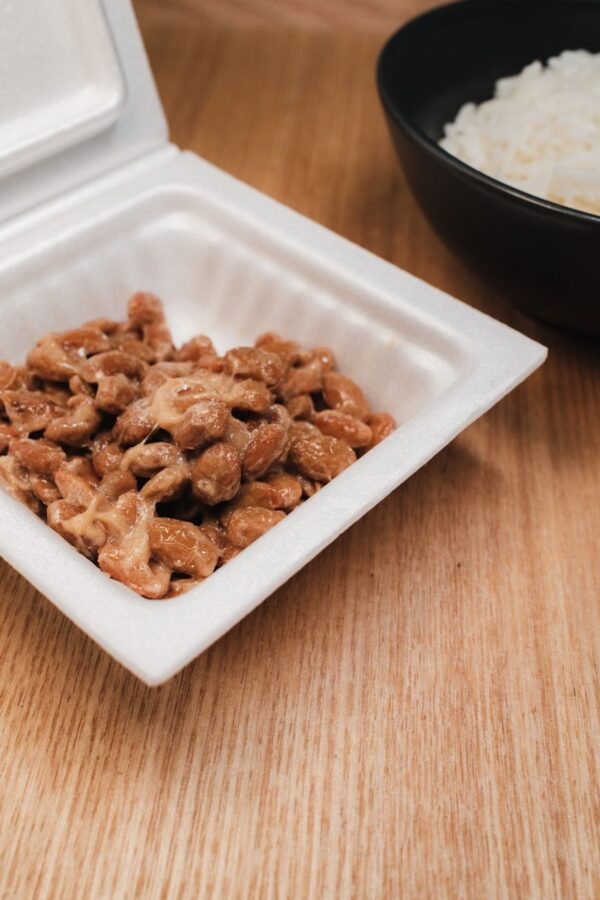
Sticky, strong-smelling, and the dish most visitors either love or never order twice. Natto comes in a small foam or plastic tray with a packet of たれ (tare), a soy-based sauce, and often からし (karashi), hot mustard. You stir it hard, add the sauce, stir again, and tip it over your rice.
If natto is not for you, say so politely. 納豆は大丈夫です (nattō wa daijōbu desu), polite, means “I’m fine without the natto”, even though 大丈夫 (daijōbu) usually means “all right”. It is the standard way to turn something down.

海苔 (nori) and 漬物 (tsukemono)
Nori at breakfast comes in small sheets, either 焼き海苔 (yakinori), plain toasted, or 味付け海苔 (ajitsuke nori), brushed with a sweet soy seasoning. Hotels and chains hand it out in little packets.
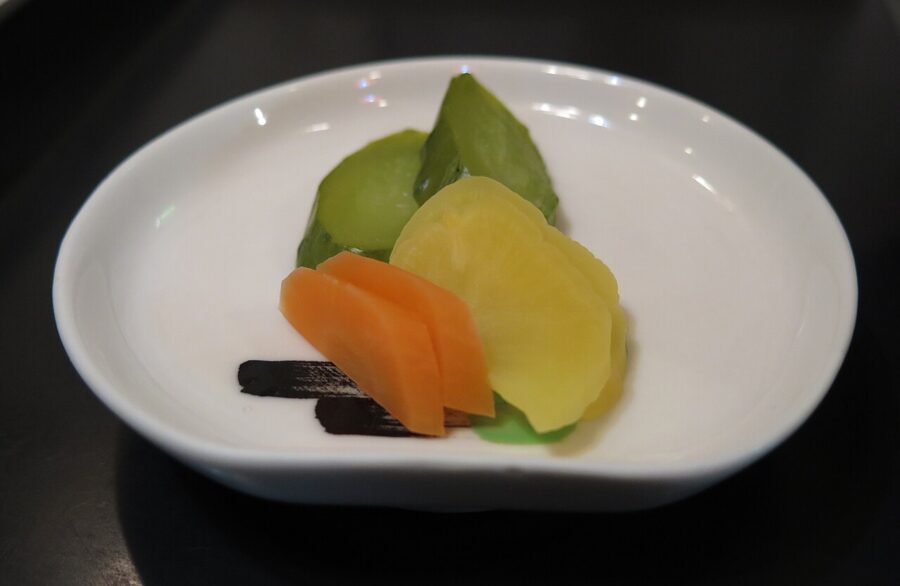
漬物 (tsukemono) are pickles, salted, brined or fermented vegetables. On a tray you may see them called お新香 (oshinko) or 香の物 (kō no mono), both meaning the same small dish. Look for yellow たくあん (takuan), pickled daikon, and 梅干し (umeboshi), a salted plum so sour it makes your eyes close.
How to eat it
Start with the phrase. いただきます (itadakimasu), polite, is said before the first bite, at home, in a ryokan and to yourself at a chain counter. It comes from いただく (itadaku), the humble verb for receiving, so it is closer to “I humbly receive” than to “let’s eat”. Many people press their palms together as they say it.
Then take a sip of the miso soup first. It wets the chopsticks so rice does not stick to them, and it is the usual way to start. After that, move around the tray: rice, a bite of fish, rice, soup, a pickle. This rotation has a name, 三角食べ (sankaku tabe), “triangle eating”, and many people learned it from school lunches.
- Lift the bowls. Pick up the rice bowl and the soup bowl and hold them near your chest. Plates of fish stay on the tray.
- Do not pour soup on your rice. Families do it at home and nobody minds, but at a ryokan or restaurant it reads as sloppy.
- Do not flip the fish. Eat the top fillet, lift the backbone off with your chopsticks, set it at the back of the plate, and eat the bottom half.
- Wrap rice in nori. Dip one edge of a sheet in soy sauce, lay it on the rice, and fold it around a bite with your chopsticks.
- Put the lids back on when you finish. It tells staff you are done.
When you finish, say ごちそうさまでした (gochisōsama deshita), polite. ちそう (chisō) originally meant running around to gather food for a guest, so you are thanking whoever went to the trouble. Say it to the ryokan staff, say it to the person behind the counter at Sukiya. Among friends, plain ごちそうさま is casual and fine.
| Japanese | Romaji | English | Level |
|---|---|---|---|
| いただきます。 | itadakimasu. | (Said before eating.) | polite |
| ごちそうさまでした。 | gochisōsama deshita. | Thank you for the meal. | polite |
| 朝食は何時からですか。 | chōshoku wa nanji kara desu ka. | What time does breakfast start? | polite |
| 和食でお願いします。 | washoku de onegai shimasu. | The Japanese breakfast, please. | polite |
| ご飯少なめでお願いします。 | gohan sukuname de onegai shimasu. | Less rice, please. | polite |
| おかわりお願いします。 | okawari onegai shimasu. | A refill, please. | polite |
| 納豆は大丈夫です。 | nattō wa daijōbu desu. | I’m fine without the natto. | polite |
| おいしかったです。 | oishikatta desu. | That was delicious. | polite |
Eight phrases, all polite, all usable tomorrow. If you keep vocabulary flashcards, put the table above on one card each and drill them on the plane.
Where a traveler gets one
Ryokan and hotels
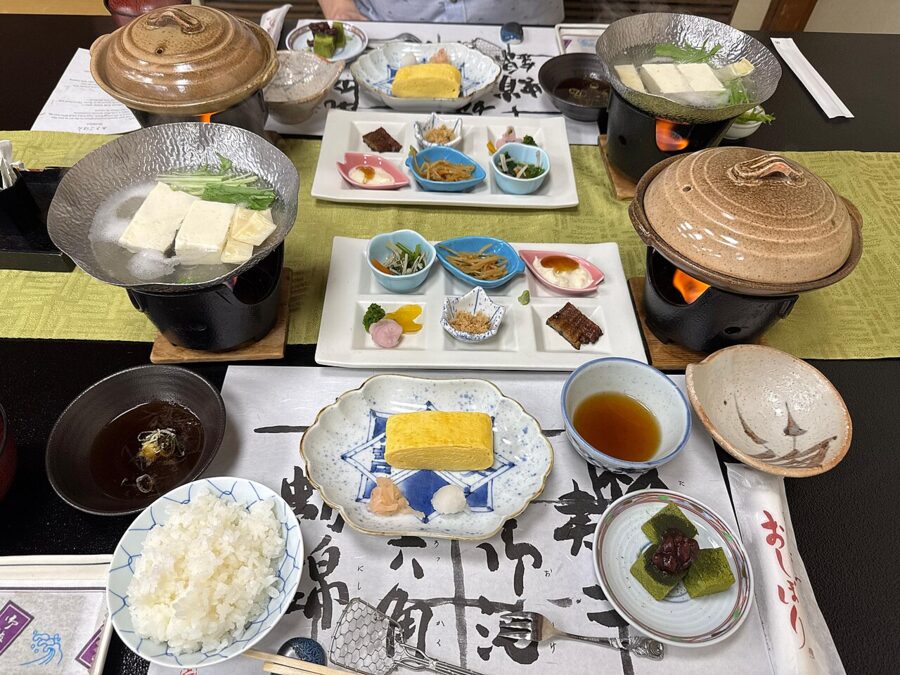
The full version, with ten small dishes, a tiny hot pot and fish grilled that morning, is a ryokan breakfast. Many inns sell rooms as 一泊二食付き (ippaku nishoku-tsuki), “one night with two meals”, meaning dinner and breakfast are included. 朝食付き (chōshoku-tsuki) means breakfast only, and 素泊まり (sudomari) means a room with no meals at all.
Many inns ask you to pick a breakfast time when you check in, and they mean it; the rice and fish are timed to your slot. If you are staying at a hot-spring town, the onsen guide covers the bathing side of the stay, and breakfast is the reward for an early soak.

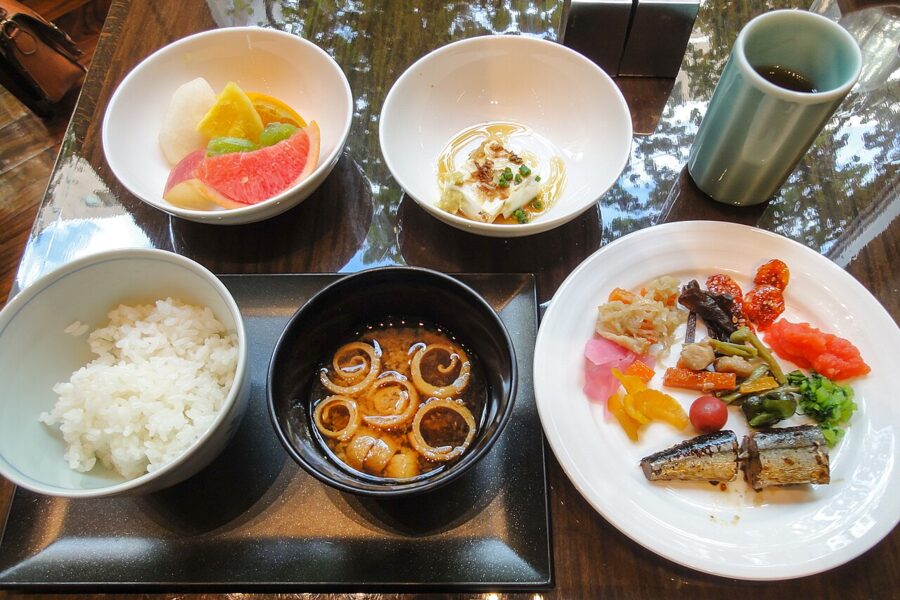
Business hotels and city hotels mostly run a buffet, which Japanese calls バイキング (baikingu), “Viking”, or ビュッフェ (byuffe). The Japanese side of the buffet usually has rice, miso soup, grilled salmon or mackerel, natto, nori and pickles, so you can build the tray yourself.

Teishoku and beef-bowl chains
For a traveler on a budget, the chains are the best breakfast in Japan. They open early, the food is on the tray in minutes, and a full fish breakfast costs less than a coffee at a hotel. Prices below are eat-in, tax included, as of November 2026, and can vary by branch.
| Chain | Breakfast hours | Fish breakfast | Cheapest set | Notes |
|---|---|---|---|---|
| Sukiya (すき家) | 4:00 to 11:00 | 焼鮭朝食, grilled salmon, 560 yen (about $3.50); 塩さば朝食, mackerel, the same | たまかけ朝食, rice with raw egg, 330 yen (about $2) | 7% late-night surcharge on orders from 4:00 to 5:00 |
| Yoshinoya (吉野家) | 4:00 to 11:00 | 焼魚定食, salmon, 530 yen (about $3.30) | 納豆定食, natto set, 430 yen (about $2.70) | Extra rice free at participating branches; the fish set is eat-in only |
| Yayoiken (やよい軒) | 5:00 to 11:00 at 24-hour branches; others vary | しゃけの塩焼朝食, salmon, 580 yen (about $3.70); サバの塩焼朝食, mackerel, 640 yen (about $4) | 納豆朝食, natto set, 440 yen (about $2.80) | Tokyo prices; breakfast at some branches only; free rice refills |
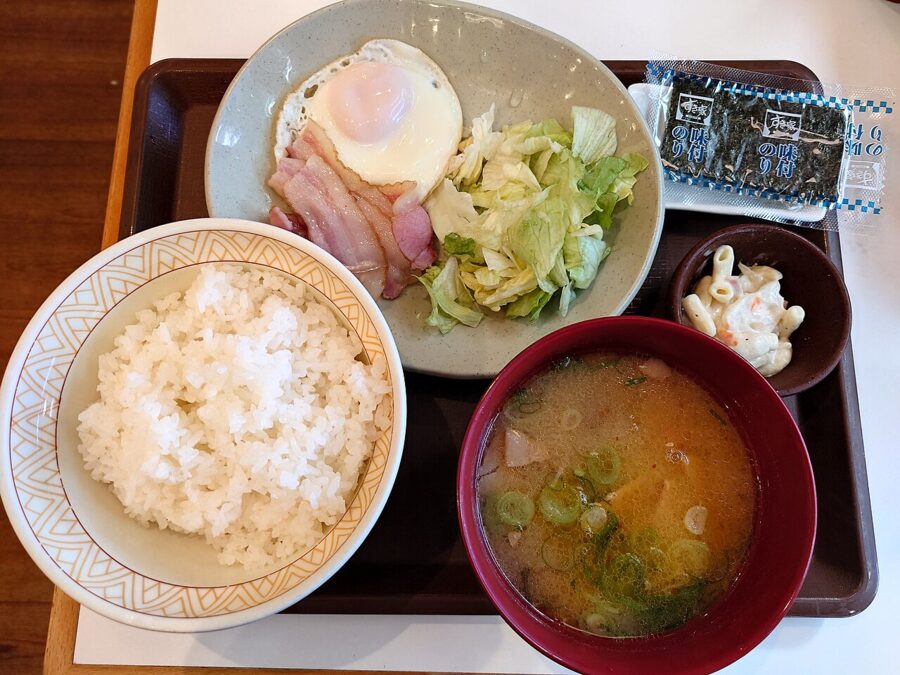

At Sukiya the salmon and mackerel sets also come with nori and a seasonal small dish, and on the たまかけ (tamakake) sets you can swap the raw egg for pickles. Yoshinoya’s salmon set is the plainest of the three: rice, soup, fish, done.
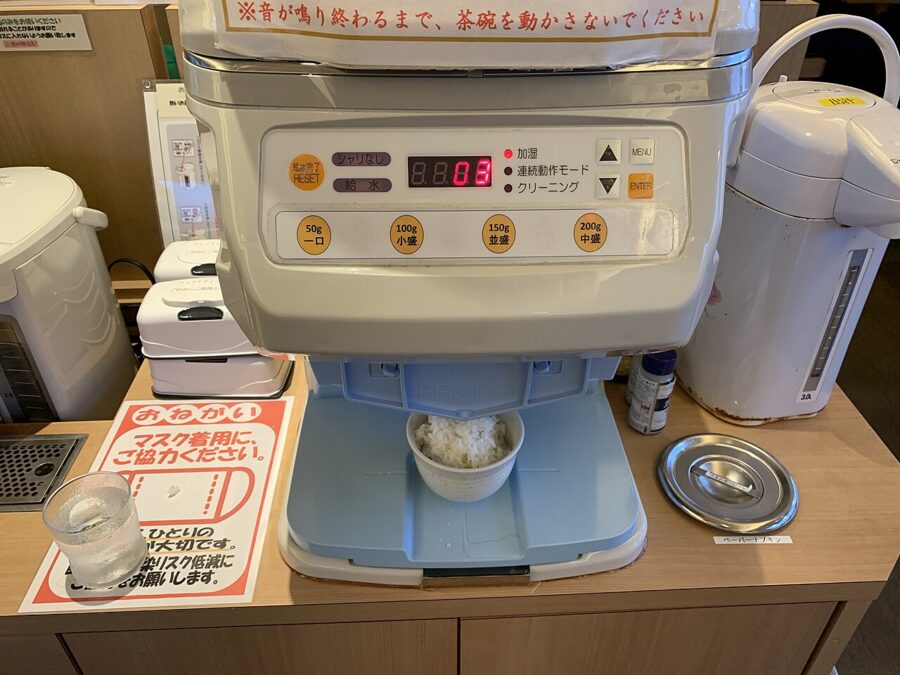
Yayoiken works differently. You buy a ticket from a machine at the door, hand it over, and the staff bring the tray; the pickles on the table are free once you have ordered. Its rice refills are the draw, and some branches let you refill the bowl yourself from a machine.
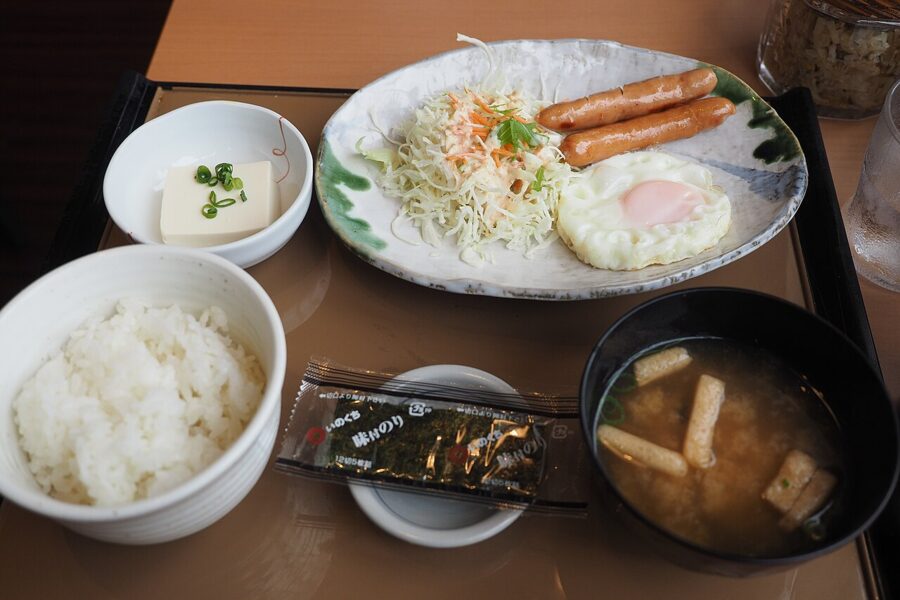


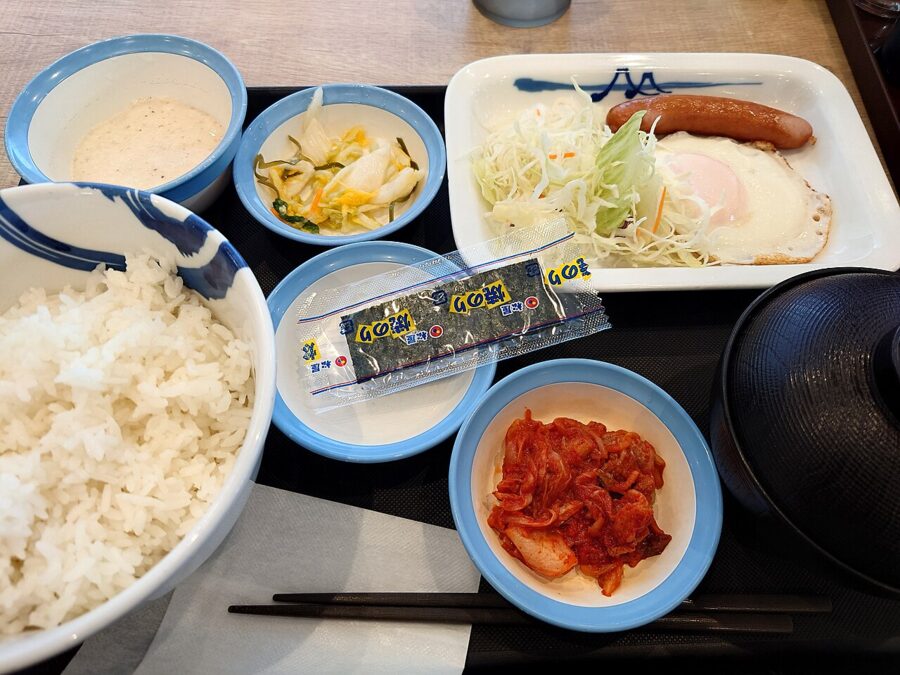
Matsuya (松屋) runs a breakfast menu too, ordered from a ticket machine at the door, including a sausage-and-egg set. Read the prices off the machine; they change more often than the menu photos. Ootoya (大戸屋), the chain best known for charcoal-grilled fish set meals, serves breakfast at only a handful of branches; at the rest, its grilled fish waits until lunch.

Morning markets
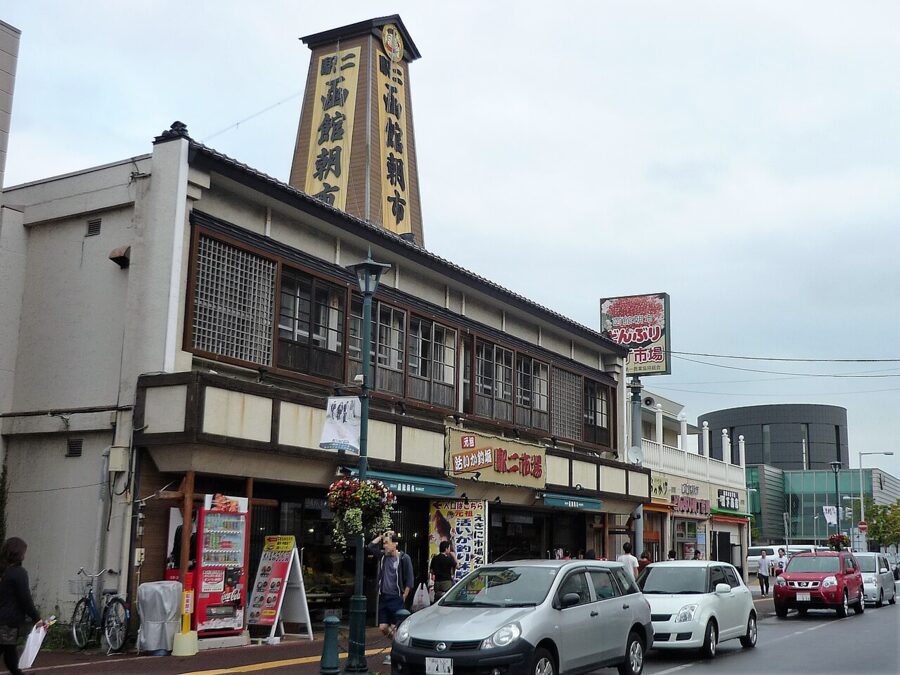
A port town’s morning market is the other great breakfast. At the Hakodate Morning Market (函館朝市, Hakodate asaichi) in Hokkaido, shops open at 5:00 from May to December and 6:00 from January to April, and most stay open to about 14:00, as of November 2026. The thing to eat there is a 海鮮丼 (kaisendon), a bowl of rice under raw seafood: salmon roe, sea urchin, crab, squid.

In Tokyo, the Tsukiji Outer Market is where the wholesale fish market used to sit, and its shops and restaurants still trade. The market splits its day into 6:00 to 9:00, mainly for trade buyers, and 9:00 to 14:00, normal shopping hours. Many shops close on the days the city’s wholesale market closes, so check the market calendar before you plan a breakfast around it.

Making one at home
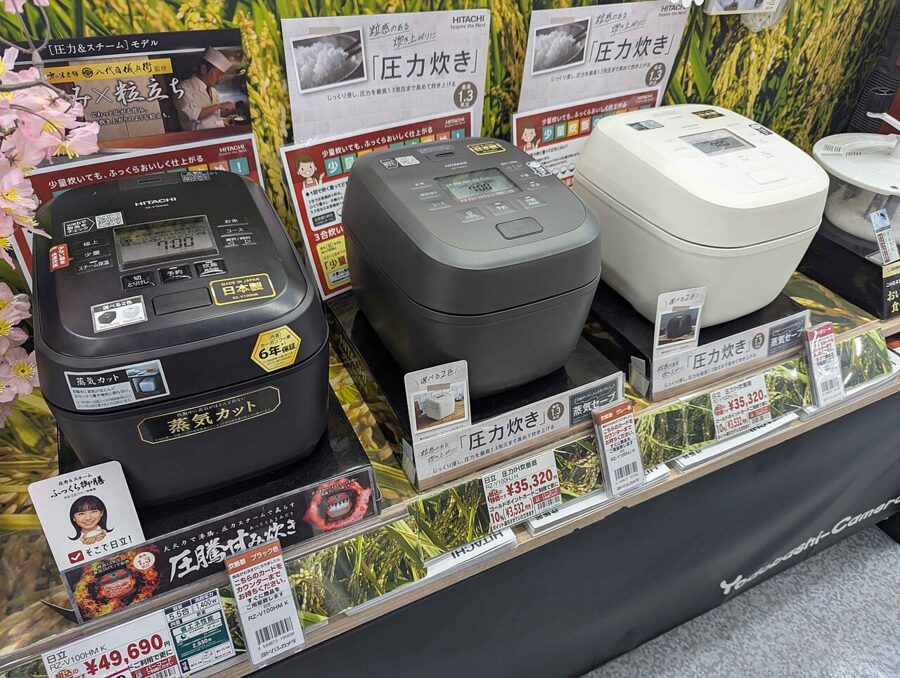
A Japanese breakfast takes about 30 minutes in the morning if you do two things the night before. Wash the rice and set the rice cooker timer. Put a strip of kombu in a jar of water in the fridge for dashi, or keep a jar of dashi granules and skip it.
In the morning, the order matters more than the recipes:
- The fish first. Put the salted salmon or mackerel under the broiler, skin side up, for about ten minutes, until the skin blisters.
- Then the soup. Heat the dashi, add cubed tofu and a pinch of dried wakame, and when it is hot, turn off the heat and dissolve the miso in a ladle before stirring it in. Boiling miso dulls it.
- Then the extras. Open the natto, cut nori into small sheets, put pickles in a dish.
- The egg if you have time. Tamagoyaki is easier made the evening before and served cold, which is how many bento-packers do it anyway.
- Rice last, straight from the cooker into the bowls, then soup, then fish.

What to buy
Most Asian grocery stores outside Japan carry everything here. Learn the labels and you can shop by kanji.
| Item | Label | Romaji | What to pick |
|---|---|---|---|
| Short-grain rice | 米 | kome | Japanese short-grain, often sold as “sushi rice” |
| Miso | 合わせ味噌 | awase miso | A mixed white and red miso, the easiest starting point |
| Dashi | 顆粒だし | karyū dashi | Granules; or だしパック (dashi pakku), tea-bag style |
| Tofu | 絹 / 木綿 | kinu / momen | Silken for soup, firm for anything else |
| Dried wakame | 乾燥わかめ | kansō wakame | A teaspoon swells into a soup’s worth |
| Salted salmon | 甘塩鮭 | amajio-zake | “Lightly salted”; plain salmon works if you salt it overnight |
| Natto | 納豆 | nattō | Three-packs, chilled or frozen |
| Nori | 焼き海苔 | yakinori | Toasted sheets; buy small packs, it goes stale |
| Pickles | たくあん / 梅干し | takuan / umeboshi | One sweet-salty, one sour |
Toast, onigiri and the konbini
The fish breakfast is the classic, but it is not what most of Japan eats on a Tuesday. In 2011 the Statistics Bureau’s household survey found that households of two or more people spent more on bread than on rice for the first time. Rice spending pulled ahead again the next year, mostly because rice got more expensive, but the direction was clear.
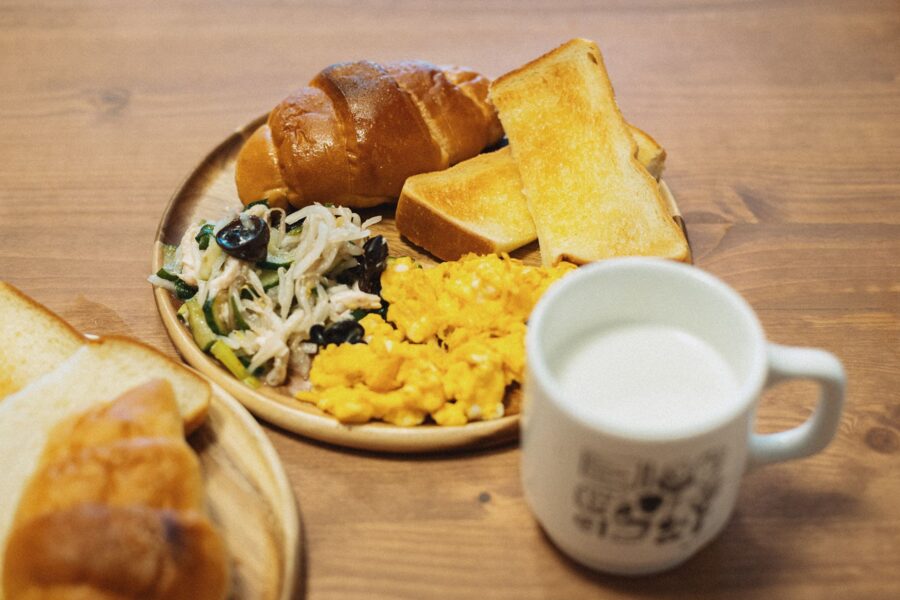
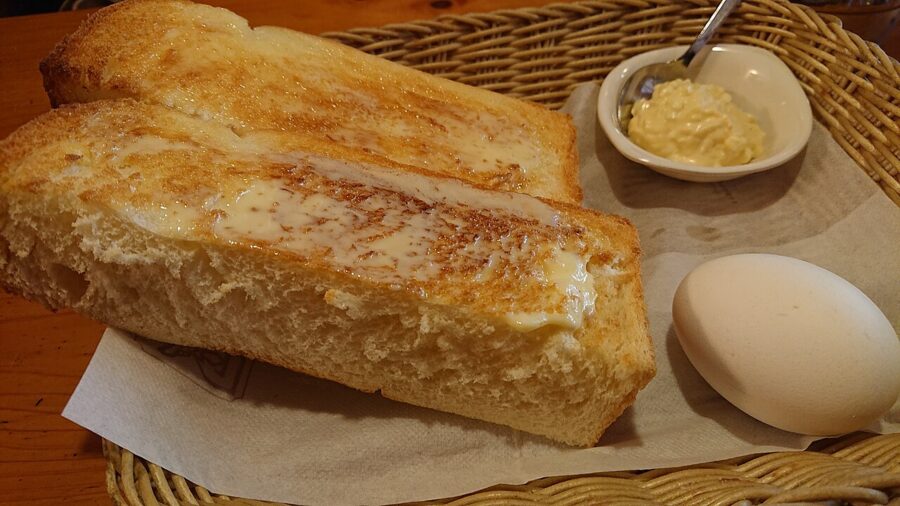
Bread breakfasts spread after the Meiji era opened Japan to Western food, and took off after the war, when bread became part of school lunches. Around Nagoya it turned into モーニング (mōningu), the coffee-shop morning set. At Komeda Coffee, a Nagoya chain, any drink ordered between opening and 11:00 comes with free bread, thick toast or a roll, and your choice of a boiled egg, egg spread or sweet red-bean paste.

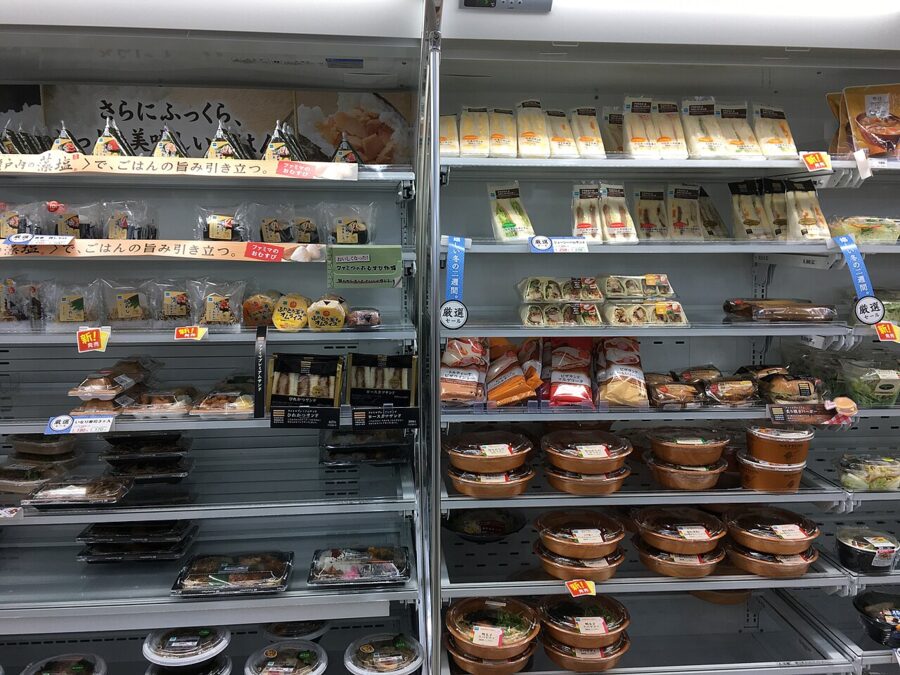
Then there is the convenience store. A rice ball from the konbini, often filled with salted salmon or umeboshi, is the commuter’s version of the fish breakfast, eaten on the walk to the station. It is rice, salt and fish in one hand, which is the classic breakfast pared down to the bone.

Next time you see 朝食 on a hotel sign, read it out loud: chōshoku. Then ask for the 和食, sip the soup first, and say itadakimasu to the fish.