
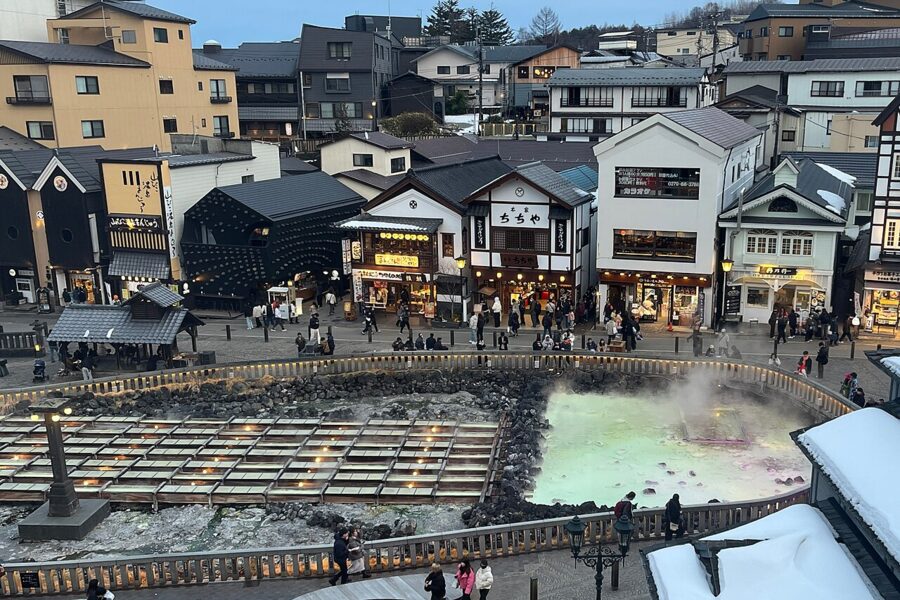
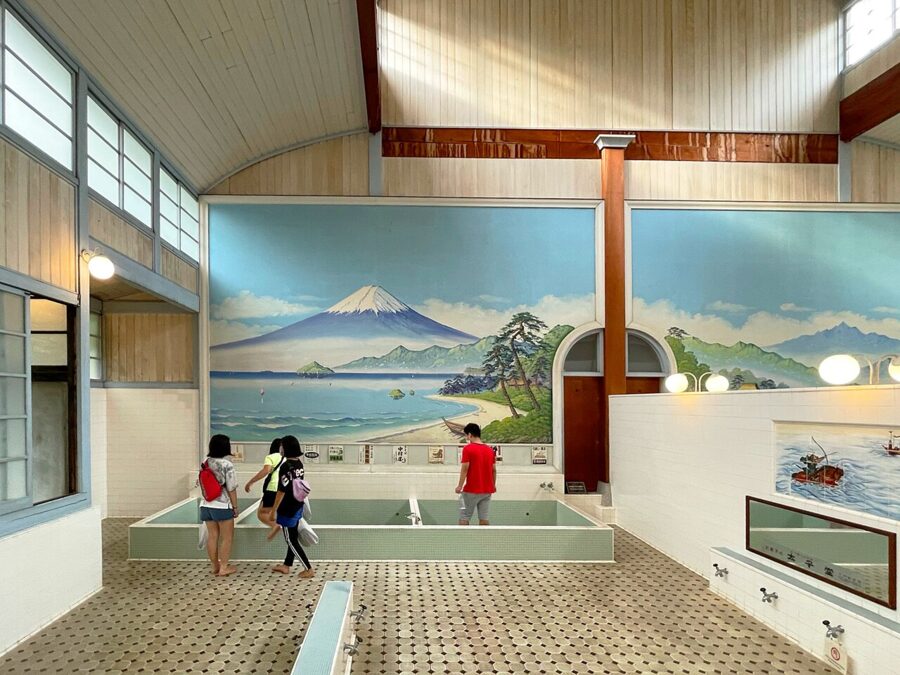
The first word you read at a Japanese bath is a single hiragana, ゆ (yu), painted big enough to see from the end of the street. It means hot water. Everything behind that curtain runs on a short list of words and a fixed order of steps, and once you know both, the most nervous part of a first trip to Japan becomes the part you look forward to all day.
温泉 (onsen) is built from 温 (on, warm) and 泉 (sen, spring). It names the hot spring, the bath built on it and the town around it, which is why so many place names end in it. Bathing is one of the customs in Japanese culture where the words and the habits arrive together: learn the sign and you know which door to take. Prices and rules below are as of November 2026.


目次 Contents
The words on the door
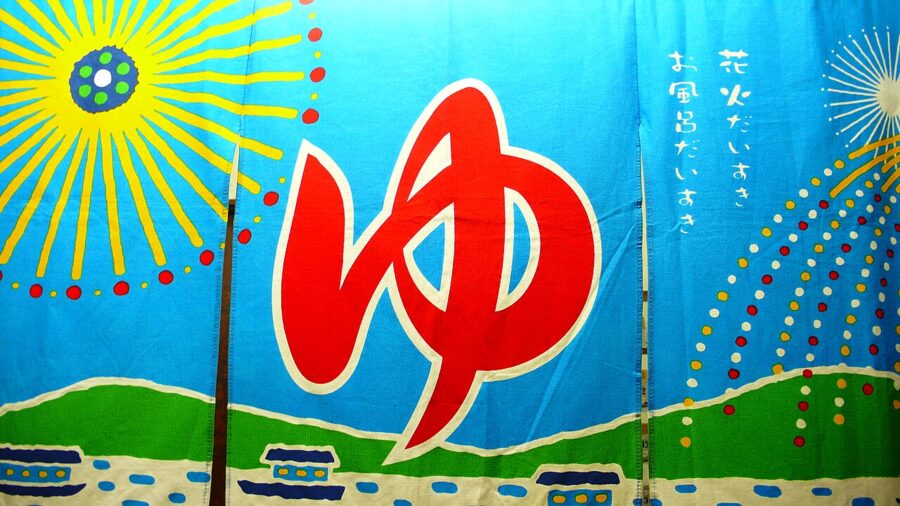
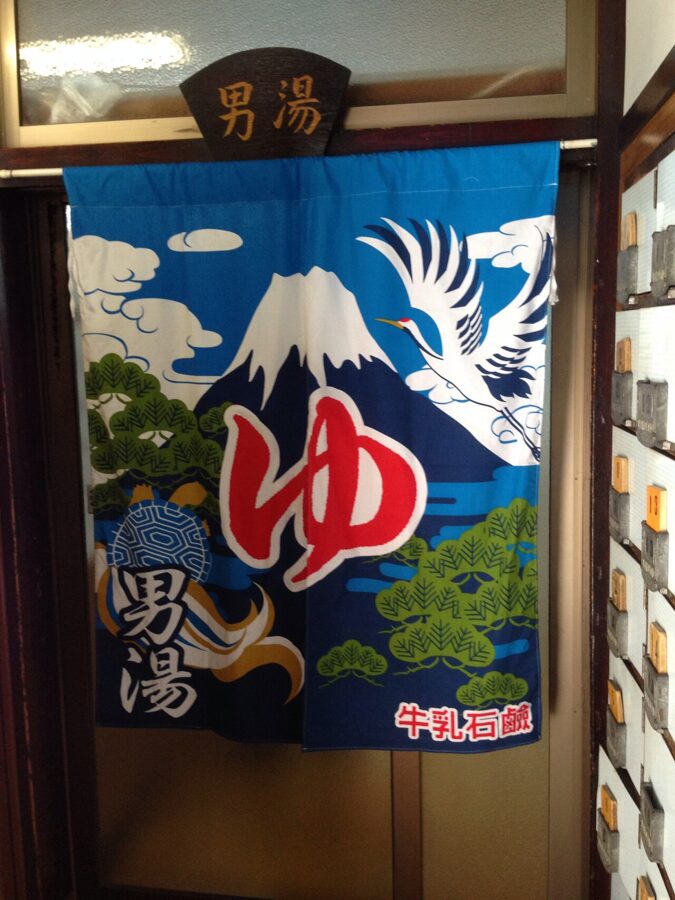
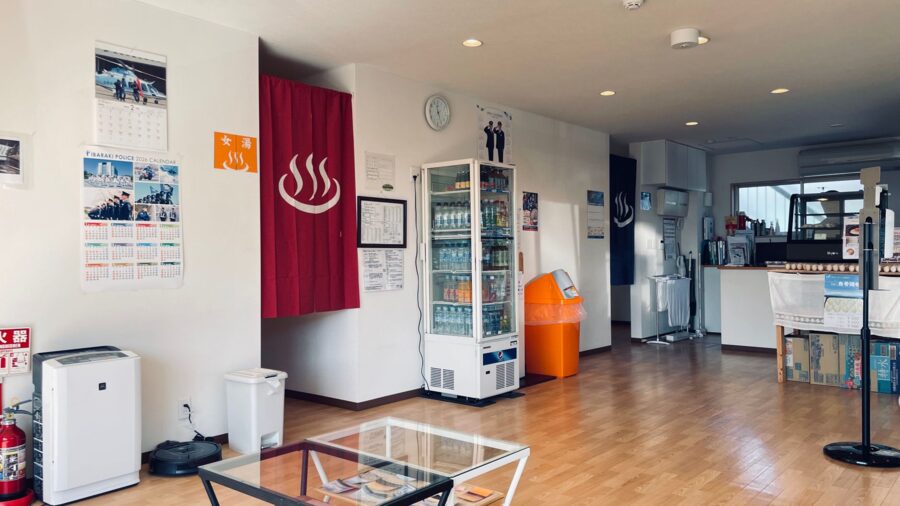
Japanese has a separate word for hot water. 水 (mizu) is water you drink; お湯 (oyu) is hot water, shortened to 湯 (yu) in compounds and on signs. A bath is 風呂 (furo), and the men’s and women’s sides are 男湯 (otokoyu) and 女湯 (onnayu). On a small curtain the sign shrinks to one kanji: 男 (otoko, man) or 女 (onna, woman).
| Sign | Reading | Meaning |
|---|---|---|
| ゆ / 湯 | yu | Hot water; a bath is open here |
| 男湯 / 男 | otokoyu / otoko | Men’s bath |
| 女湯 / 女 | onnayu / onna | Women’s bath |
| 大浴場 | daiyokujō | Large shared bath |
| 内湯 | uchiyu | Indoor bath |
| 露天風呂 | rotenburo | Open-air bath |
| 貸切風呂 | kashikiri-buro | Private bath for your group |
| 混浴 | kon’yoku | Mixed bathing |
| 足湯 | ashiyu | Footbath, clothes on |
| 脱衣所 | datsuijo | Changing room |
| 清掃中 | seisōchū | Being cleaned |
Men’s curtains are often blue and women’s red, but plenty of baths use one color for both, so read the kanji. 男 is a rice field (田) over power (力); 女 is a kneeling figure. Learn those two before you land.
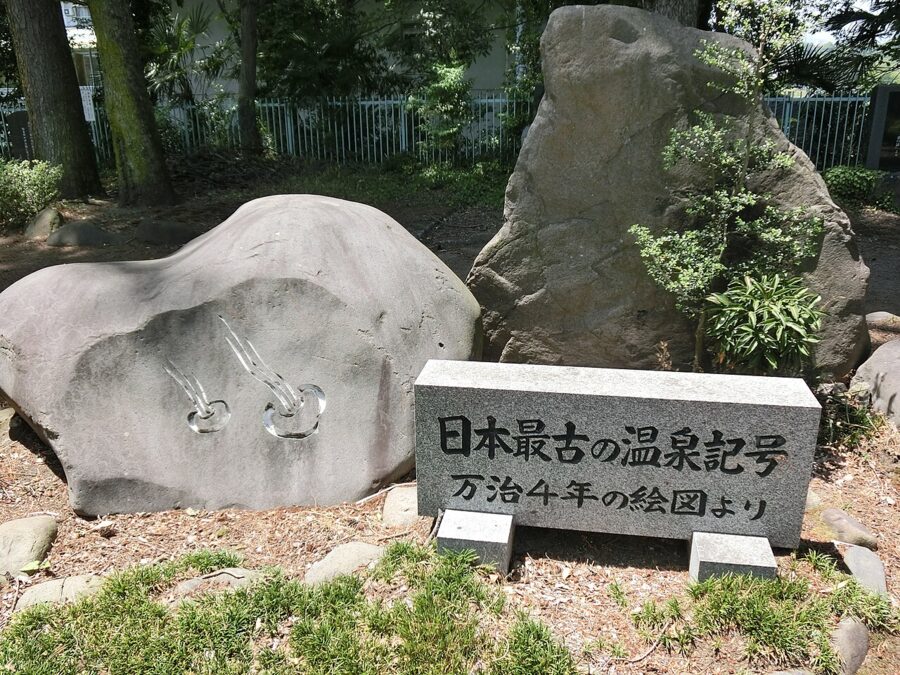
On maps and road signs you will also see the 温泉マーク (onsen māku), a shallow bowl with three wavy lines of steam rising from it. It marks a hot spring the way a cross marks a church.
Onsen or sento?
Under Japan’s Hot Springs Act, water counts as onsen if it leaves the ground at 25°C or hotter, or carries a set amount of at least one of 19 listed substances, such as sulfur or iron. A 銭湯 (sentō) is a neighborhood bath that heats ordinary water. The manners are identical, so a sento near your hotel is the cheapest practice run in the country.
Tokyo’s adult sento price is set by the metropolitan government and rose to ¥600 (about $4) on August 1, 2026. The Tokyo bathhouse association also bans phones in changing rooms and bathing areas, photos included.
Today’s men’s bath
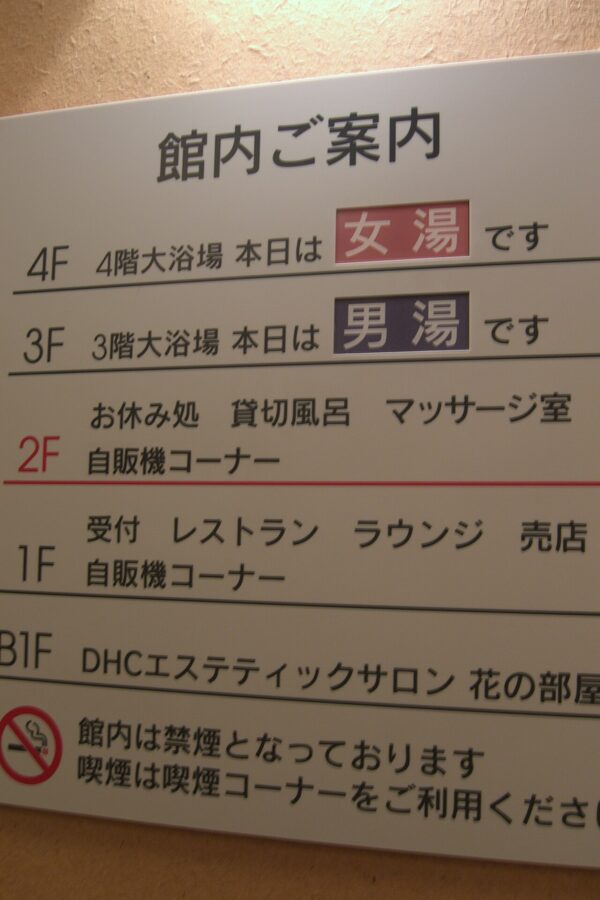
Hotels and ryokan with two large baths often swap them overnight, so the men’s side in the evening is the women’s side at breakfast. The phrase is 男女入れ替え (danjo irekae, men and women swapped). Read the door again every time.

Open-air, private and mixed
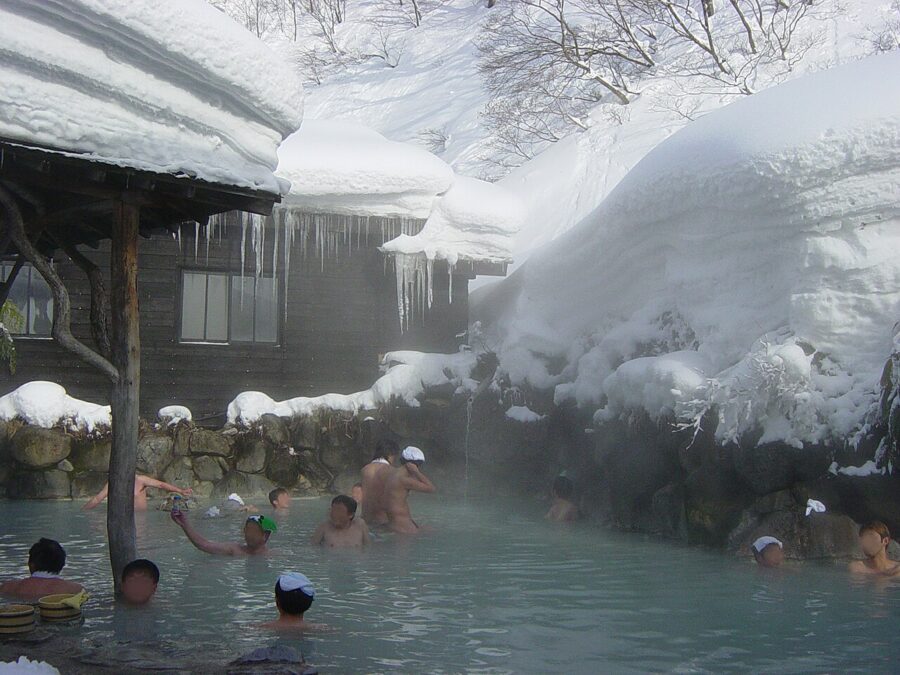
露天風呂 breaks down as 露 (open to the weather), 天 (sky) and 風呂 (bath). It is the bath people travel for: hot water, cold air, snow at the edge of the rock. On a cold night I would start indoors and move outside once warm.

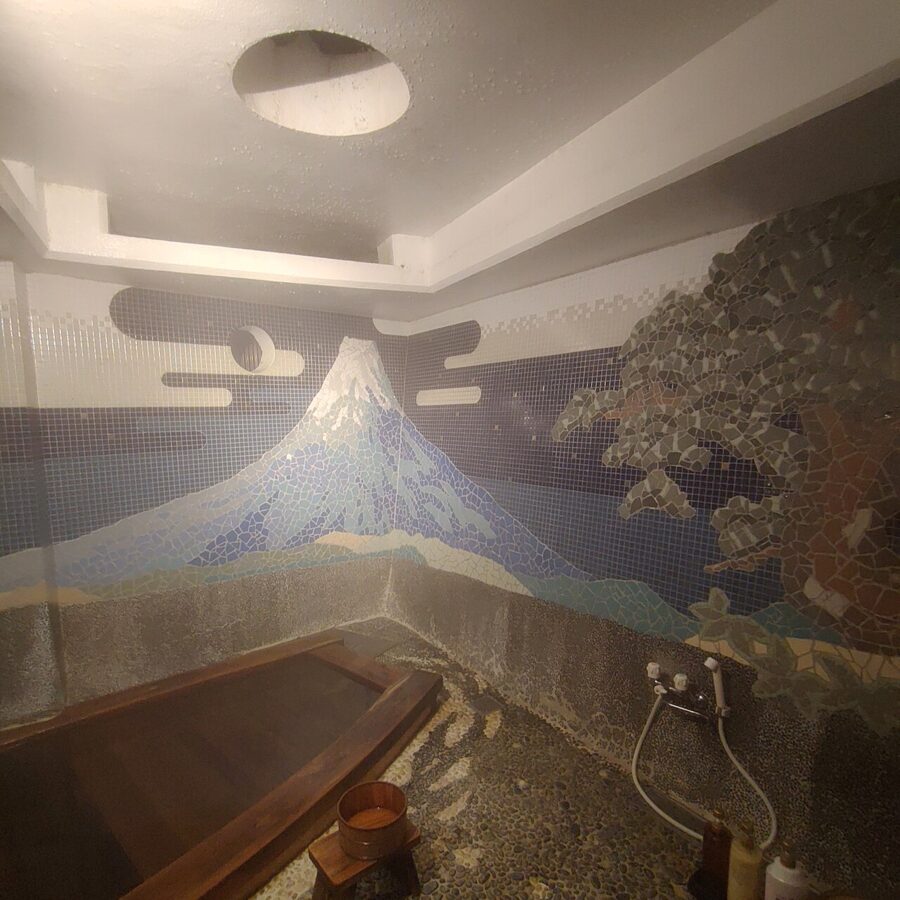
A 貸切風呂 (kashikiri-buro) is a bath you book for your own group, usually for under an hour; 貸切 means “rented out whole.” Couples can bathe together, nobody sees a tattoo, and a first-timer can learn the routine in private.

Are onsen always split by gender? Nearly always. 混浴 (kon’yoku, mixed bathing) survives in some mountain inns, and a few baths run mixed sessions in wraps. At Sainokawara in Kusatsu, Friday nights from 5:30 to 8 p.m. are mixed: women rent a 湯あみ着 (yuamigi, bathing wrap) for ¥400 (about $3), men borrow one free, and swimsuits are allowed for that session only.
How to bathe, step by step
Do you wear clothes at an onsen? No: no swimsuit, nothing but a small towel. The routine below works in a city sento and a mountain ryokan alike.
- Shoes off into the 下足箱 (gesokubako, shoe locker). Keep the key.
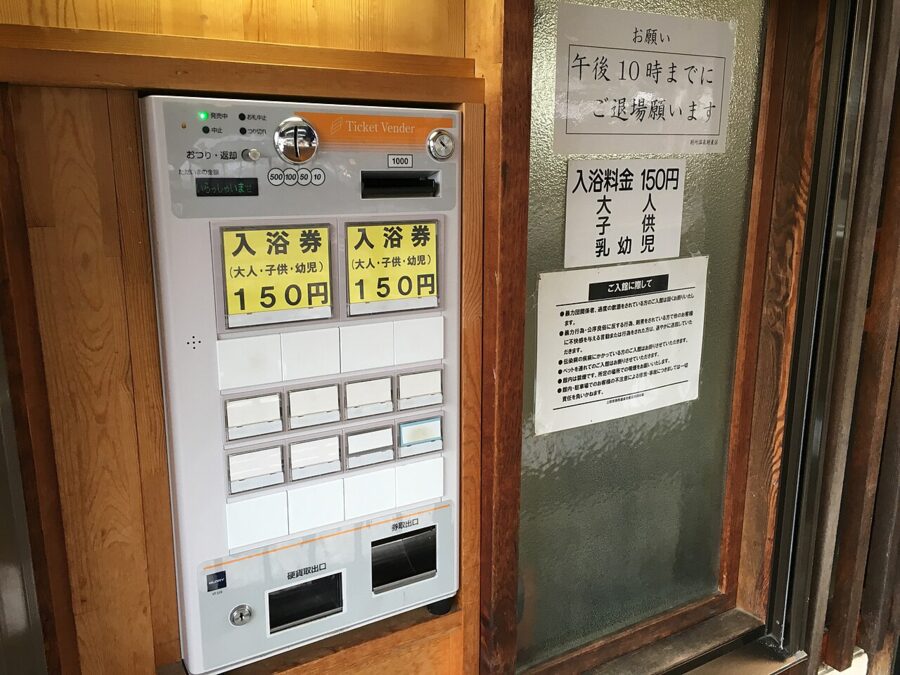
- Pay at the 受付 (uketsuke, front desk) or a 券売機 (kenbaiki, ticket machine) selling an 入浴券 (nyūyokuken, bath ticket). A towel rental set is often a 手ぶらセット (tebura setto, “empty-handed set”).
- Undress in the 脱衣所. Clothes and the large towel stay in a basket or locker; valuables go in the 貴重品ロッカー (kichōhin rokkā).
- Wash first, sitting down at the 洗い場 (araiba), the row of low taps. Rinse off every bit of soap.
- かけ湯 (kakeyu): scoop bath water over yourself, feet first, to meet the heat.
- Ease in. No swimming or splashing. Tie up long hair. The small towel never touches the water: fold it on your head or set it on the edge.
- Soak, then stop. The Japan Onsen Association suggests three to ten minutes at a time for beginners.
- Dry off with the small towel before you step back into the changing room.

Should you shower afterward? At a gentle spring, no: the Japan Onsen Association advises toweling off and leaving the minerals on your skin. At strong acidic or sulfur springs it says people with sensitive skin should rinse.
Phrases you will hear and say
The verb for bathing is 入る (hairu, to enter), and it takes the particle に: お風呂に入る (ofuro ni hairu), 温泉に入る (onsen ni hairu). You enter a bath the way you enter a room.
| Japanese | Romaji | Meaning | Level |
|---|---|---|---|
| いらっしゃいませ | irasshaimase | Welcome (no answer needed) | formal |
| 大人一枚お願いします | otona ichimai onegai shimasu | One adult ticket, please | polite |
| タオルを借りられますか | taoru o kariraremasu ka | Can I rent a towel? | polite |
| 日帰り入浴はできますか | higaeri nyūyoku wa dekimasu ka | Can I bathe without staying? | polite |
| いいお湯ですね | ii oyu desu ne | Lovely water, isn’t it? | polite |
| 熱い! | atsui! | Hot! | casual |
| お先に失礼します | osaki ni shitsurei shimasu | Excuse me for leaving first | polite |
Quiet small talk in the bath is normal. If someone says いいお湯ですね, reply そうですね (sō desu ne), “it is,” and when you climb out first, お先に失礼します is the polite exit.
When your body says stop
のぼせる (noboseru) is the flushed, light-headed feeling of staying in too long. 湯あたり (yuatari) is feeling tired and queasy after a day or two of too many soaks. 湯冷め (yuzame) is the chill of standing around damp afterward.
The association’s cautions: no bathing right before or after a meal or alcohol, wait thirty minutes after exercise, and drink water first. If you feel faint, leave slowly, keep your head low and say 気分が悪いです (kibun ga warui desu), “I feel unwell.”
Tattoos: the 2016 guidance and what happens in practice
Why are tattoos banned at so many onsen? The old link is to organized crime, and the rule outlived it. In October 2015 the Japan Tourism Agency published a survey of hotels and ryokan: of 581 that answered, about 56% refused tattooed guests, about 31% let them in, and about 13% allowed them on conditions such as covering up.
On March 16, 2016, the agency wrote to four industry bodies, including the Japan Ryokan and Hotel Association and the Japan Onsen Association. Turning a guest away only for a tattoo is not appropriate, it said, and tattoos cause no hygiene problem. It then listed options a bath could choose:
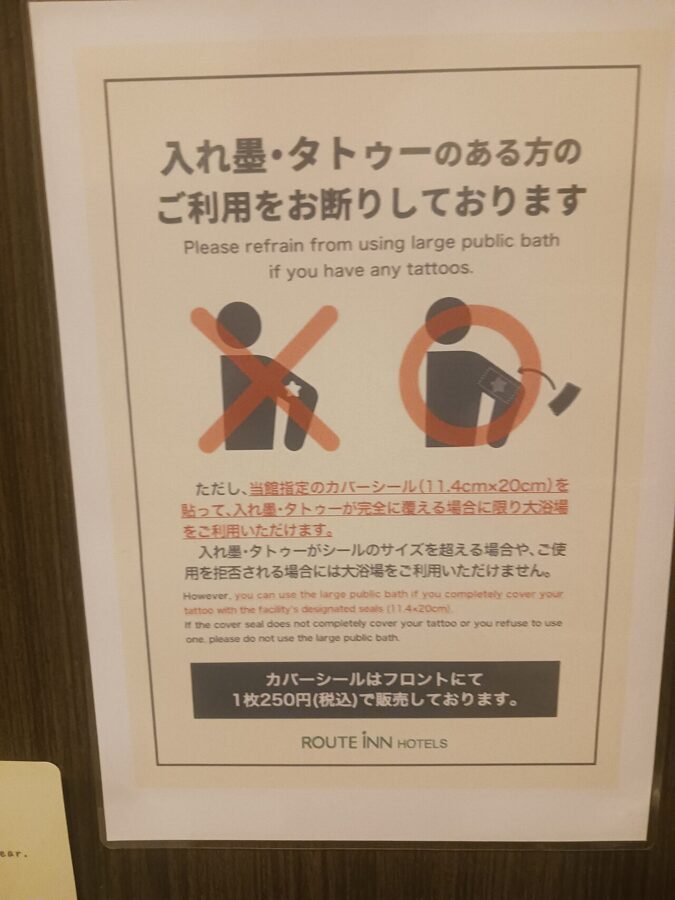
- Ask the guest to cover the tattoo with a sticker.
- Ask nothing when the tattoo is small, about palm-sized, and unlikely to intimidate.
- Suggest quieter times, when fewer families bathe.
- Offer a private bath, or a room with its own bath.
That is guidance, not law, and each bath still decides. In practice you will meet flat bans, bans with a cover-seal exception, and baths that say nothing. Ask before you pay.
入れ墨 (irezumi) is the traditional word; タトゥー (tatū) is the loanword, written in katakana, and the one I would use.
| Japanese | Romaji | Meaning | Level |
|---|---|---|---|
| タトゥーがあるんですが、入れますか | tatū ga aru n desu ga, hairemasu ka | I have a tattoo. Can I go in? | polite |
| シールで隠せば大丈夫ですか | shīru de kakuseba daijōbu desu ka | Is it OK covered with a sticker? | polite |
| 貸切風呂はありますか | kashikiri-buro wa arimasu ka | Do you have a private bath? | polite |
Kinosaki Onsen also lets bathers with scars from breast cancer surgery or skin grafts wear a special 入浴着 (nyūyokugi, bathing cover) in its public baths.
Spring types: what the sign at the door tells you
Near the changing room of a real onsen hangs a framed sheet of numbers: the 温泉分析書 (onsen bunsekisho), the spring analysis. You only need four lines of it.
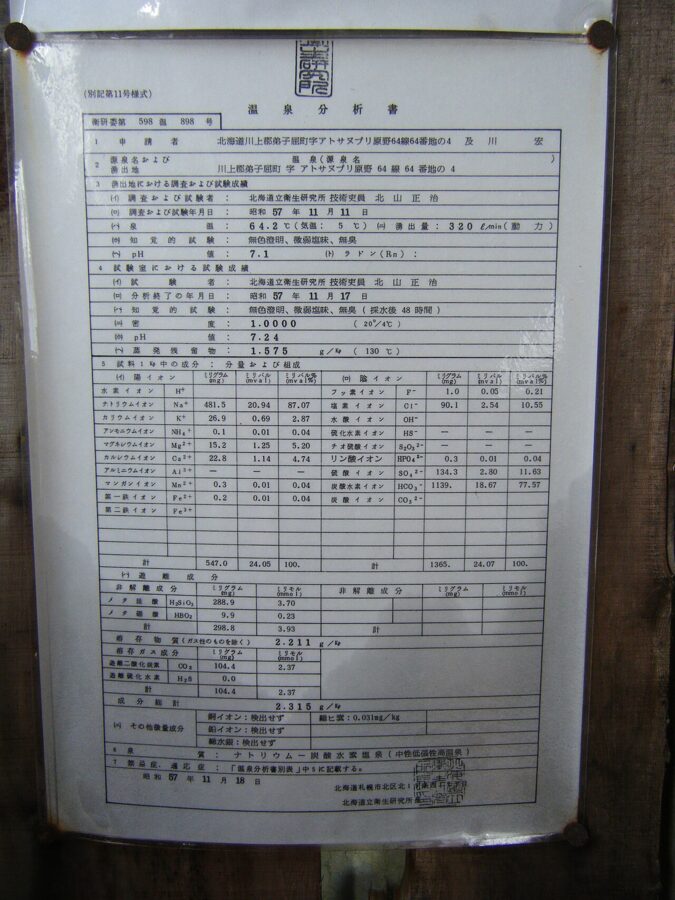

- 泉質 (senshitsu), spring type: one of the ten in the table below.
- 適応症 (tekiōshō), conditions the water is traditionally said to help.
- 禁忌症 (kinkishō), conditions in which you should not bathe. Read it if you are ill or pregnant.
- 源泉かけ流し (gensen kakenagashi), fresh spring water flowing in and out, nothing recirculated. Its opposites: 加水 (kasui, water added), 加温 (kaon, heated), 循環ろ過 (junkan roka, recirculated and filtered).
| Spring type | Reading | English | What you notice |
|---|---|---|---|
| 単純温泉 | tanjun onsen | Simple | Mild; alkaline versions feel smooth |
| 塩化物泉 | enkabutsu-sen | Chloride | Salty; keeps you warm |
| 炭酸水素塩泉 | tansan suiso’en-sen | Bicarbonate | Slippery on the skin |
| 硫酸塩泉 | ryūsan’en-sen | Sulfate | Often slightly bitter |
| 二酸化炭素泉 | nisanka tanso-sen | Carbon dioxide | Bubbles cling to you; rare |
| 含鉄泉 | gantetsu-sen | Iron | Turns red-brown in the air |
| 酸性泉 | sansei-sen | Acidic | Stings small cuts |
| 含よう素泉 | gan’yōso-sen | Iodine | Often yellow-brown |
| 硫黄泉 | iō-sen | Sulfur | Rotten-egg smell; tarnishes silver |
| 放射能泉 | hōshanō-sen | Radon | Looks like plain water |
That is the Ministry of the Environment’s list of ten. Leave jewelry in the locker whatever the sheet says: sulfur blackens silver in minutes.
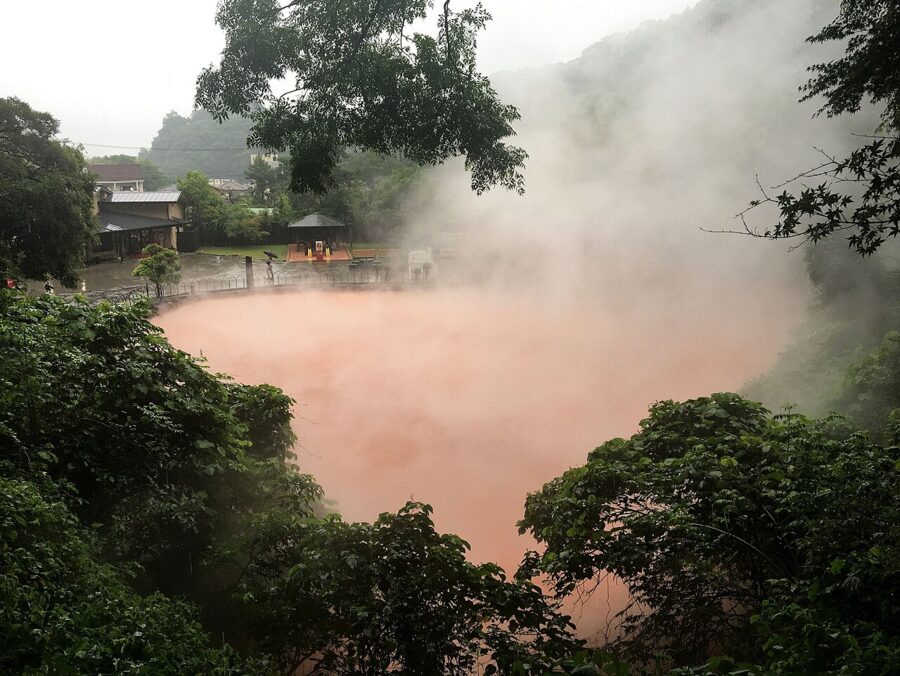

Five onsen towns worth the trip
Each of these teaches something different: acidic water cooling in the street, a city of steam, a postcard street with a winter booking system, an 1894 bathhouse, and a town you cross bath to bath in a cotton robe.
Kusatsu, Gunma: the hot water field
Kusatsu claims the largest natural flow of any hot spring in Japan, and its water is strongly acidic, about pH 2.05 by the town’s own figure. That makes it a 酸性泉, so rinse afterward if your skin is sensitive. At the center, the Yubatake cools the water in wooden channels before it reaches the inns.
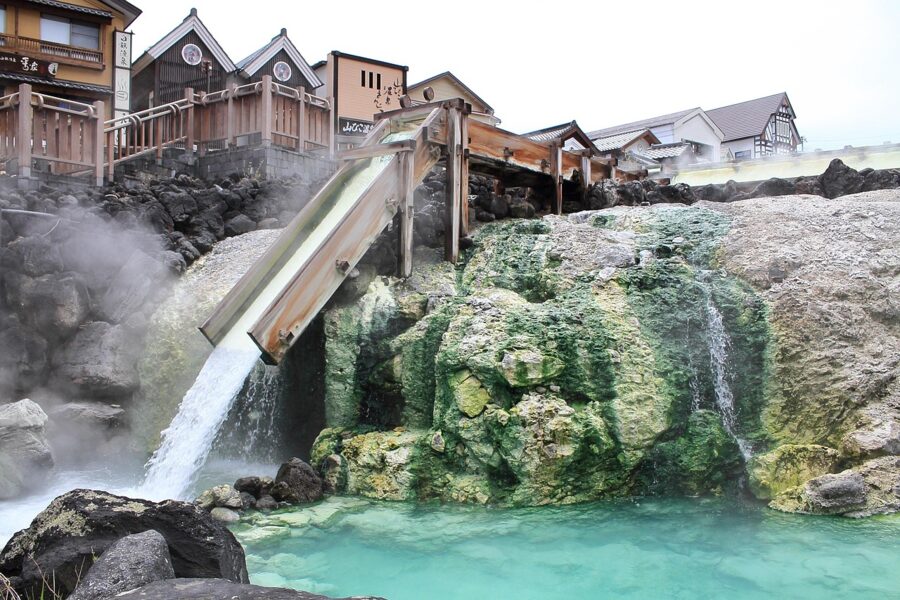
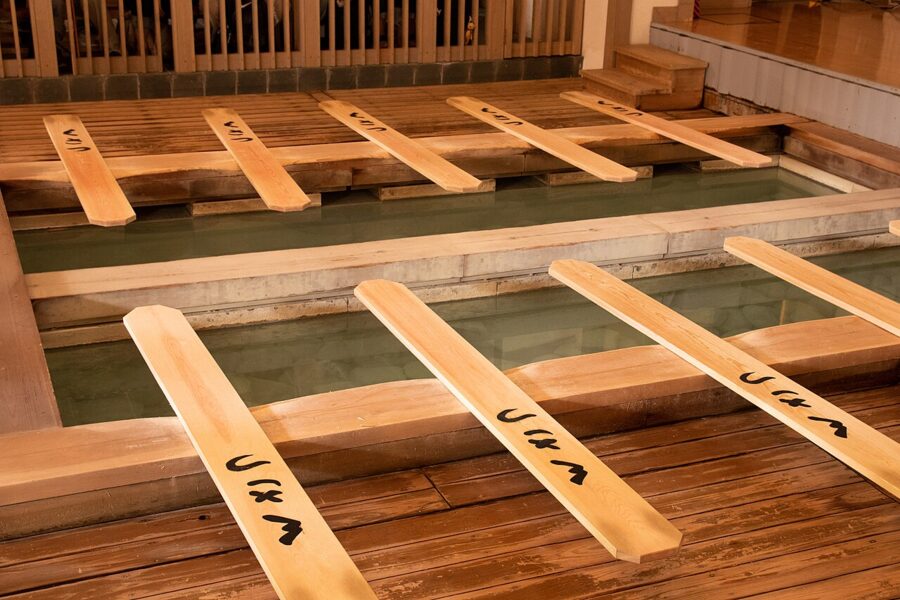
湯もみ (yumomi) is cooling the water by stirring it with long boards. At Netsunoyu on the Yubatake, the 湯もみと踊り (yumomi to odori) show costs ¥700 (about $4), with tickets sold from 30 minutes before each show, and a short hands-on session around midday costs ¥300 (about $2).

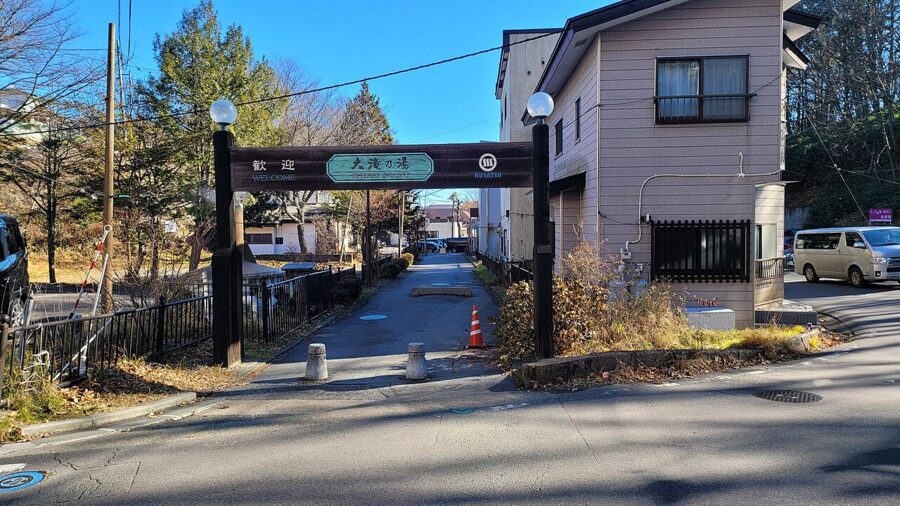
Sainokawara, a big open-air bath in a park west of the Yubatake, costs ¥800 (about $5). It opens at 7 a.m. from April to November and at 9 a.m. from December to March, closing at 8 p.m. with last entry at 7:30. Otakinoyu, an indoor bath with private baths for rent, costs ¥1,200 (about $8) and opens 9 a.m. to 9 p.m.
Getting there: a JR train to Naganohara-Kusatsuguchi or the Hokuriku Shinkansen to Karuizawa, then a bus up the mountain, or a direct highway bus from Tokyo.
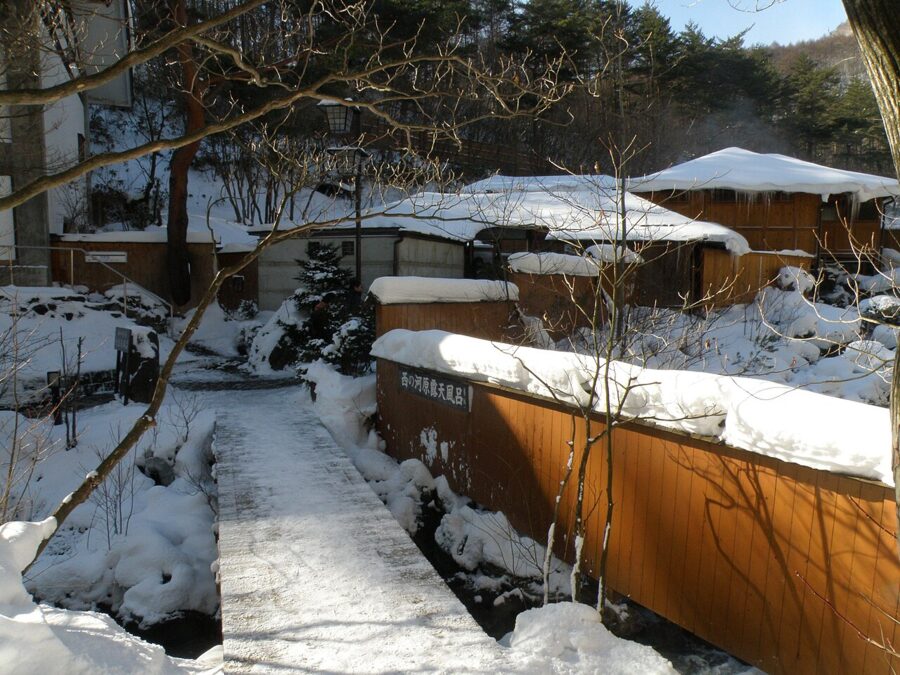

Beppu, Oita: the city of steam
Beppu, on the coast of Kyushu, claims more spring sources and more hot water than anywhere else in Japan, and steam rises from roofs and drains across the city. The 地獄 are boiling ponds you tour on foot. The bathing is in town.
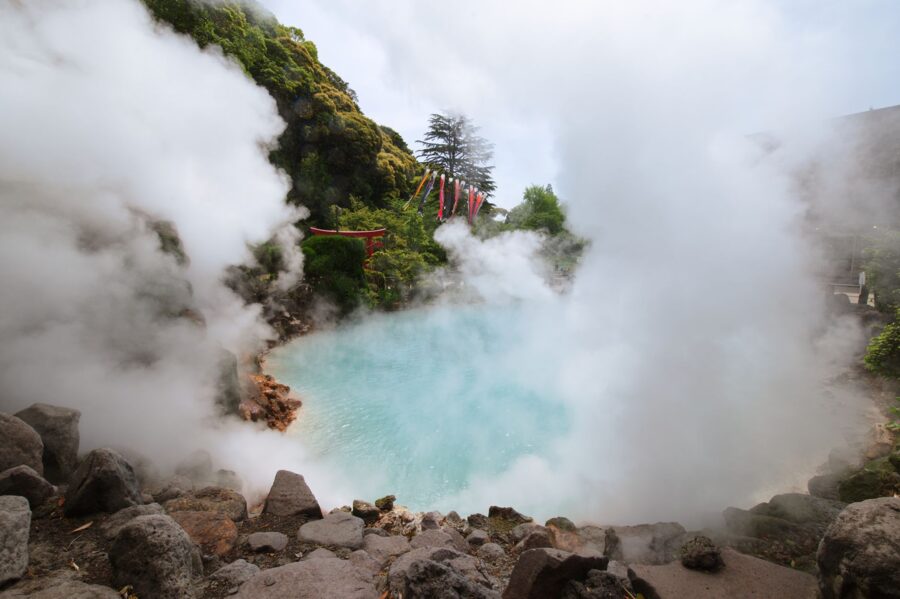
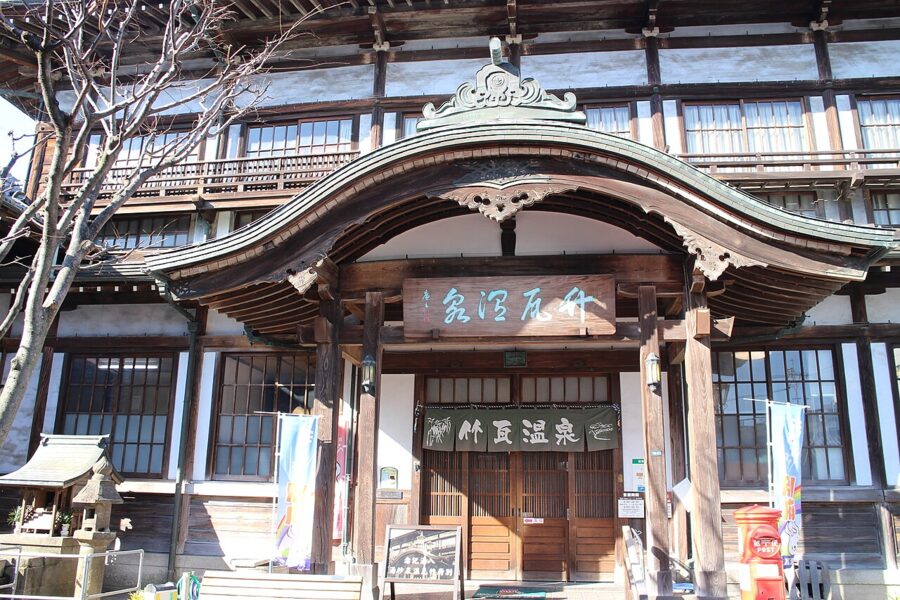
Start at Takegawara Onsen, whose present wooden building dates from 1938. The city lists the ordinary bath at ¥300 (about $2), open 6:30 a.m. to 10:30 p.m. The 砂湯 (sunayu, sand bath), where staff bury you to the neck in naturally heated sand, costs ¥1,500 (about $9) from 8 a.m., last entry 9:30 p.m.
Both close on the third Wednesday of the month. From Hakata, the limited express Sonic takes about two hours.

Ginzan, Yamagata: one street, booked in winter
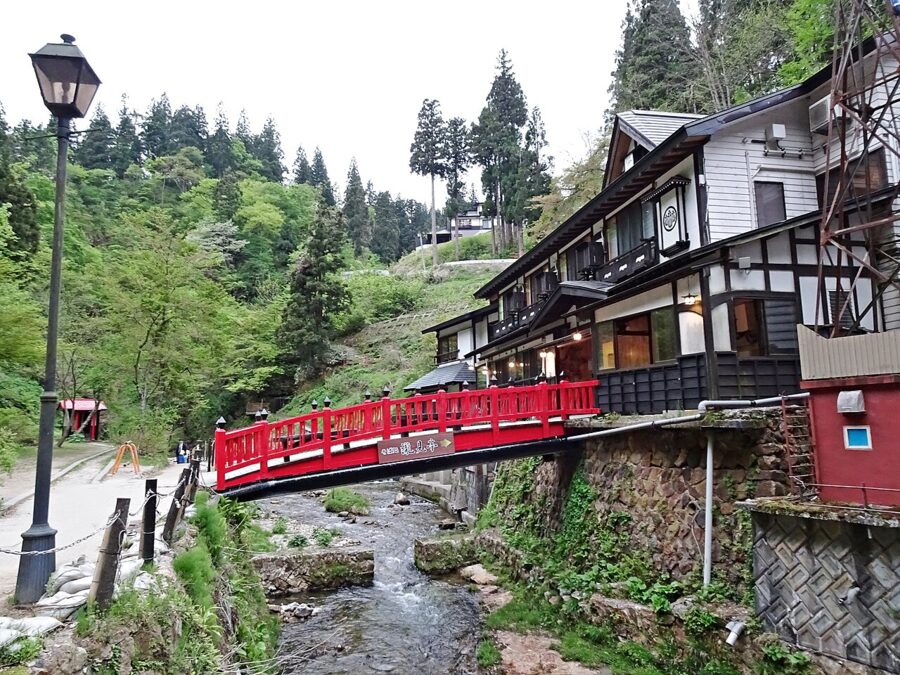
銀山 (ginzan) means “silver mountain,” after the old mine. The town is one street of tall wooden inns facing each other across a narrow river, gas-lit after dark, and so photographed that it now manages its crowds on purpose.
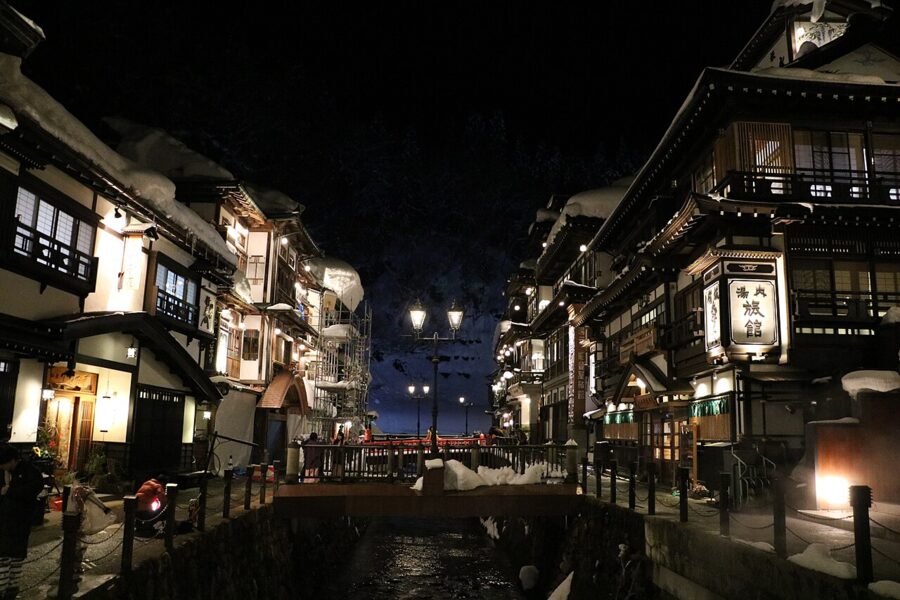

From December 19, 2026 to March 7, 2027, day visitors park at Taisho Roman-kan in Obanazawa and ride a timed shuttle. Round trips cost ¥1,000 (about $6) for 9 to 11 a.m. departures, ¥700 (about $4) for 11 a.m. to 2 p.m. and ¥1,200 (about $8) for 2 to 6 p.m., booked by 5 p.m. the day before. On the day it costs ¥300 more if seats remain.
The inns’ association says evening waits have run to three hours. Do not walk the two kilometers in winter: the road has no usable sidewalk.
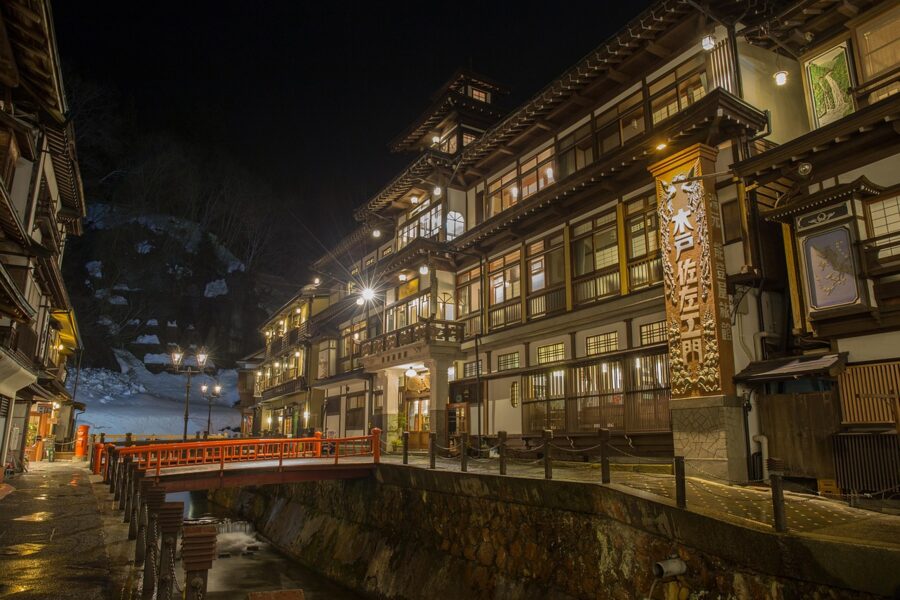
The rest of the year, take the Yamagata Shinkansen to Oishida and a local bus up the valley. Autumn gives you the same street with easier access.

Dogo, Ehime: the old public bathhouse
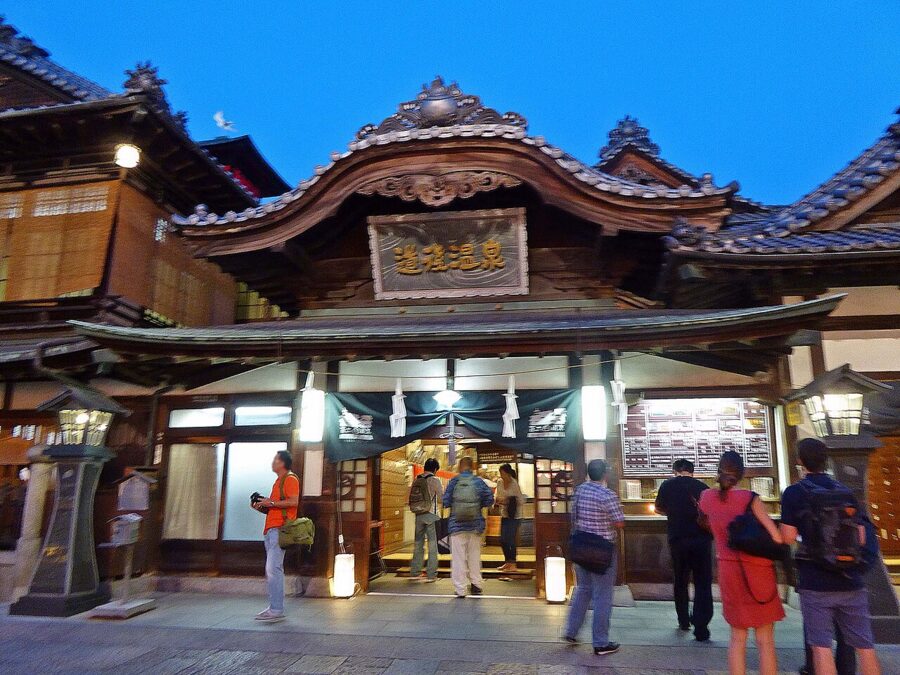
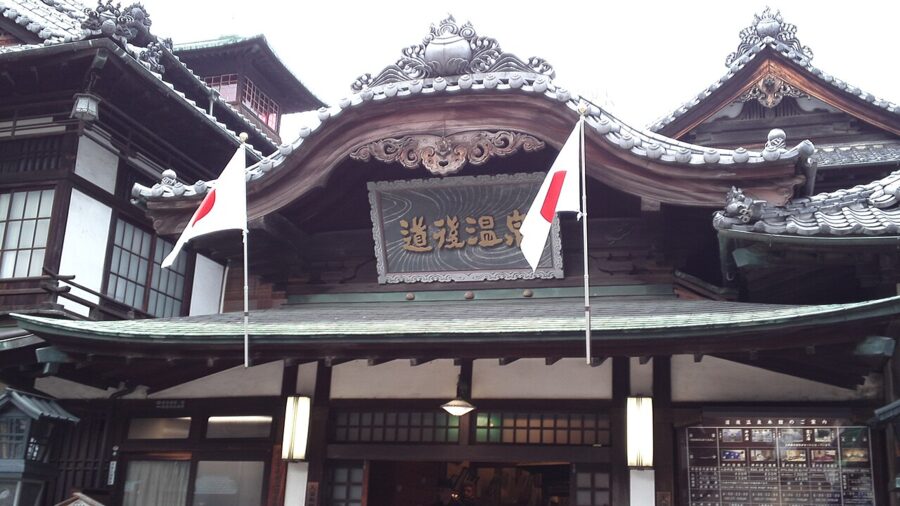
Dogo Onsen Honkan in Matsuyama is a wooden bathhouse built in 1894 and open to anyone with a ticket. It stayed partly open through a restoration that began in January 2019 and finished on December 20, 2024. The water is a gentle alkaline simple spring.

| Ticket | Adult | Hours (last ticket) |
|---|---|---|
| 神の湯 階下 (Kami no Yu, ground floor) | ¥700 (about $4) | 6 a.m. to 11 p.m. (10:30) |
| 神の湯 二階席 (with upstairs lounge) | ¥1,300 (about $8) | 6 a.m. to 10 p.m. (9:00) |
| 霊の湯 二階席 (Tama no Yu, upstairs lounge) | ¥2,000 (about $13) | 6 a.m. to 10 p.m. (9:00) |
I would buy the plain ground-floor ticket: it is the bath locals use, and the upstairs tickets add tea and a lounge, not better water. The streetcar runs from JR Matsuyama Station to the Dogo Onsen stop, a short walk away.

Kinosaki, Hyogo: bath-hopping in a yukata
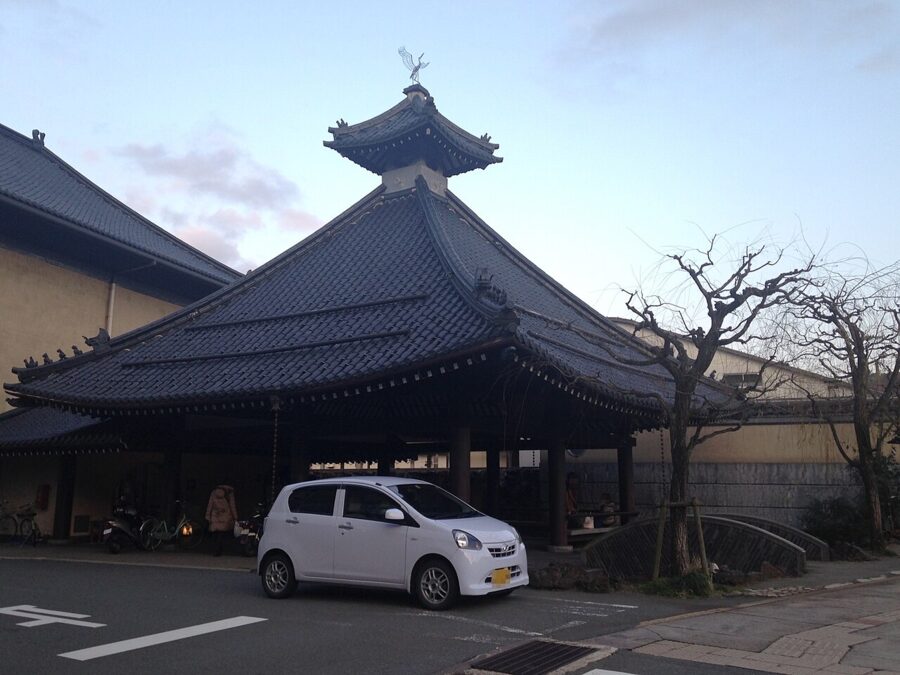
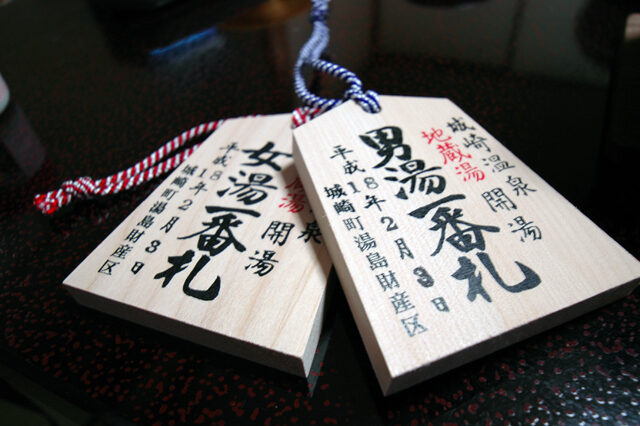
In Kinosaki, guests leave their ryokan in a 浴衣 (yukata, cotton robe) and walk from one public bath, 外湯 (sotoyu), to the next along a willow-lined canal. The water is a salty chloride spring, and local legend dates the first bath to about 1,300 years ago.
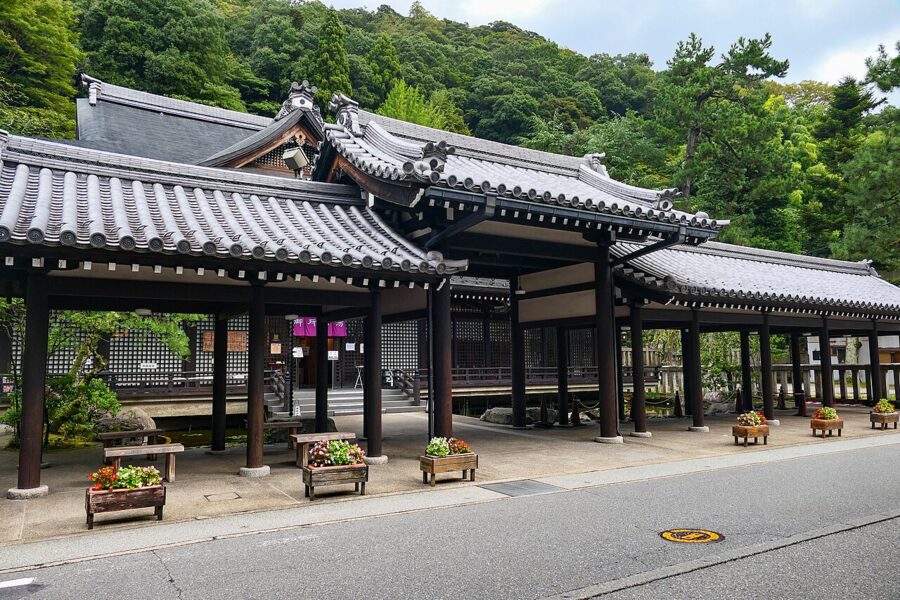
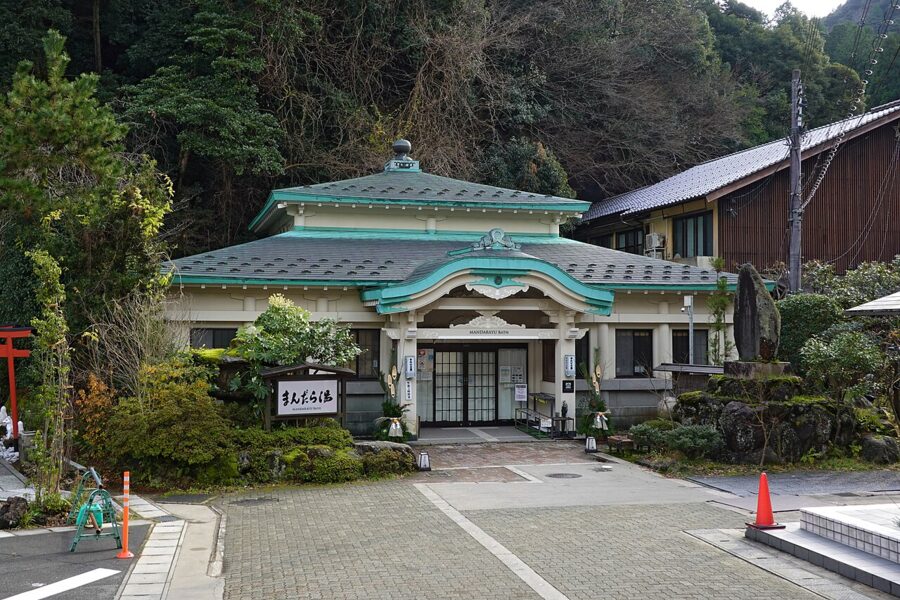
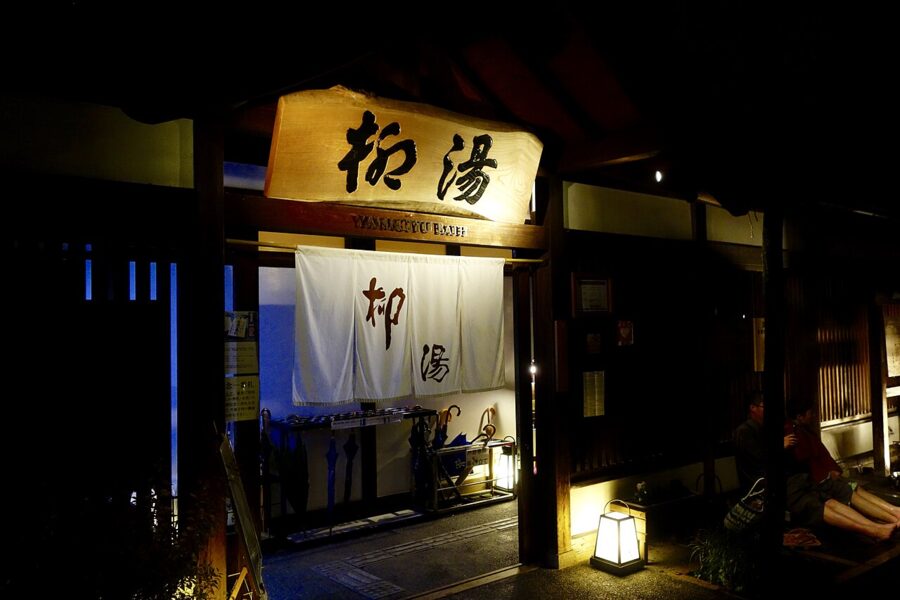
Seven public baths are on the town’s list, but Satonoyu has been closed since March 31, 2024, so six are open. Each costs ¥800 (about $5); the one-day pass, ゆめぱ (Yumepa), is ¥1,500 (about $9). Each bath closes on a different weekday, and Mandara-yu and Yanagi-yu open only at 3 p.m.


The limited express Kounotori runs from Osaka in about 2 hours 40 minutes, and the Kinosaki from Kyoto in about 2 hours 20 minutes. From Kinosaki Onsen Station every bath is on foot.


Day-trip bath or a night at a ryokan?
日帰り入浴 (higaeri nyūyoku, day-trip bathing) means paying at the door and leaving the same day; a ryokan bath open to outside visitors is often a 立ち寄り湯 (tachiyori-yu, “drop-in bath”). A night at a 旅館 (ryokan) makes the bath the frame of the whole stay.
| Day-trip bath | Night at a ryokan | |
|---|---|---|
| Cost | A ticket | Usually 一泊二食付き (ippaku nishoku tsuki, one night, two meals) |
| Timing | Fixed hours | Evening, late night and dawn |
| Privacy | Shared baths | Bookable 貸切風呂 or a room with its own bath |
| On the bill | Towel rental | 入湯税 (nyūtōzei, bathing tax) |
The bathing tax is a local tax with a standard rate of ¥150 (about $1) per person per day; towns can set their own.
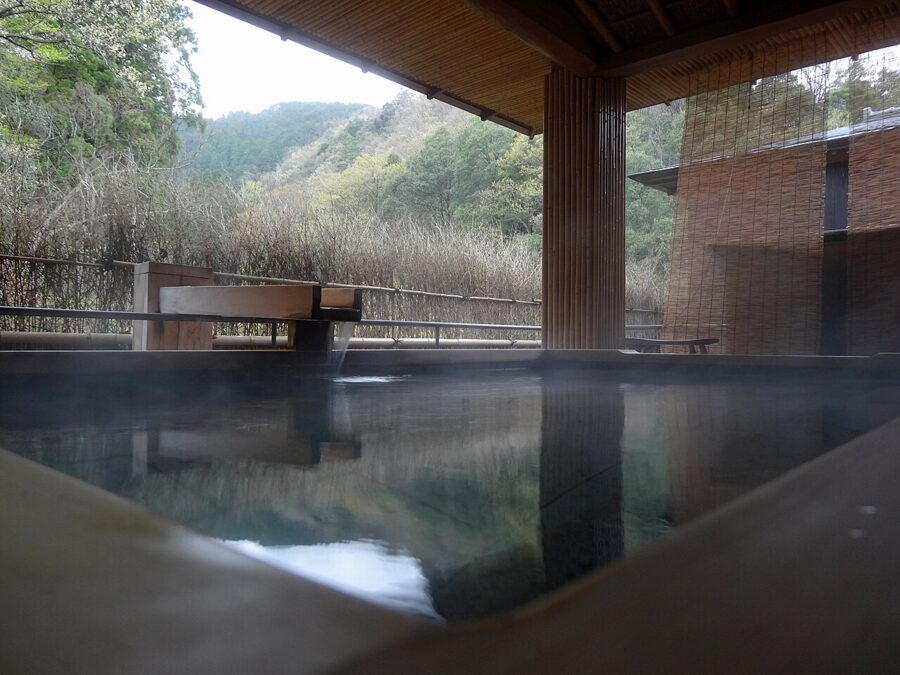

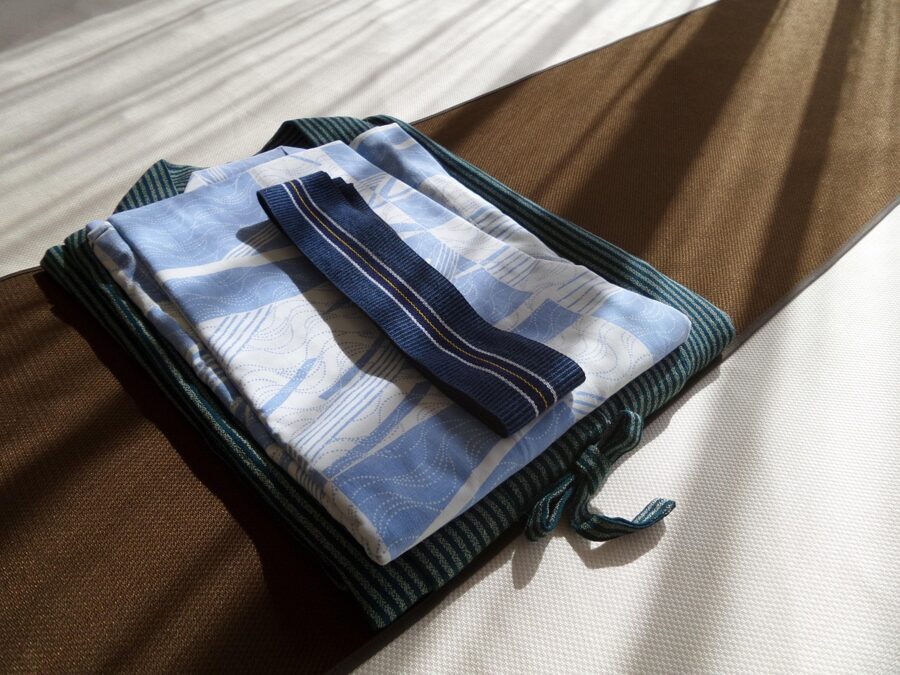
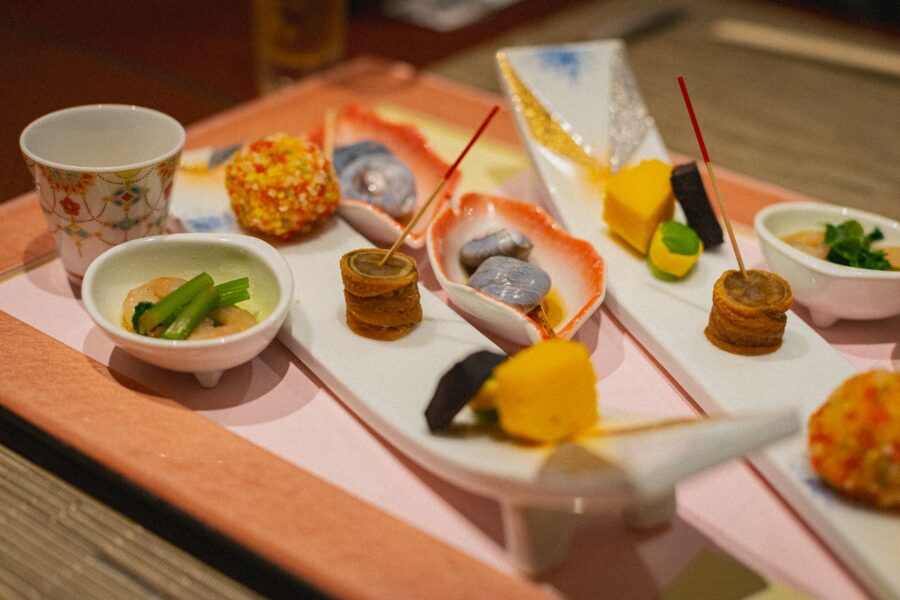
Wrap the yukata left side over right; right over left is for dressing the dead. Dinner is usually a long seasonal course, and the Japanese food words earn their keep on the menu card.
Staff may ask お湯加減はいかがでしたか (oyu kagen wa ikaga deshita ka), “how was the bath?” (formal), and the happy answer is ちょうどよかったです (chōdo yokatta desu), “just right.”
For a first trip I would do both: a cheap day bath early on to learn the routine with nothing at stake, then one ryokan night with a soak before dinner, another late and one at dawn. In the morning, notice that the door you used last night now says the other kanji.
Before you go, write ゆ, 男 and 女 on a card five times each. The first time a curtain flaps in front of you, you will read it before you think, and walk through the right door.