
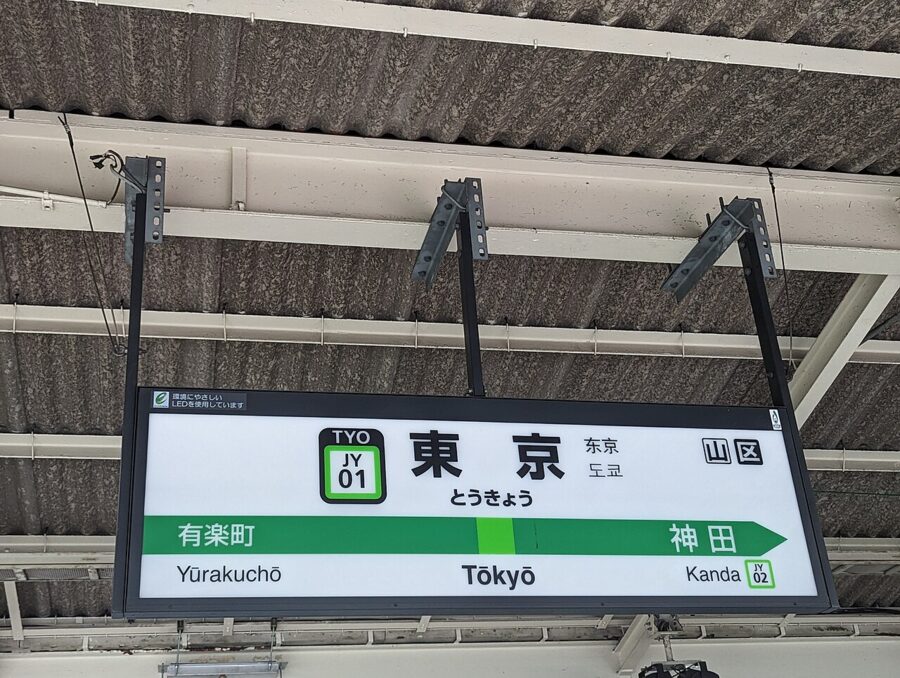
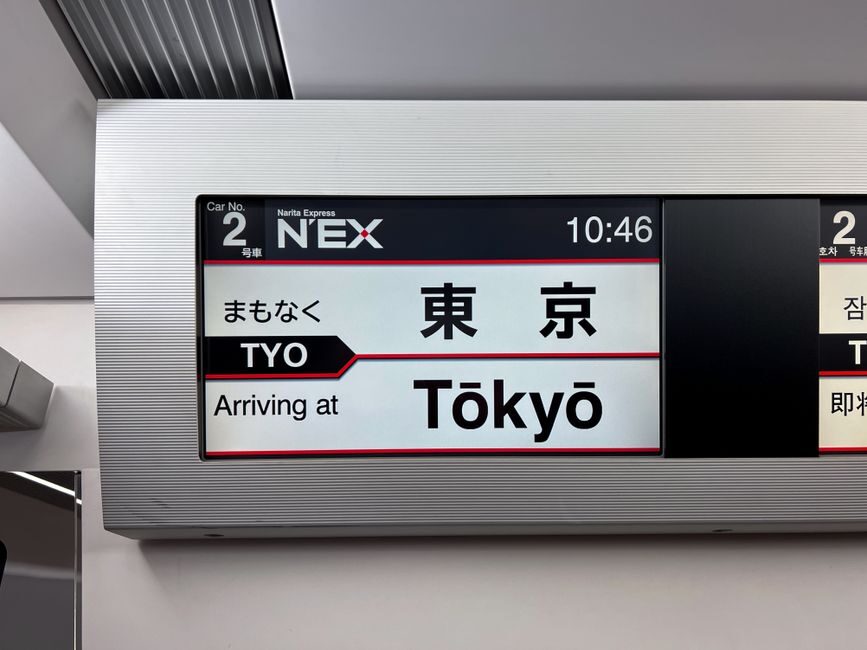
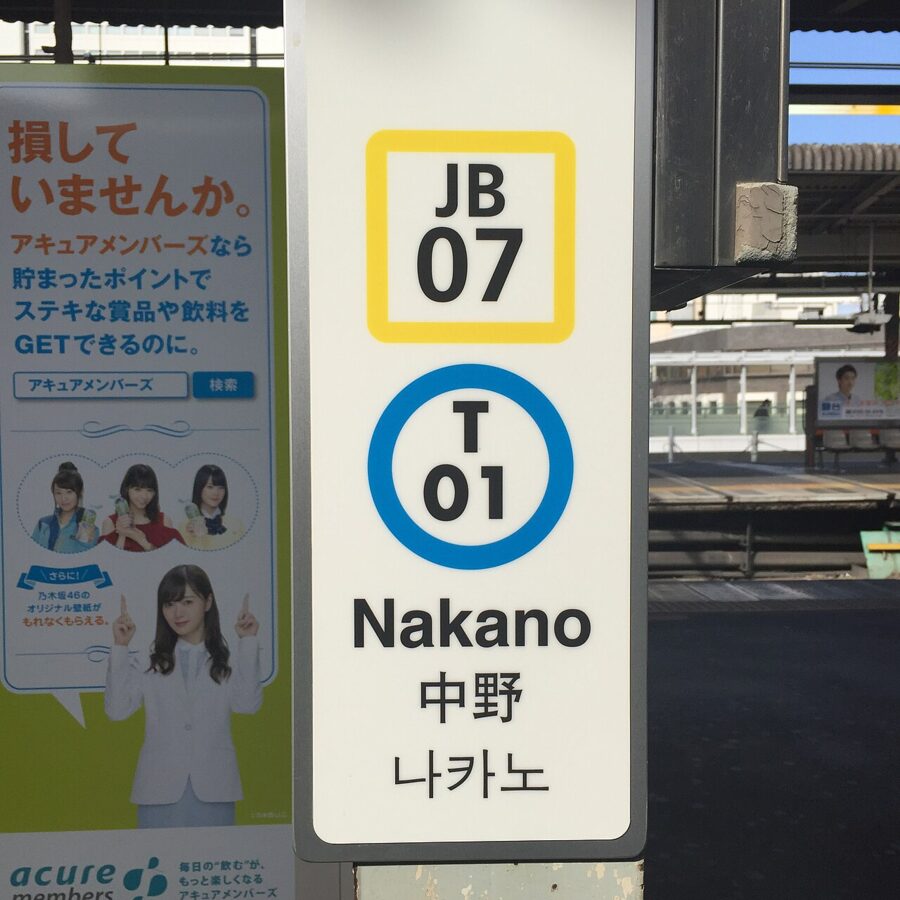
Stand on the Yamanote Line platform at Tokyo Station and the whole language is hanging over your head. The big black characters say 東京, a smaller line underneath says とうきょう, and below that, for everyone else, Tōkyō. Three ways of writing one word, on one sign, and by the end of this plan you’ll read all three without looking at the bottom line.
Learning Japanese from zero is easier to start than its reputation suggests and longer to finish than the apps imply. You need an order that doesn’t waste your first months, a fair idea of the hours involved, and the right tool for each stage. I’ll give you all three, plus a week-by-week outline for your first twelve weeks.
Here is the short version. Learn hiragana and katakana first, in two or three weeks. Then work through one beginner textbook, learning grammar and vocabulary together, and add kanji a few at a time inside real words. Listen to Japanese from the first day and speak to a person within the first month.
You’ll have company. The Japan Foundation’s 2024 survey of schools and other institutions outside Japan counted 4,000,750 people studying Japanese in 143 countries and regions, the first time the total passed four million. That figure leaves out everyone teaching themselves with books, apps and television, so the real number is higher.

目次 Contents
What a beginner is up against
People ask how easy Japanese is to learn, and the fair answer is that it’s hard in a few specific places and easy in several others. The hard places are the writing system, the word order and the way politeness is built into verbs. The easy places get less press, and I’ll come to them, because they are what keeps people going in month two.
Three scripts working at once
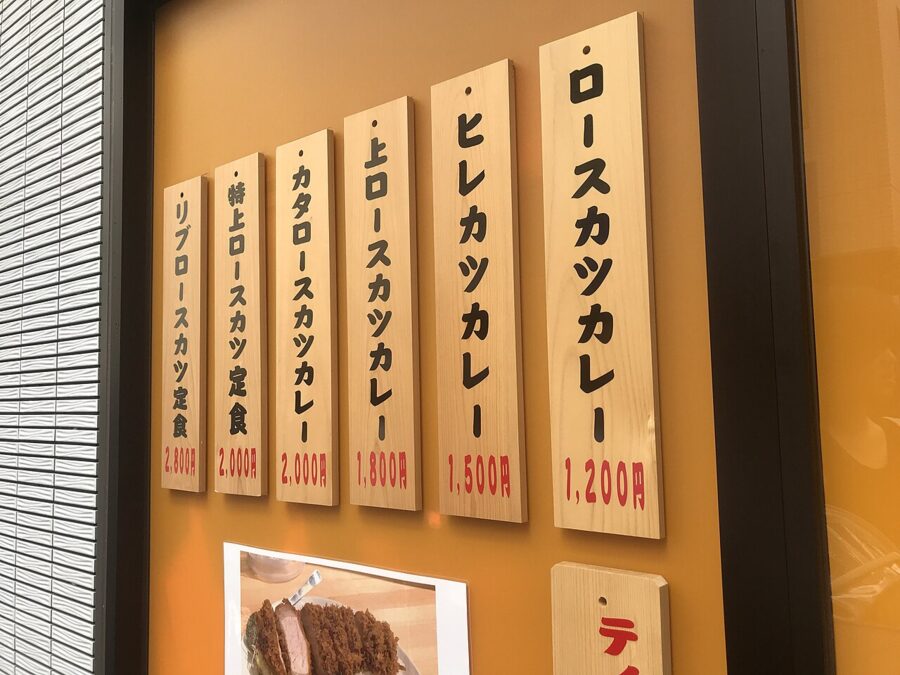
Japanese mixes three scripts in ordinary sentences. Hiragana (46 basic characters) writes grammar endings, particles and native words. Katakana (another 46, same sounds, sharper shapes) writes foreign loanwords, names and sound effects. Kanji, the characters borrowed from Chinese, write the core of most nouns, verbs and adjectives.
A single sentence shows the division of labor: 私はコーヒーを飲みます (watashi wa kōhī o nomimasu) “I drink coffee.” 私 and 飲 are kanji, コーヒー is katakana for the English loanword, and は, を and みます are hiragana doing the grammar. You can’t skip any of the three if you want to read a menu.

The kanji are the long project. Japan’s official list of characters for general use, the jōyō kanji table issued by the government in 2010, holds 2,136 of them, and newspapers and official documents keep largely to that list. Most kanji also have more than one reading: 日 is ni in 日本 (Nihon, Japan), and in 日曜日 (nichiyōbi, Sunday) it appears twice, read nichi the first time and bi the second.
The verb comes last
English runs subject, verb, object. Japanese runs subject, object, verb, and the verb waits patiently at the end of the sentence. Small words called particles label each piece, so the order before the verb can shift without losing the meaning.
| Japanese | Romaji | English |
|---|---|---|
| 私は寿司を食べます。 | watashi wa sushi o tabemasu | I eat sushi. |
| 明日、友達と京都に行きます。 | ashita, tomodachi to Kyōto ni ikimasu | Tomorrow I’m going to Kyoto with a friend. |
| 駅で切符を買いました。 | eki de kippu o kaimashita | I bought a ticket at the station. |
Look at what the particles are doing. は (wa) marks the topic, を (o) marks the object, に (ni) marks the destination, で (de) marks where the action happens and と (to) means “with”. Learn these five early and every sentence in your textbook gets easier to take apart. The Japanese grammar guide walks through each one with more examples.
Politeness is built into the verb
Japanese changes the form of a verb depending on who you’re talking to. With friends you say 食べる (taberu, casual). With a shop clerk, a teacher or anyone you’ve just met, you say 食べます (tabemasu, polite). Talking about what a customer or a boss eats, staff will use 召し上がります (meshiagarimasu, formal keigo), a different verb entirely.
The Agency for Cultural Affairs, in its 2007 guidance on keigo, sorts respectful language into five types, and Japanese adults spend years polishing it. You don’t need any of that yet. Learn the desu/masu polite forms first, because they are safe with strangers, and pick up casual speech from friends and dramas once the polite forms feel automatic.
What’s easier than it looks
Pronunciation is the first gift. Japanese has five vowels, a, i, u, e and o, each with one sound, and the kana are read the way they’re written, with a couple of exceptions such as は read as wa when it’s a particle. English speakers rarely struggle to be understood once the vowels are clean.
The grammar drops a lot of baggage. Nouns have no plural: 猫 (neko) is one cat or ten cats. There is no grammatical gender and no “a” or “the”. Verbs don’t change for the person, so 行きます (ikimasu) covers I go, you go and they go, and only two verbs are truly irregular: する (suru, to do) and 来る (kuru, to come).
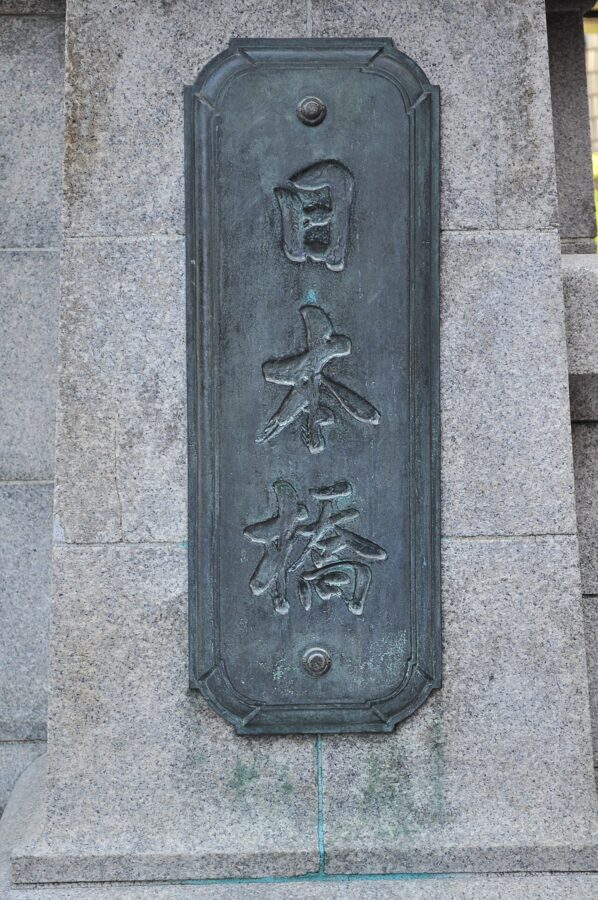
The one trap in the sound system is pitch accent. In standard Tokyo speech, 箸 (hashi, chopsticks) starts high and drops, while 橋 (hashi, bridge) starts low and rises. Context almost always rescues you, so don’t let it stall you, but copying the melody of native audio from day one costs nothing. NHK publishes a pronunciation and accent dictionary used by its own announcers if you want to check a word.

The order that saves you months
Every stage below is built on the one before it. You can run some of them in parallel, and you should run listening alongside all of them, but the sequence matters most at the start.
1. Hiragana, then katakana (weeks 1 to 3)
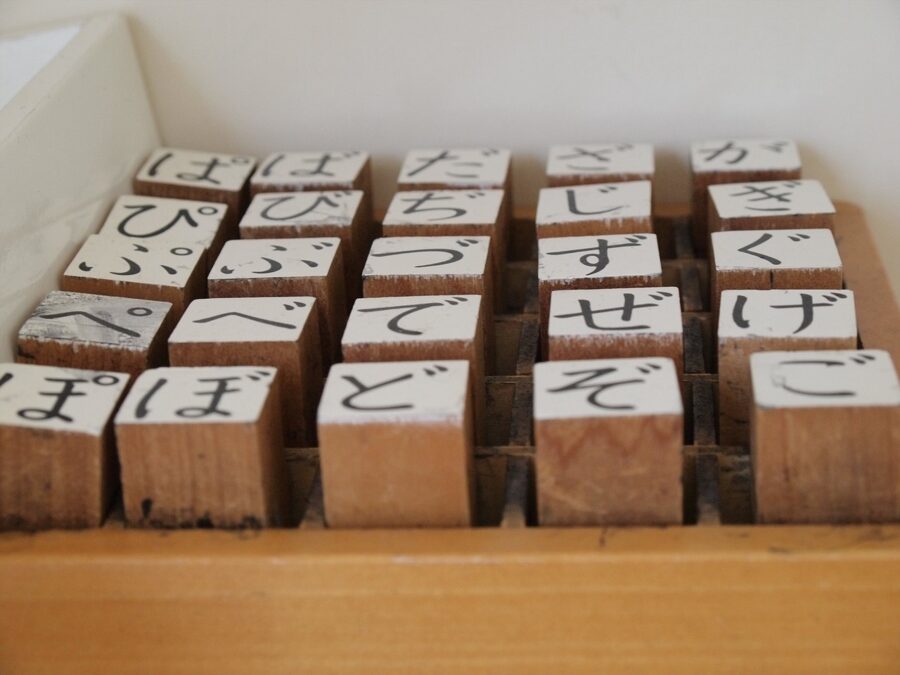
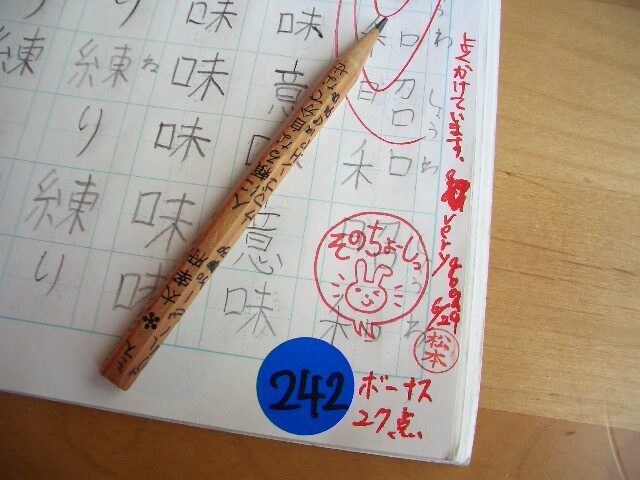
Hiragana has 46 basic characters, plus the voiced versions marked with two small strokes (か ka becomes が ga) and combinations like きゃ (kya). Fifteen to twenty minutes a day, writing each character while saying it aloud, gets most learners reading all of them in about two weeks. Katakana takes another week because you already know the sounds.
Learn the characters in their rows: あいうえお (a i u e o), かきくけこ (ka ki ku ke ko), and so on through the chart. Read real words as soon as you have two rows: あか (aka, red), いけ (ike, pond), かお (kao, face). Mnemonic pictures help for a week; after that, reading does the remembering for you.
2. Core grammar and vocabulary together
Once kana are in place, pick one beginner textbook and follow it lesson by lesson. Each lesson pairs a grammar pattern with the words you need to use it, which is the right way to meet both. A list of 500 nouns with no verbs to put them in is a dictionary, not a language.
Put each lesson’s new words into vocabulary flashcards with spaced repetition, and add a full example sentence to each card. 食べる on its own is a word; りんごを食べる (ringo o taberu) “eat an apple” is a word you can use.
3. Kanji, a few at a time, inside words
Start kanji when your textbook does, usually around the third lesson, and learn them through the words that use them. 日本 (Nihon, Japan), 日本語 (nihongo, Japanese) and 毎日 (mainichi, every day) teach you 日 better than any list of its readings. Five new kanji a day, reviewed properly, adds up to more than 1,800 in a year.

4. Listening from the first day
Your ears need far more hours than your eyes. Play your textbook audio until you can say each dialogue along with the speakers, a technique called shadowing. Add slow, clear Japanese early: textbook audio first, then learner podcasts and simple news.
5. Speaking, sooner than feels comfortable
Most self-taught learners wait to speak until they feel ready, and they wait for a year. Book a tutor or a language exchange in your first month, even if all you can say is your name and that you’re studying Japanese. Twenty-five minutes of fumbling with a patient native speaker teaches you which words you actually remember.
How long it takes, in real hours
The most quoted figure comes from the US Foreign Service Institute, which trains American diplomats. It places Japanese in its hardest group, Category IV, alongside Arabic, Cantonese, Mandarin and Korean, and expects 88 weeks or 2,200 class hours to reach professional working proficiency in speaking and listening. Its students also study on their own for about 17 hours a week on top of 23 hours in class.
That is the goal of a diplomat who must negotiate in Japanese, not a learner who wants to order dinner, follow an anime without subtitles or chat with a host family. Treat it as the ceiling, and set your own target below it. The table shows what common routines add up to in a year.
| Routine | Hours in a year | Years to 2,200 hours |
|---|---|---|
| 30 minutes a day | about 180 | about 12 |
| 1 hour a day | 365 | about 6 |
| 2 hours a day | 730 | about 3 |
| Full-time language school in Japan (about 20 class hours a week) | about 800 | about 3 |
My rule of thumb: an hour a day, with one speaking session a week, carries a steady learner through a two-volume beginner course in about a year. That is roughly the level of the JLPT N4: everyday conversations, spoken slowly, and short texts on familiar topics. Japanese doesn’t reward cramming; it rewards showing up most days.
Your first phrases, with their politeness level
The questions beginners ask first are nearly always about a handful of phrases: how to say hi politely, how to apologize, how to say “I love you”. Here they are with the level each one carries. Learn the polite ones first.
| Japanese | Romaji | English | Level |
|---|---|---|---|
| こんにちは | konnichiwa | hello (daytime) | polite enough for anyone |
| おはようございます | ohayō gozaimasu | good morning | polite |
| すみません | sumimasen | excuse me; sorry | polite |
| ごめんなさい | gomen nasai | I’m sorry | polite, personal |
| 申し訳ありません | mōshiwake arimasen | I sincerely apologize | formal (keigo) |
| ありがとうございます | arigatō gozaimasu | thank you | polite |
| もう一度お願いします | mō ichido onegai shimasu | once more, please | polite |
| 日本語を勉強しています | nihongo o benkyō shite imasu | I’m studying Japanese | polite |
| いただきます | itadakimasu | said before eating (“I humbly receive”) | polite (humble) |
| 好きです | suki desu | I like you; I love you | polite |
Two notes on that list. すみません is the most useful word in it: it stops a waiter, apologizes for bumping someone and thanks a stranger who held a door. And 愛してる (aishiteru, casual), the textbook “I love you”, is heavy enough that many couples rarely say it; 好き (suki, casual) is the everyday confession.

The tools, stage by stage
No single tool takes you all the way. A textbook gives you structure, an app gives you daily repetition, a tutor gives you conversation and correction, and real Japanese gives you the reason to keep going. Prices below are as of November 2026; yen prices carry a rounded dollar figure at about ¥159 to the dollar.
Free resources worth using first
Start with what costs nothing. The first three come from Japanese public bodies, and their beginner material is good enough to carry you for months.
- Irodori: Japanese for Life in Japan, from the Japan Foundation: four downloadable PDF textbooks with MP3 audio, Starter (A1), Elementary 1 and 2 (A2) and Pre-Intermediate (A2/B1). Built around everyday tasks rather than grammar charts.
- JF Japanese e-Learning Minato, also from the Japan Foundation: free self-study courses, many at A1 in English, plus a learner community.
- NHK やさしいことばニュース, NEWS WEB EASY: real news rewritten in simple Japanese for foreign residents and children, with furigana readings over the kanji and audio. Try it from month three.
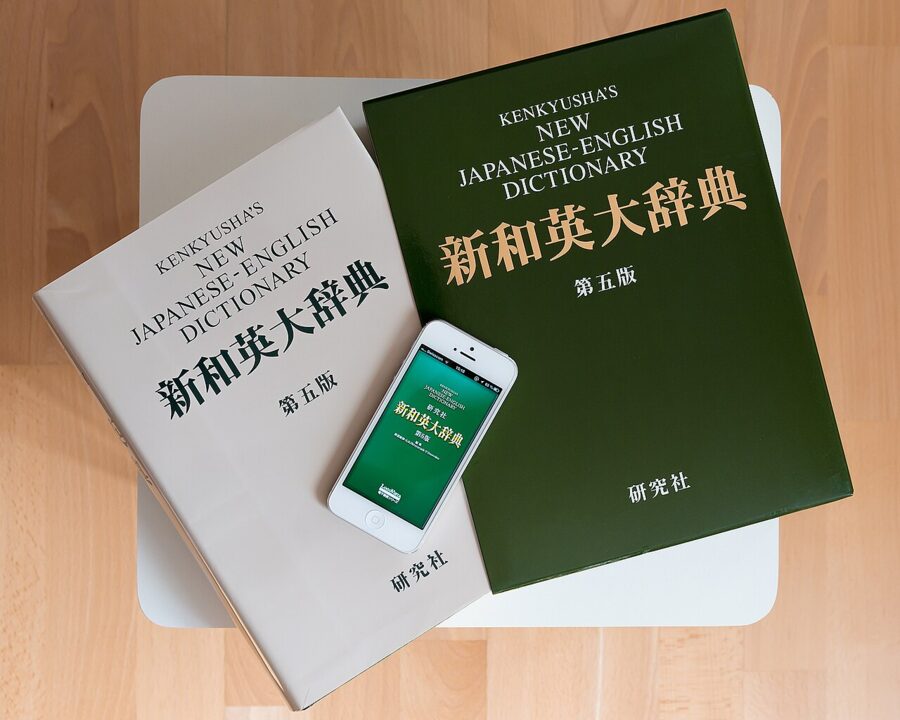
- Jisho: a free online Japanese-English dictionary that also lets you draw a kanji or build it from its parts.

Apps: good at repetition, poor at conversation
Apps are excellent for the daily ten or twenty minutes of review that keep words from leaking away. None of them will teach you to hold a conversation, and an app streak is not the same as progress. Use one or two, not five.

| App | What it’s for | Price (November 2026) |
|---|---|---|
| Anki | Spaced-repetition flashcards you build or download | Free on computer and Android; AnkiMobile for iPhone $24.99 one-time |
| WaniKani | More than 2,000 kanji and 6,000 words, taught through component parts in a fixed order | $9 a month, $89 a year or $299 lifetime; free to try |
| Bunpro | Grammar review with example sentences, more than 900 grammar items | Limited free plan; Premium $5 a month or $150 lifetime; 30-day free trial |
| Duolingo | Light daily habit for absolute beginners | Japanese course free with ads; paid tiers vary by country |
If you want my pick, Anki plus a textbook is enough for most learners, and the free versions do everything the paid iPhone app does. WaniKani suits people who like a set path and don’t mind paying for it. Duolingo is fine for the first few weeks of habit-building, then becomes a distraction from real study.
Textbooks: Genki, Minna no Nihongo and Irodori
A textbook is the spine of the whole plan. The two most widely used beginner courses are Genki and Minna no Nihongo, and they suit different learners.
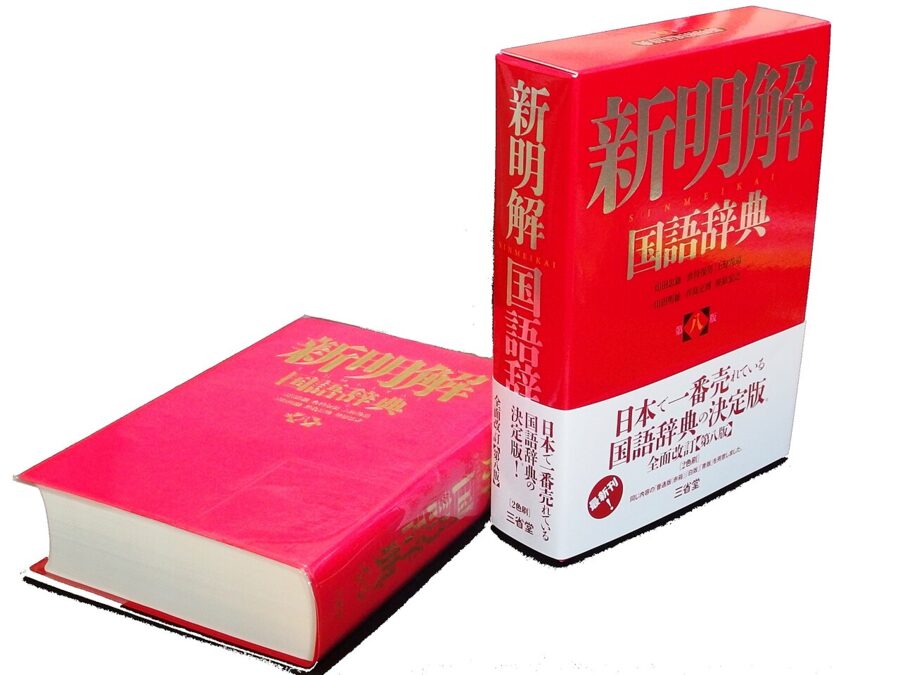
Genki: An Integrated Course in Elementary Japanese (third edition, The Japan Times Publishing) explains grammar in English and was written for university courses, which makes it the easier book to use alone. The publisher’s own store lists each of the two textbooks at ¥3,600 (about $23) and each workbook at ¥1,700 (about $11). The publisher also sells companion apps for vocabulary, kanji and conjugation.
Minna no Nihongo (3A Corporation) is written entirely in Japanese, with grammar explained in a separate translation volume. A third edition of the beginner books came out from autumn 2025 with updated conversation scenes and the grammar order largely unchanged. Elementary I Main Text costs ¥2,750 (about $17) and the English translation and grammar notes ¥2,200 (about $14), with conversation audio free on the publisher’s site and app.
My advice: work alone with Genki, choose Minna no Nihongo if you’re in a class that uses it, and use Irodori if you’re moving to Japan, since it teaches the tasks of daily life first. Don’t buy all three. Finish one.

Online tutors
A tutor is the fastest fix for the silent learner. Marketplaces let teachers set their own rates. On italki, most Japanese teachers on the first page of results charged between about $5 and $35 a lesson in November 2026, and Preply filtered its Japanese tutors from about $3 to over $50.
Look for a teacher who has taught beginners before and who will follow your textbook, so the lesson becomes practice for what you studied that week. A cheap community tutor for conversation plus a trained teacher once a month for correction is a sensible split.
Classes
Classes suit people who need a timetable to keep going. Universities, community colleges and Japan Foundation offices abroad run beginner courses, usually built on Genki, Minna no Nihongo or the Japan Foundation’s own Marugoto books.
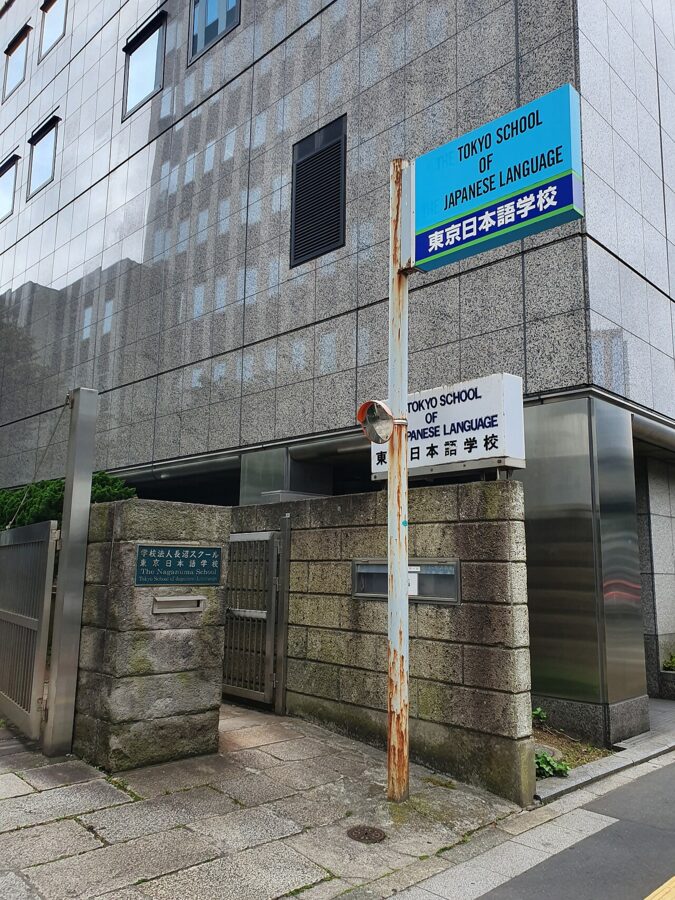
If you plan to study in Japan, the rules changed recently. Since April 2024 the government certifies Japanese language schools under a new law, in tracks for study, work and daily life, and teachers at certified schools must hold a national qualification, the registered Japanese language teacher (登録日本語教員, tōroku nihongo kyōin). Check that a school is certified before you pay a deposit.
Immersion, once you can follow some of it
Immersion works when you understand most of what you hear. Before that it’s background noise. Begin with material made for learners, then move to children’s shows, slice-of-life anime, dramas and YouTube creators who speak clearly, with Japanese subtitles once you can read kana fast enough.
Choose things you’d watch anyway, because you’ll need hundreds of hours of it. Cooking videos are a good start since the actions explain the words, and they lead naturally into Japanese food vocabulary you’ll use the moment you land.

The JLPT as a milestone
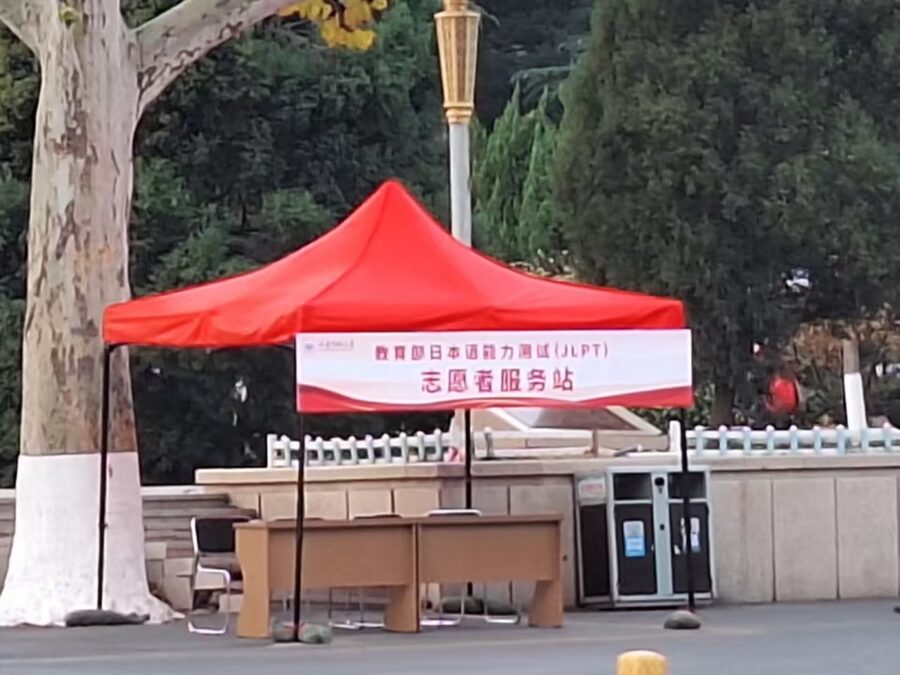
The Japanese-Language Proficiency Test, run by the Japan Foundation outside Japan and by the Japan Educational Exchanges and Services inside it, is the standard yardstick. About 1.9 million people applied in 2025, the most ever. It tests reading, vocabulary, grammar and listening, with no speaking or writing section, and the organizers say there are no plans to add them.
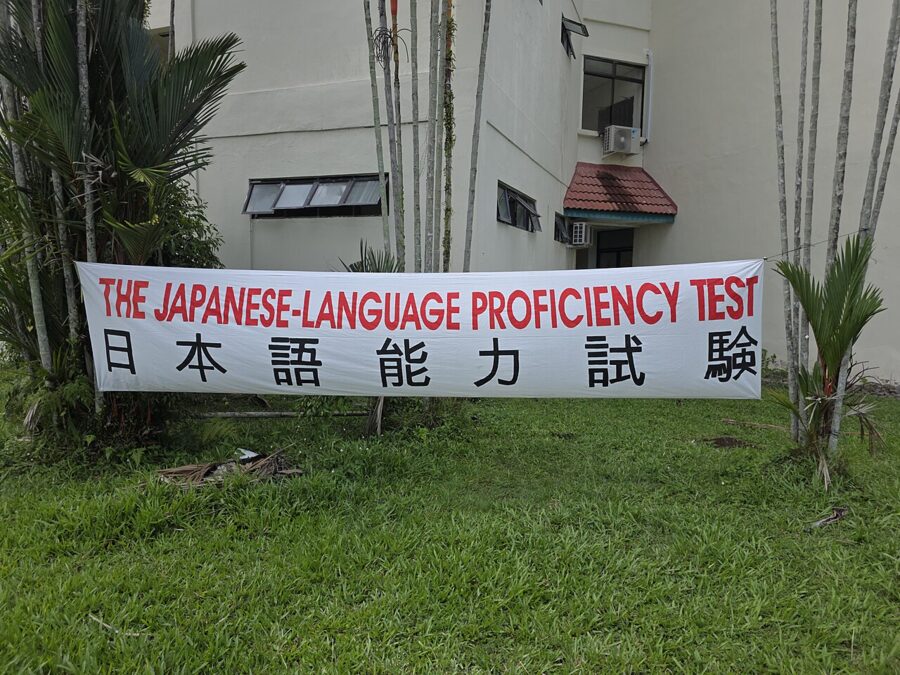
There are five levels, from N5, the easiest, to N1. The official descriptions, in a sentence each:
- N5: you understand some basic Japanese: set phrases and sentences in kana and basic kanji, and short, slow conversations about daily life.
- N4: you understand basic Japanese: familiar topics written with basic vocabulary and kanji, and everyday conversation spoken slowly.
- N3: you understand everyday Japanese to a certain degree, including newspaper headlines and near-natural-speed conversation.
- N2: you follow everyday Japanese and some wider topics, including newspaper articles and nearly natural-speed news.
- N1: you understand Japanese in a wide range of situations, including editorials, critiques, lectures and natural-speed news.

The test runs twice a year in July and December, though many cities outside Japan hold only one of them. In 2026 the dates were July 5 and December 6. In the United States the American Association of Teachers of Japanese holds its sitting in December, at 21 sites in 2026, for $135 at every level, with registration opening in mid-August. Since the December 2025 test, score reports also show a reference CEFR level, which helps if an employer or university abroad thinks in A1 to C2.
When should you sit your first one? I’d take N5 after you finish the first volume of a beginner textbook, around six months in at an hour a day, mainly for the deadline it puts on your calendar. Learners in a hurry often skip N5 and take N4 after the second volume. Since the test has no speaking section, a pass tells you nothing about whether you can talk, so keep the tutor sessions going.
Your first three months, week by week
This outline assumes about an hour a day and a textbook like Genki I. Slower is fine; skipping steps is not.
| Weeks | Focus | By the end |
|---|---|---|
| 1 to 2 | Hiragana by hand, a row a day; greetings from the phrase table | You read all of hiragana slowly and can say hello, thank you and sorry |
| 3 | Katakana; set up a Japanese keyboard on your phone | You can type your name in katakana and sound out a menu |
| 4 | Textbook lessons 1 and 2: です, the particles は, の and か, numbers and time; first tutor lesson | You can introduce yourself and ask what something costs |
| 5 to 6 | Lesson 3: verbs in the ます form, を, に, で; start flashcards, about ten new cards a day | You can describe your daily routine in simple sentences |
| 7 to 8 | Lessons 4 and 5: past tense, あります and います, adjectives; your first 30 kanji | You can say what you did yesterday and what something was like |
| 9 to 10 | Lesson 6: the て form, the verb shape behind requests and linked actions; shadowing the dialogues | You can make polite requests: 見てください (mite kudasai) “please look” |
| 11 to 12 | Review week by week; two short NHK Easy articles a week; weekly tutor sessions | You can hold a ten-minute slow conversation about yourself |
The て form in weeks 9 and 10 is where many self-taught learners stall, because it has a handful of sound changes to memorize. Give it two full weeks and drill it out loud. Everything after it in a beginner course leans on it.
Mistakes that cost learners months
Staying in romaji too long
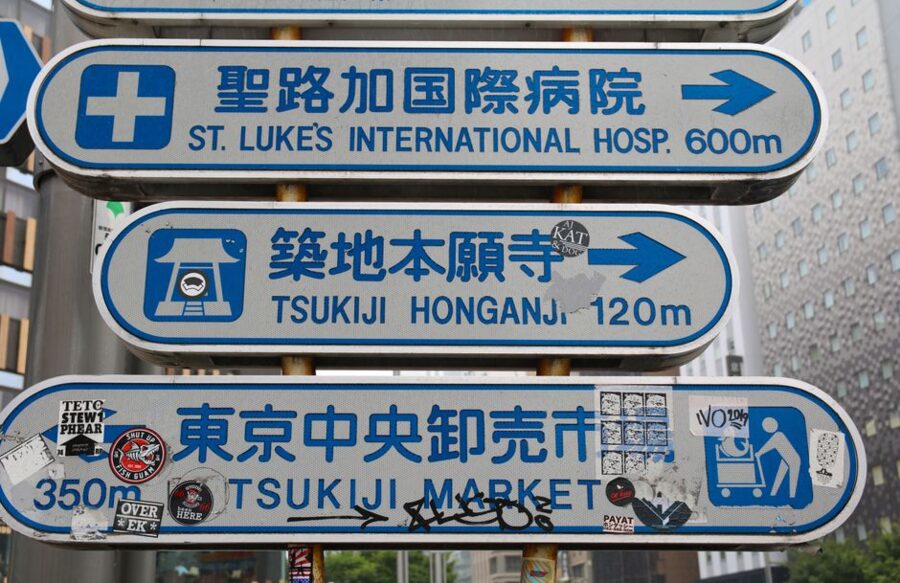
Romaji feels like a shortcut and turns into a crutch. It hides the long vowels (Tokyo is really とうきょう, Tōkyō, with two long syllables the plain spelling drops), and there is more than one way to spell it. Even Japan’s official standard changed recently: a 2025 Cabinet notice replaced the 1954 rules with spellings close to Hepburn, so shi, chi and fu instead of si, ti and hu, and allowed long vowels to be written with doubled letters as well as macrons.
Use romaji for your first two weeks at most. After that, read kana even when it’s slow.
Using apps and nothing else
A year of app streaks can leave you with a few hundred words and no idea how to build a sentence. Apps sort and drill, and that’s all they do. Pair any app with a textbook and with a person.
Never speaking
Reading and listening are one skill set, speaking another, and the second only grows when you use it. Learners who pass N3 on paper still freeze at a ticket counter if they’ve never practiced out loud. Speak every week, from the first month.
Learning kanji as pictures with English labels
Memorizing 2,000 kanji as one-word meanings gets you a lot of half-knowledge. You know 生 means “life” but can’t read 先生 (sensei, teacher) or 生ビール (nama bīru, draft beer). Learn each kanji inside two or three common words and the readings come with it.


Letting flashcards pile up
Spaced repetition is generous until you add 50 new cards a day for a week and face 400 cards due on Sunday. Keep new cards to a number you can review every single day, usually ten to twenty. Skipping two days hurts more than adding fewer cards.
Hopping between resources
Every new textbook starts again at lesson 1, and lesson 1 always feels like progress. Pick one course and finish it, then branch out. The language you need for festivals, shrines and family life, the material in Japanese culture, will make far more sense once the core grammar is solid.
Back at that sign at Tokyo Station, 東京 is two kanji you’ll meet in your first month: 東 for east and 京 for capital. Write あいうえお five times tonight, say each one aloud, and tomorrow start the k-row.